Blessed
Blessed Antoine Chevrier
Priest and founder of the Provvidenza del Prado, Lyon, 1826-1879
Early life
Antoine Chevrier was born on 16 April 1826 at Lyon, to a modest family; at 17 he entered the seminary and was ordained a priest at 24, in 1850.[1] He began his pastoral mission as curate in a workers' parish on the outskirts of the city.[1] In 1856, while in intense prayer before the crib, he had the intuition of divine poverty.[1]
Foundation
Under the guidance of the Curato d'Ars, Giovanni Maria Vianney, he agreed to become spiritual director of the 'Città di Jesus Bambino', which aimed to encourage first communion among poor children and to provide lodging for the destitute.[1] Aware of the immense field of work, he thought of founding a work of his own, and in 1860 bought the 'Prado', an old dance hall by then in ruins, calling the institution 'La Provvidenza del Prado'.[1] For some twenty years he carried on with the help of only a few priests, and added to the work a school of clerics, who once ordained formed the 'Società dei Preti del Prado' to run the original work and its charitable activities.[1]
Death and recognition
He died on 2 October 1879 after a long and painful illness, and his body rests in the chapel of the Prado.[1] He was beatified at Lyon by Pope John Paul II on 4 October 1986.[1]
Follow the evidence
Sources and notes
- Antoine Chevrier
Dicastery for the Causes of Saints · Italian
Accessed 2026-09-05
Editorial notes
Translated and condensed from the Dicastery's official Italian profile by an automated pass on 2026-09-09; identity matched on the death date and name; editorial review pending.
This is an AI-assisted draft prepared from the sources above. Its citations identify its evidence; they do not replace a historical review.
The inherited biography
The earlier biography for this record.
Read the inherited biography
Blessed Antoine Chevrier, also known as Father Antoine Chevrier, was born on Easter Sunday, 16 April 1825, in Lyon, Rhåne, France. He was the only child in a family of workers in the silk industry. Antoine was baptized just two days after his birth, and he received his First Communion in 1837. At the young age of 14, he felt a deep attraction to the priesthood, experiencing profound happiness at the idea. This sense of calling to the priesthood led him to begin his seminary studies in 1842.
During his time in the seminary, Father Antoine considered joining the foreign missions, desiring to bring the Gospel to people in distant lands. However, his mother strongly opposed this idea and even threatened to disown him. She exclaimed, "Do you think I raised you for you to be eaten by savages? Savages you can find in Lyon!" Despite this opposition, Father Antoine remained dedicated to his vocation and was ordained a priest in the Archdiocese of Lyon on 25 May 1850.
Father Antoine's first assignment as a priest was to the parish of Saint-André de la Guillotière, a poverty-stricken area in Lyon. It was here that he dedicated himself to assisting the poor and relieving their suffering. He preached against greed and worked tirelessly to organize charity initiatives. On Christmas Eve of 1856, while meditating before a Nativity creche and contemplating the humble beginnings of Christ, he had a profound experience that led him to not just serve the poor himself but to establish a religious congregation for others with the same commitment.
In January 1857, Father Antoine sought the guidance of Saint John Marie Vianney, the renowned Cure of Ars, regarding his calling. Encouraged by Vianney, he received permission to leave parish work and, with the assistance of a layman named Camille Rambaud, began his ministry of working with and sheltering poor, abandoned, factory working children, as well as those who had been imprisoned as children. They provided care and education to these vulnerable young individuals.
Father Antoine joined the Franciscan Third Order in 1859, embracing the spirituality and charism of St. Francis of Assisi. On 10 December 1860, he acquired an old ballroom which he converted into a chapel, shelter, and school for impoverished children. Throughout his lifetime, Father Antoine personally worked with around 2,400 boys and young men. Recognizing the need to continue his mission beyond his own efforts, he opened a school in 1866 to educate those who felt called to priestly or religious life and train them to work with underprivileged youth.
This endeavor eventually gave rise to the Institute of the Priests of Prado, an association of priests dedicated to the service of the poor and the formation of future priests. In 1876, the first members were ordained in Rome, Italy. Shortly after, a female branch called the Sisters of Prado was established. The Institute of the Priests of Prado and the Sisters of Prado, collectively known as the Work of Prado, aimed to alleviate suffering and restore dignity to those living in poverty. Their work involved various charitable initiatives, education, and spiritual formation.
Father Antoine played a significant role in calming civil unrest in Lyon in 1871 when he led a Eucharistic procession through the streets on the Feast of Corpus Christi. Both sides of the conflict respected the sacredness of this event and refrained from disrupting it. In addition to his pastoral work, he wrote two influential books: "Disciple of Jesus Christ" and "God Sends Revolutions." The latter was a critique of clergy who prioritized comfort, worldly possessions, or personal ambition over their call to serve.
Although Father Antoine did not witness the full extent of the Work of Prado's growth, his dedication and vision laid a strong foundation for its expansion. In 1924, the Work received diocesan approval and became affiliated with the Conventual Franciscans in 1930. Pope John XXIII commended their efforts with a decree of papal praise on 28 October 1959. The Work of Prado, now spread across numerous countries, continues its mission to help the marginalized and vulnerable.
Blessed Antoine Chevrier died on 2 October 1879 in Lyon at the age of 54 due to natural causes. Around 10,000 people attended his funeral, a testament to the impact of his work and the lives he had touched. He was laid to rest in the chapel he had built, and the street in front of it now bears his name. Recognized for his exemplary virtues, Father Antoine was venerated on 16 January 1953 by Pope Pius XII, who attributed heroic virtue to him. Later, he was beatified on 4 October 1986 by Pope John Paul II, affirming his sanctity and his significant contribution to the Catholic Church.
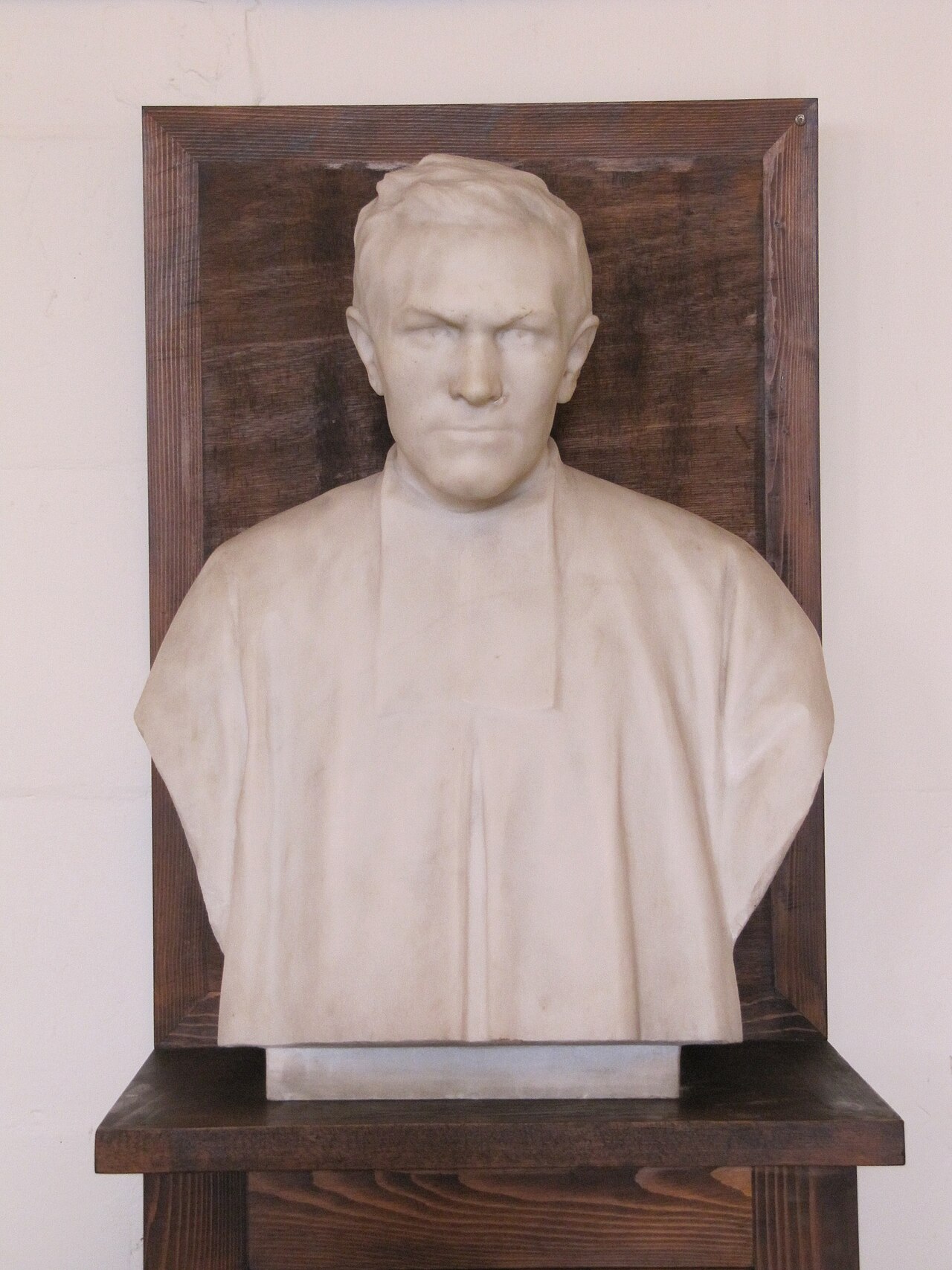
Wikimedia Commons
Also remembered on October 2
Know of a grace or miracle attributed to Blessed Antoine Chevrier?
Report a Grace or Miracle