SaintPre-Congregation
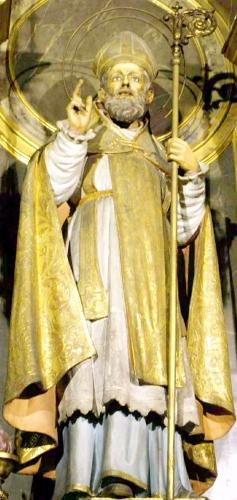
Pope Saint Marcellus I
Pope Saint Marcellus I, whose name is also sometimes spelled Marcellinus, was a significant figure in the early Christian Church during a tumultuous period.
Biography
Pope Saint Marcellus I, whose name is also sometimes spelled Marcellinus, was a significant figure in the early Christian Church during a tumultuous period. Unfortunately, very little is known about his life before he became Pope, as historical documents from that time have not survived the passing centuries.
Marcellus assumed the papacy at a crucial moment, towards the end of the persecutions initiated by the Roman Emperor Diocletian. The persecutions had severely disrupted the Church, leading to a gap of over a year without a Pope. Marcellus faced the daunting task of rebuilding the clergy, which had been decimated during this period of intense persecution. Many clergy members had practiced their vocation covertly, and some had even renounced their faith out of fear of martyrdom.
Marcellus worked tirelessly to recover and welcome back those who had denied their faith, seeking to heal and reunite the wounded Church.
However, during this time, a group known as the lapsi emerged. These individuals had apostatized before or during the period of persecution and refused to undergo penance in order to rejoin the Church. Despite their political influence and the civil disruptions they caused, Marcellus steadfastly refused to allow their return to the fold. In response to this stance, Emperor Maxentius, who was sympathetic to the lapsi, exiled the Pope in an attempt to resolve the matter.
There are legendary accounts that claim Marcellus was forced into slavery and made to work in a stable as punishment for his steadfastness. However, there is no substantive evidence to support these claims, and they are likely later additions to his story. Marcellus ultimately died in exile, succumbing to the unbearable hardships he endured. His suffering and death are considered martyrdom, as he steadfastly held to his convictions in the face of immense adversity.
After his death, Marcellus was initially buried in the cemetery of Saint Priscilla in Rome. Later, his relics were translated to the altar of the San Marcello al Corso church in Rome, where they rest to this day. Despite his impactful life and significance within the early Church, Marcellus was never formally canonized through the process of the Congregation for the Causes of Saints, as this institution did not yet exist at the time.
Pope Saint Marcellus I is honored as a patron saint of horses, stablemen, and Montemarzo di Asti, Italy. He is often depicted in artwork alongside a donkey or horse, symbolizing his purported forced labor in a stable. His feast day is celebrated on January 16th in the Western calendar and June 7th in the Eastern calendar.
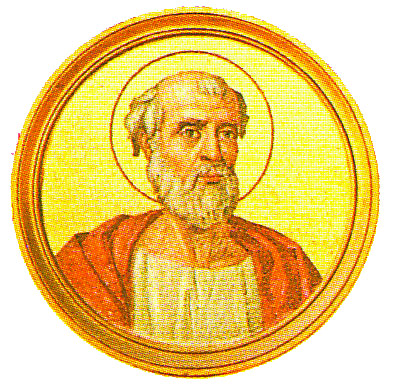
Wikimedia Commons
Also remembered on January 16
Know of a grace or miracle attributed to Pope Saint Marcellus I?
Report a Grace or Miracle