Beata
Beata Leopoldina Naudet
Foundress of the Suore della Sacra Famiglia, Verona, 1773-1834
Early life
Leopoldina Naudet was born on 31 May 1773 in Florence, where her parents, Giuseppe and Susanna d'Arnth, were in the service of the grand duke of Tuscany, Leopoldo d'Asburgo-Lorena, who was her godfather.[1] Her mother died in 1776; from 1778 to 1783 she and her sister Luisa were educated by the nuns of San Frediano, and in 1783 their father took them to Soissons, the town the Naudet family came from, to the dame di Nostra Signora.[1] Her father died in 1787, and in 1789, at the outbreak of the revolution, the two sisters returned to Florence, where they were put in charge of the education of the little archdukes; in 1790 the grand duke became emperor of Austria and the whole family moved to Vienna.[1] After the emperor Leopoldo died in 1792, the archduchess Marianna, sister of the new emperor Francis II, chose the two sisters as ladies-in-waiting, and they moved to Prague, where Marianna was named abbess of the canonesses.[1]
Vocation
She came into contact with the fathers of the Sacred Heart and with the former Jesuit Father Giuseppe Varin, and was guided by her spiritual director, the former Jesuit Father Nicolò Diessbach, who involved her in the apostolate of the book.[1] In 1799 she met Father Niccolò Paccanari, founder of the padri della fede; on 31 May 1799 Marianna, Luisa and Leopoldina Naudet pronounced vows as the first dilette di Jesus, and she was named superior of the new society.[1] In 1800 Paccanari sent her to Italy to look for a place to settle, with stages at Padova, Loreto and Rome.[1] From 1801 to 1807 she went through a very difficult period: Paccanari lost his authority and was denounced to the Holy Office, the dilette of France and England separated, and she was left with a small group of companions; at the end of 1807 she reached Verona.[1] On 8 May 1808 she began working with Maddalena di Canossa in the convent of Santi Giuseppe e Fidenzio in the San Zeno quarter, taking on the formation of her companions, the responsibility for the community, and the school and catechesis for the poor girls of the quarter.[1]
Foundation and death
On 9 January 1811 she began a spiritual path with Gaspare Bertoni, confessor at the convent of San Giuseppe, and in 1813 the reference to the Holy Family, which she called 'my special devotion', appears for the first time.[1] On 9 November 1816 the institute of the sisters of the Sacra Famiglia obtained a house, the convent of the Terese in piazza Cittadella; from 1831 the community was in the convent of San Domenico, in via del Pontiere.[1] There she joined prayer with the education of the young noblewomen of the college and free schools for poor girls; the institute was approved by the Austrian government on 5 May 1833 and by Gregory XVI on 20 December.[1] After a short illness she died on 17 August 1834, leaving a small institute of about eighty sisters.[1] She was beatified on 29 April 2017 by Pope Francis.[1]
Siga la evidencia
Fuentes y notas
- Leopoldina Naudet
Dicastery for the Causes of Saints · italiano
Consultado el 2026-09-05
Notas editoriales
Translated and condensed from the Dicastery's official Italian profile by an automated pass on 2026-09-09; identity matched on the death date and name; editorial review pending.
Este es un borrador asistido por IA preparado a partir de las fuentes anteriores. Sus citas identifican la evidencia; no sustituyen una revisión histórica.
La biografía heredada
La biografía anterior de este registro.
Leer la biografía heredada
Beata Leopoldina Naudet, también conocida como María Magdalena, nació el 31 de mayo de 1773 en Florencia, Italia. Era hija de un padre francés y una madre alemana. Leopoldina y su hermana Luisa recibieron su educación en monasterios prestigiosos de Italia y Francia.
En 1789, Leopoldina y Luisa fueron nombradas tutoras de los hijos del Gran Duque Leopoldo I en Florencia. Cuando el Gran Duque se convirtió en emperador y la familia se trasladó a Viena, las hermanas las acompañaron. Durante su estancia en Viena, la Beata Leopoldina sintió un creciente llamamiento a la vida religiosa y comenzó a trabajar con Santa Maddalena de Canossa, figura reconocida en el catolicismo.
Respondiendo a su vocación, la Beata Leopoldina fundó las Hermanas de la Santa Familia el 9 de noviembre de 1816. Esta orden estaba dedicada a servir las necesidades de los pobres y marginados en la sociedad. Bajo su guía, las Hermanas de la Santa Familia establecieron escuelas, orfanatos y hospitales, brindando servicios esenciales a quienes los necesitaban.
La vida de la Beata Leopoldina Naudet estuvo marcada por su devoción a la fe católica y su servicio incansable a los miembros más vulnerables de la sociedad. Ejemplificó las virtudes de humildad, compasión y desinterés, inspirando a muchos a seguir sus pasos.
El Papa Benedicto XVI reconoció sus virtudes heroicas el 6 de julio de 2007, y su beatificación fue celebrada el 29 de abril de 2017 por el Papa Francisco. El reconocimiento de la beatificación tuvo lugar en la Basílica de Santa Anastasia en Verona, Italia, con el Cardenal Angelo Amato presidiendo la ceremonia.
El legado de la Beata Leopoldina Naudet continúa a través de la orden religiosa que fundó, y su historia de vida inspiradora sirve como ejemplo de fe y caridad para los creyentes de todo el mundo.
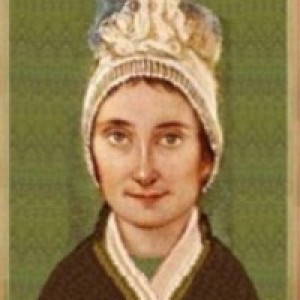
Imagen: Public domain via Wikimedia Commons (Leopoldina Naudet.jpg)
¿Conoces una gracia o milagro atribuido a Beata Leopoldina Naudet?
Reportar una Gracia o Milagro