Santo
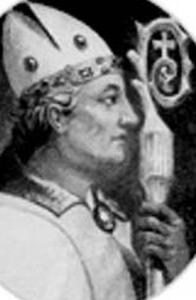
Saint Alpin
In the annals of the early Church in Gaul, few figures shine with the brilliance of martyrs or the ink of theologians, yet the faithful are sustained by the quiet fidelity of those who maintained the pastoral lines…
Biografía
Esta biografía está disponible actualmente solo en inglés.
In the annals of the early Church in Gaul, few figures shine with the brilliance of martyrs or the ink of theologians, yet the faithful are sustained by the quiet fidelity of those who maintained the pastoral lines during turbulent times. Among these is the figure of Alpin, whose name is preserved in the ecclesiastical records of Châlons. He is remembered not for a singular act of martyrdom or a written treatise, but for the steadfast stewardship of a diocese in the heart of the former Roman province of Gallia Lugdunensis, a region that corresponds to the modern-day territory of France.
The historical context of his ministry is one of profound transition. During the era in which he served, the political landscape of the West was shifting under the weight of migration and the decline of imperial authority. In such times, the Church became a pillar of stability for the local populace.
As the bishop of Châlons, Alpin occupied a position of significant responsibility. The duties of the episcopal office in this period encompassed the administration of the sacraments, the care of the poor, and the maintenance of orthodoxy amidst a complex social environment. While the specific acts of his ministry are not preserved in the historical record, the very fact that his name remains in the liturgical and historical memory of the see suggests a tenure marked by stability and faithfulness.
The defining characteristic of his spiritual formation lies in his connection to a more widely venerated predecessor. He is recorded specifically as a disciple of Saint Lupus of Troyes. To be a disciple in this context was not merely to learn theology in a classroom, but to enter into a lineage of apostolic succession and pastoral zeal. Saint Lupus of Troyes, a figure of significant repute, would have instilled in him a deep understanding of the episcopal office and the rigors of spiritual warfare against the heresies and social upheavals of the age. This relationship anchors Alpin within a specific spiritual genealogy, linking the see of Châlons to the broader network of sanctity that characterized the Church in Gaul c. the fifth century.
It must be acknowledged that the historical record regarding his life is sparse. Unlike contemporaries who were martyrs or authors of theological treatises, his legacy is primarily one of succession and service. The silence of the archives regarding specific dates or miraculous events does not diminish his status as a holy man; rather, it reflects the nature of episcopal records from that period, where the continuity of the office was often more documented than the details of individual lives. The lack of precise biographical data requires the historian to speak with humility, relying on the testimony of tradition to affirm his sanctity.
Yet, within the vast tapestry of the Church in Gaul, every link in the chain of succession holds weight. By faithfully serving the flock in Châlons and carrying forward the teachings received from his master, he ensured the transmission of the faith to the generations that followed. Through the centuries, he remains a figure of reverence, remembered not for a singular act of heroism, but for the consistent witness of a shepherd in the land of the Gauls. In the silence of the archives, his name stands as a marker of continuity, a reminder that the faith is preserved not only by the loud voices of reformers but by the steady hands of those who tend the vineyard without seeking renown.
También se celebran el 7 de septiembre


¿Conoces una gracia o milagro atribuido a Saint Alpin?
Reportar una Gracia o Milagro