Santo
Saint Amâtre
In the quiet valleys of Burgundy, where the Yonne River winds through the heart of Gaul, a spiritual transformation took root during a pivotal era of the Church's history.
Biografía
Esta biografía está disponible actualmente solo en inglés.
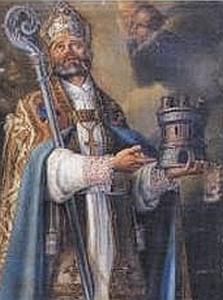
In the quiet valleys of Burgundy, where the Yonne River winds through the heart of Gaul, a spiritual transformation took root during a pivotal era of the Church's history. This change is inextricably linked to the ministry of Saint Amâtre, a bishop whose legacy is defined not by the romance of early life, but by the tangible reformation of a city's soul. As the shepherd of Auxerre, he found himself navigating a complex spiritual terrain where the old gods still held sway in the hearts of the people. His tenure was marked by a vigorous pastoral effort to cleanse the city of pagan superstitions, ensuring that the worship of the true God would displace the ancient rites that had long dominated the region.
The work of eradicating pagan superstitions was far more than a matter of administrative policy; it was a profound cultural shift. In the context of late antiquity, the countryside and
cities alike were often steeped in local traditions that predated the arrival of the Gospel. Amâtre faced the challenge of guiding a populace accustomed to these practices toward the liturgical rhythms of the Church. This required a delicate balance of firmness and charity, dismantling the structures of idolatry while nurturing the spiritual life of the community. He sought to replace the uncertainty of ancient rites with the certainty of Christian truth, fostering an environment where the name of Christ was honored above all others.
Equally significant was his role in establishing the cult of the holy martyrs within his diocese. In the early Church, the veneration of martyrs served as a vital pillar of communal identity, connecting the living faithful with those who had borne witness to the faith through their suffering and death. By promoting the cult of these saints, Amâtre provided the people of Auxerre with tangible links to the heroes of the faith. This focus on the martyrs would have strengthened the resolve of the believers, offering them models of courage and a sense of continuity with the universal Church. It was a strategic and spiritual investment that ensured the stability of the local Christian community against the encroachment of old beliefs.
Regrettably, the historical record preserves very little of his personal history. Specific dates of his birth or death are not recorded, and details regarding his family or education remain lost to the passage of time. There are no surviving accounts of specific miracles performed during his life, nor any correspondence that reveals his private thoughts. Despite this scarcity of information, the fact that his name endures in the liturgical memory of the Church speaks volumes about the efficacy of his labors. The enduring mention of his work suggests that his contributions were foundational to the development of the Diocese of Auxerre.
Ultimately, Saint Amâtre stands as a testament to the quiet, persistent labor required of a faithful shepherd. He did not seek the acclaim of hagiographic legend but the solid ground of spiritual reform. His legacy is one of purification and establishment, clearing the fields of spiritual weeds to plant the garden of the martyrs. For the faithful of that era, and for those who remember him today, he remains a figure of foundational importance, the bishop who dedicated his life to the purification and strengthening of the Church in a time of great transition.
También se celebran el 1 de mayo

¿Conoces una gracia o milagro atribuido a Saint Amâtre?
Reportar una Gracia o Milagro