Santo
Saint Dié
The rugged Vosges Mountains in Burgundia stand as a silent witness to the early spread of the Gospel in Gaul.
Biografía
Esta biografía está disponible actualmente solo en inglés.
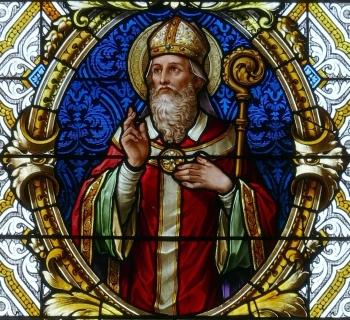
The rugged Vosges Mountains in Burgundia stand as a silent witness to the early spread of the Gospel in Gaul. It was within this demanding and spiritually significant terrain that a figure of considerable piety emerged to anchor the faith in the highlands. He was Dié, a bishop of Nevers whose ministry bridged the administrative center of the see with the remote territories of the present-day French region.
As a bishop of Nevers, Dié operated within a period when the Church was actively consolidating its presence across the Frankish territories. The see of Nevers held significant sway over the surrounding regions, and its bishops were often tasked with extending the reach of Christian institutions into less settled areas. It is traditionally held that Dié was not content merely with pastoral oversight from the city; he felt compelled to bring the stability of monastic life to the Vosges.
Consequently, he is said to have founded a monastery in this place. This act of foundation was a hallmark of the era, where bishops often established communities of religious men to serve as centers of prayer, learning, and agriculture in frontier zones.
The historical record, however, offers little beyond this foundational act. The dates of his birth and death are not preserved in the surviving annals, and no specific details regarding his personal asceticism or the miracles attributed to him have come down through the centuries. The text of his hagiography is truncated, leaving the ultimate fate of the monastery he established to the realm of historical implication. Yet, the fact of his presence in the region is enough to mark him as a key figure in the spiritual geography of Burgundia. The territory itself, situated in what is now France, bears the imprint of his episcopal care.
To speak of Dié is to speak of a pioneer of the faith in a challenging environment. The Vosges, with their dense forests and high altitudes, required a different kind of pastoral resilience than the plains of the Loire. A bishop willing to found a monastery there demonstrated a commitment to the spiritual welfare of the mountain dwellers. While the specific name of the monastery or its exact location is lost to the truncation of the historical record, the association of the name Dié with the Vosges Mountains remains a testament to his enduring influence.
In the quiet silence of the mountains, the memory of this bishop endures. He is remembered not for a specific date or a catalog of miracles, but for the simple, profound act of planting a monastic community in the heart of the Vosges. This act ensured that the light of the Church was not confined to the episcopal seat of Nevers but was carried into the rugged highlands. For the faithful who venerate him, he represents the enduring power of the episcopal mission to transform the landscape through prayer and community. Though the historical details are sparse, the impact of his work suggests a life dedicated to the expansion of the Kingdom of God in the heart of France. His story is one of quiet dedication, where the lack of extensive documentation does not diminish the significance of his contribution to the early Church in Gaul.
También se celebran el 19 de junio
¿Conoces una gracia o milagro atribuido a Saint Dié?
Reportar una Gracia o Milagro