Santo
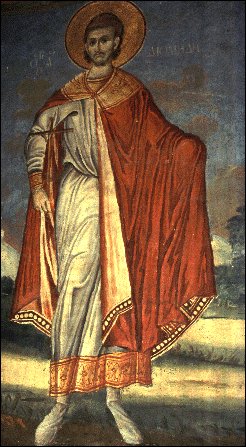
Saint Diomedes
The early centuries of the Church were marked by a profound silence that often speaks louder than words.
Biografía
Esta biografía está disponible actualmente solo en inglés.
The early centuries of the Church were marked by a profound silence that often speaks louder than words. In the annals of Christian history, there are those whose names are preserved only as a whisper, yet whose sacrifice forms the bedrock of the faith. Among these witnesses is the figure known as Diomedes, a martyr whose life was extinguished in the fires of persecution. His story is not one of elaborate deeds or miraculous interventions recorded in hagiography, but rather one of absolute fidelity unto death. To understand the weight of his witness, one must look to the soil in which his blood was shed.
The location of his martyrdom, Nicaea in Bithynia, holds a unique place in the consciousness of the universal Church. Situated in the region that is now modern-day Türkiye, Nicaea was a city of immense strategic and religious importance.
It is perhaps best known historically as the site of the First Ecumenical Council, where the foundations of Christian doctrine were defined amidst theological debate. Yet, long before the councils convened, the city was a crucible of faith. The province of Bithynia was a region where the Roman Empire’s authority frequently clashed with the emerging Christian community. In this landscape, the call to discipleship often demanded the ultimate price. It was here that Diomedes stood firm.
The name Diomedes itself carries the resonance of the ancient world, a name familiar in Greek antiquity. To bear this name in the early centuries of the faith was to carry a connection to the culture of the time, yet to die as a martyr was to transcend it. The records preserve his identity not through a biography of his birth or his daily labors, but through the singular, defining act of his death. He is known simply as the martyr of Nicaea. This brevity in the historical record is not a failure of memory, but a testament to the sheer number of faithful who offered their lives. In the shadow of the Roman state, the Church was sustained by thousands of such individuals whose names have not survived, but whose witness remains.
To speak of Diomedes is to speak of the reality of the early Christian experience in Asia Minor. The persecution faced by believers in Bithynia was not an isolated incident but part of a broader struggle for religious liberty and spiritual integrity. When the state demanded allegiance to the emperor above God, the choice was stark. Diomedes chose God. The specific circumstances of his passing are lost to the passage of time, yet the fact of his martyrdom stands as a historical certainty within the tradition of the Church. He did not renounce his faith. He did not seek to escape the trial that awaited him.
The legacy of such a saint is found in the veneration of the Church. Even without a detailed account of his virtues or his specific trials, the recognition of his name in the liturgical calendar affirms that his sacrifice was not in vain. The Church remembers that the blood of the martyrs is the seed of the Church. In the context of the First Ecumenical Council, which later gathered in that same city, the presence of the martyrs' memory would have been palpable.
También se celebran el 9 de junio
¿Conoces una gracia o milagro atribuido a Saint Diomedes?
Reportar una Gracia o Milagro