Santo
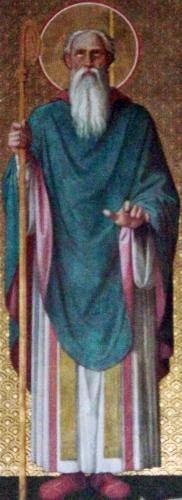
Saint Donato di Scozia
In the quiet reverence of the early medieval church, few figures stand out as distinctly as a bishop who bridged the distant shores of the British Isles with the ancient hills of Tuscany.
Biografía
Esta biografía está disponible actualmente solo en inglés.
In the quiet reverence of the early medieval church, few figures stand out as distinctly as a bishop who bridged the distant shores of the British Isles with the ancient hills of Tuscany. This is the legacy of the holy man known as Donato di Scozia. While the records of his life are sparse, the historical footprint he left behind speaks volumes of a man whose reputation for profound culture and deep piety transcended geographical boundaries. He is remembered not merely as an administrator of a diocese, but as a beacon of learning and holiness in a time when the preservation of faith was often a labor of love undertaken by dedicated travelers.
His journey began far from the sun-drenched landscapes of Fiesole. Tradition indicates that he hailed from the British Isles, with specific accounts suggesting he came as a pilgrim to Rome from Ireland.
It is a common historical phenomenon for "Scotti" to refer to monks from Ireland, a distinction that sometimes blurs in later hagiography, yet the core narrative remains consistent: he was a traveler seeking spiritual fulfillment. This pilgrimage was not a mere sightseeing tour but a rigorous spiritual undertaking common among the devout of his era. Upon arriving in the Eternal City, his demeanor and intellect made an impression that would alter the course of his life.
Following his time in Rome, the narrative of his life shifts to the Tuscan region. He was eventually entrusted with the pastoral care of the faithful in Fiesole. This assignment was no small matter; to be given charge of a community in Tuscany during the early centuries required a man of proven virtue. His reputation for culture was particularly notable. In an age where literacy and theological understanding were rare commodities, his scholarly background distinguished him. He brought with him the intellectual traditions of the monastic schools of the north, enriching the local church with a depth of learning that complemented his spiritual fervor. It is likely that his presence contributed to the preservation of liturgical practices and theological texts during a period of significant transition in the region.
The historical context of his episcopacy is one of consolidation and stability. As the early medieval period progressed, the church in Tuscany relied heavily on the dedication of bishops who could navigate both spiritual duties and the practicalities of community leadership. Donato’s tenure is characterized by this dual focus. He was not a recluse but a man engaged with his flock, utilizing his cultural gifts to serve the spiritual needs of the people. The fragmentary nature of the historical record leaves many details of his daily life to the imagination, but the enduring title of Bishop of Fiesole confirms his acceptance and recognition within the ecclesiastical hierarchy.
He is remembered as a figure who embodied the universal nature of the church, showing that holiness and learning are not bound by nationality. His story, while brief in its recorded form, resonates with the quiet strength of a shepherd who tended his flock with wisdom and grace.
También se celebran el 22 de octubre
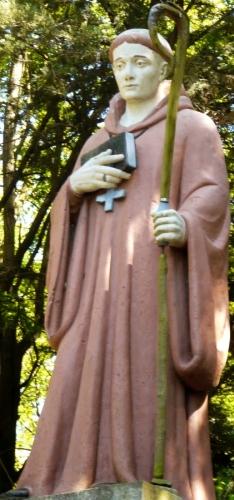
¿Conoces una gracia o milagro atribuido a Saint Donato di Scozia?
Reportar una Gracia o Milagro