Santo
Saint Eata
In the annals of the Northumbrian church, few figures stand as a testament to the quiet power of humility.
Biografía
Esta biografía está disponible actualmente solo en inglés.
In the annals of the Northumbrian church, few figures stand as a testament to the quiet power of humility. Saint Eata is remembered not for the clamor of political maneuvering or the spectacle of grand miracles, but for the profound interiority of his character. As a man of great meekness and simplicity, he embodied a spiritual authority that resonated through the monastic communities under his care. This combination of virtues was rare for a leader of his stature, offering a counter-witness to the complexities of ecclesiastical administration in his time.
His ministry was centered at Hexham, a place of significant spiritual importance within the kingdom of Northumbria. Here, the bishop exercised a pastoral charge that extended well beyond the confines of a single parish.
Historical fragments indicate that he ruled many monasteries and churches, suggesting a vast jurisdiction that required both administrative acumen and spiritual depth. To govern such a network of religious houses demanded a steady hand and a clear conscience, qualities that Eata possessed in abundance. His leadership was defined by the very simplicity that marked his personal life, allowing him to navigate the demands of the office without becoming entangled in the pride often associated with high ecclesiastical rank.
The narrative of his life includes a notable movement of return. The records speak of him returning to Hexham, a gesture that speaks to a deep attachment to his foundational see. While the specific circumstances of this transition are lost to the fragmentary nature of the surviving texts, the act of returning itself signifies a commitment to the place of his service. It implies a cycle of departure and return that was common in the itinerant nature of early monastic leadership, where bishops often moved between communities before settling into a final place of repose or continued oversight. Despite the challenges that may have arisen during such transitions, he maintained his focus on his pastoral duties.
It must be acknowledged that the historical record regarding his early life and specific deeds remains sparse. The available data provides a portrait of his character and his office rather than a detailed chronology of events. There is no precise information regarding his birth or death, nor are there specific dates that can be attached to his episcopate with certainty. Yet, within this silence, the essence of his witness remains clear. He is preserved in memory as a shepherd who prioritized the virtues of meekness and simplicity over worldly ambition.
In an age where the church in Northumbria was navigating its own consolidation and growth, Eata’s life offered a model of stability. His tenure reminds the faithful that the strength of the church often lies not in the loud voices of the powerful, but in the quiet endurance of those who serve with simplicity. To know him is to know a man who ruled many houses yet remained defined by his internal peace.
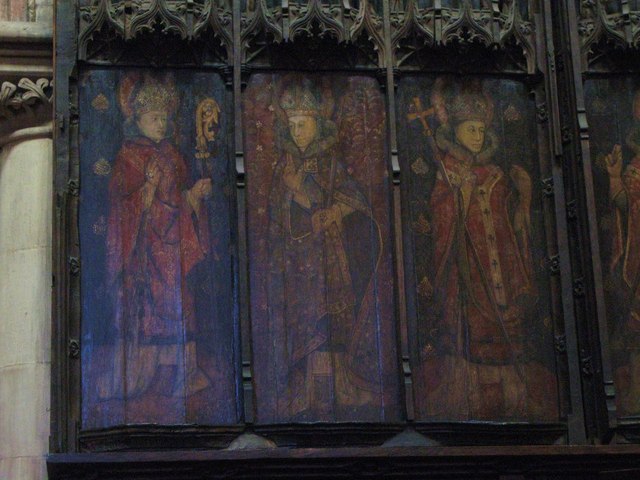
También se celebran el 26 de octubre

¿Conoces una gracia o milagro atribuido a Saint Eata?
Reportar una Gracia o Milagro