SantoMártir
Saint Euphemia
The ancient city of Chalcedon, situated on the Asian shore of the Bosporus in Bithynia, bears witness to a profound act of faith that transcends the boundaries of time.
Biografía
Esta biografía está disponible actualmente solo en inglés.
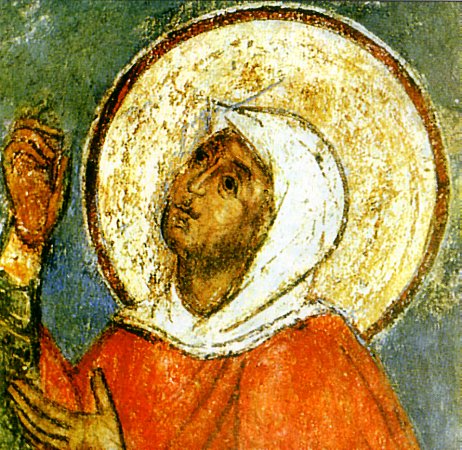
The ancient city of Chalcedon, situated on the Asian shore of the Bosporus in Bithynia, bears witness to a profound act of faith that transcends the boundaries of time. In the turbulent early fourth century, amidst a landscape where the Roman Empire sought to extinguish the light of Christianity, a woman known as Euphemia stood as an unyielding pillar of the Church. She is remembered not for political power or earthly wealth, but for her radical commitment to Christ, a commitment that cost her her life. Her story is one of the earliest and most significant examples of Christian resistance during the height of the Great Persecution.
Historical records place her life during the reign of the Emperor Diocletian, a period c. 303 to 305 when imperial edicts demanded the renunciation of Christian worship. In this atmosphere of state-sanctioned terror, the local administration was led by the
proconsul Priscus. It was under his jurisdiction that the virgin martyr faced her trial. The demands of the state were absolute: submit to the traditional gods or face the full weight of imperial justice. For Euphemia, there was no middle ground. Her resolve was forged in the conviction that her citizenship lay in heaven, rendering the threats of earthly authorities powerless to sway her spirit.
The confrontation between the proconsul and the faithful woman was not merely a legal proceeding but a spiritual contest. While specific details of the era are often obscured by the passage of centuries, the tradition is clear that she was subjected to a series of severe physical trials. The text of her history notes that she overcame many tortures. This endurance was not passive; it was an active defiance against the regime’s attempt to break the human spirit. Each attempt to inflict pain served only to strengthen her testimony, transforming her suffering into a public declaration of the truth she held dear. The specific methods of her ordeal are less significant than the outcome: she remained steadfast, refusing to compromise her vows of virginity or her faith in the Risen Lord.
The scarcity of detailed contemporary accounts regarding her life is a reality of the period, yet this silence does not diminish her impact. Where other records fade, her name remains etched in the liturgical memory of the Church. She is venerated as a martyr who conquered death through the very act of dying for her faith. The location of her martyrdom, Chalcedon, later became a place of pilgrimage and ecclesiastical significance, ensuring that the memory of her sacrifice was preserved by subsequent generations of believers.
The narrative of her life serves as an anchor for the faithful, reminding them that the witness of the martyrs forms the foundation of the Church’s history. Even though the precise chronology of her suffering is approximated by the reign of Diocletian, the spiritual reality of her victory is absolute. She is celebrated not as a victim, but as a victor who triumphed over the powers of the world. Her story invites reflection on the nature of true freedom, found not in the absence of chains, but in the liberty of the spirit to remain faithful to God regardless of the consequences. In the annals of the saints, her name shines brightly, a beacon of hope that continues to illuminate the path for those who seek to follow in the footsteps of the martyrs.
También se celebran el 16 de septiembre
¿Conoces una gracia o milagro atribuido a Saint Euphemia?
Reportar una Gracia o Milagro