Santo
Saint Eupsychius
The reign of Julian the Apostate cast a long shadow over the Roman Empire, a brief but fierce attempt to extinguish the light of Christianity that had taken root in the provinces.
Biografía
Esta biografía está disponible actualmente solo en inglés.
The reign of Julian the Apostate cast a long shadow over the Roman Empire, a brief but fierce attempt to extinguish the light of Christianity that had taken root in the provinces. During this period, which spanned c. 361 to 363, the emperor sought to restore the traditional pagan cults and reverse the Christianization of the state. It was within this volatile climate that a courageous witness emerged in the province of Cappadocia, a region in present-day Türkiye known for its deep spiritual heritage and resilience. Caesarea, the capital of Cappadocia, became the stage for a dramatic confrontation between imperial authority and unwavering faith.
Here, a man named Eupsychius chose a path of radical defiance. While specific details regarding his early life remain lost to history, the record preserves the pivotal act that sealed his destiny. He did not merely endure the pressure to conform; he actively opposed the restoration of idolatry. For having destroyed the temple of a pagan deity, he drew the immediate and severe attention of the imperial administration. This act was not one of mindless destruction, but a deliberate declaration that the gods of the empire held no power against the truth he professed. Tradition maintains that such actions were rare and dangerous, marking the individual as a direct threat to the religious order Julian attempted to enforce.
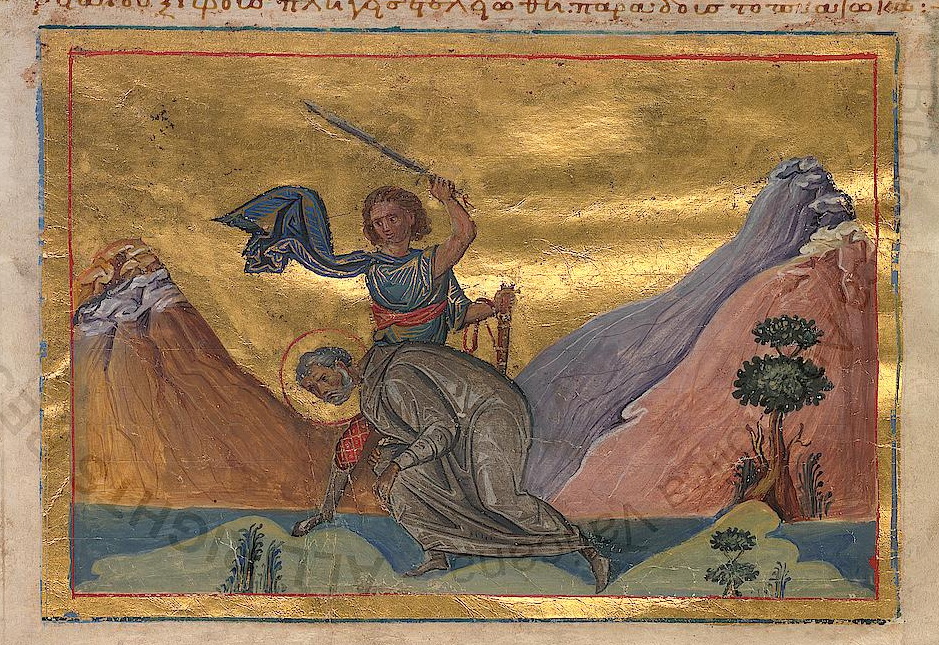
The consequences were immediate. Under the reign of the Apostate, the destruction of a temple was tantamount to treason against the state religion. Eupsychius was brought to trial, where he faced the full weight of imperial wrath. The historical record does not preserve the specifics of his interrogation, nor does it recount the words he spoke in his defense, yet the outcome is clear. He suffered martyrdom, offering his life as a testament to his belief. In the eyes of the Church, his death was not a defeat but a victory, a final seal upon his witness that affirmed the supremacy of the Christian God over the false idols of the age.
Today, the legacy of this confessor endures within the liturgical memory of the faithful. Though the details of his birth and family are not known, his status as a martyr is firmly established in the annals of the Church. He is remembered specifically for his location in Caesarea and the era of Julian the Apostate. In a time when the emperor himself sought to turn the world back to ancient rites, he stood firm. His sacrifice reminds the faithful that the destruction of false idols is a precursor to the building of true faith.
While hagiographers must acknowledge the scarcity of biographical data surrounding his life
¿Conoces una gracia o milagro atribuido a Saint Eupsychius?
Reportar una Gracia o Milagro