Santo
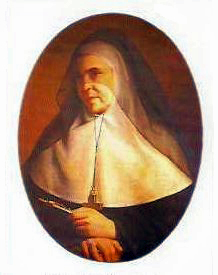
Saint Eustoche
In the annals of the Gallic Church, few figures embody the transformation of the late Roman world as vividly as the prelate known as Eustoche.
Biografía
Esta biografía está disponible actualmente solo en inglés.
In the annals of the Gallic Church, few figures embody the transformation of the late Roman world as vividly as the prelate known as Eustoche. Before he donned the vestments of the episcopate, he held the distinguished title of senator, a position that placed him at the apex of secular society within the province of Gallia Lugdunensis. Yet, the allure of imperial nobility proved insufficient to satisfy the deeper call of the spirit. Instead, he surrendered the privileges of his rank to serve in the See of Tours, now part of modern France, where his life became a testament to the virtues of holiness and piety.
His entry into the clergy was not an isolated event but part of a continuous line of shepherds guiding the faithful through a turbulent era. Tradition records that he succeeded Saint Brice, a predecessor whose own legacy had already established a standard of pastoral care and
spiritual rigor. To follow such a figure required not only administrative competence but a profound interior life. The historical context of this period suggests a time when the Church was increasingly becoming a stabilizing force in a region where Roman authority was beginning to wane. In this setting, the role of a bishop was both political and spiritual, requiring a leader capable of navigating complex social landscapes while maintaining doctrinal integrity.
The designation of his former status as a senator is particularly significant. It indicates that the highest echelons of society were drawn to the ecclesiastical hierarchy, bringing their resources and influence to the service of the faith. This transition from the Senate to the altar underscores the profound shift in values that characterized the conversion of the Roman aristocracy. For Eustoche, the pursuit of earthly power was exchanged for the pursuit of heavenly reward, a choice that defined his tenure in the diocese.
While specific details of his daily ministry or miraculous deeds are not preserved in the surviving briefs, the enduring memory of his character remains clear. He is remembered fundamentally as a holy and pious man, a description that serves as the primary evidence of his sanctity in the absence of elaborate hagiographical legends.
También se celebran el 19 de septiembre
¿Conoces una gracia o milagro atribuido a Saint Eustoche?
Reportar una Gracia o Milagro