Santo
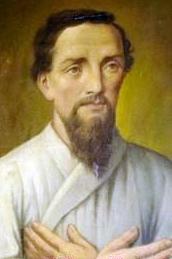
Saint Gerulf
The story of faith is often written in the blood of the young, a testament to the purity of conviction that transcends the compromises of age.
Biografía
Esta biografía está disponible actualmente solo en inglés.
The story of faith is often written in the blood of the young, a testament to the purity of conviction that transcends the compromises of age. Among the countless witnesses to the Gospel in the Low Countries, one particular figure stands as a striking example of this sacrificial love: the adolescent martyr of Tronchiennes. In the annals of the Church, where saints are frequently cataloged by their deeds, miracles, or theological contributions, the record of this youth is strikingly simple. He is remembered not for a sermon or the founding of a monastery, but for the ultimate offering of his life. This brevity in historical record does not diminish the magnitude of his sacrifice; rather, it casts a spotlight on the raw, unadorned courage required to stand for truth when the cost is everything.
To understand the weight of his witness, one must look to the land where his life ended. Flanders, a region in what is now present-day Belgium, has long been a crucible of religious history. It is a territory where the soil has often been watered by the blood of the faithful, particularly during the turbulent eras of the early Middle Ages or the earlier periods of Roman persecution. While the precise chronology of this martyr's passion remains obscured by the mists of time, the location anchors him within a specific spiritual geography. Tronchiennes, a locality within the Flemish region, serves as the silent witness to his final hours. It is a place where the physical landscape has likely changed over centuries, yet the spiritual memory of the site persists, marking the ground where a young life was surrendered for the sake of the Gospel.
The designation of this figure as an adolescent adds a profound layer to his hagiography. In the history of the Church, young martyrs occupy a unique space. They represent the uncorrupted heart of the faith, untainted by the compromises of age or worldly ambition. To die in the bloom of youth is to demonstrate a conviction that transcends the natural instinct for self-preservation. It suggests a moment of decision where the call of the divine was heard more clearly than the voice of fear. Tradition often associates such figures with the early centuries of Christianity, though without specific documentation, one cannot assign a definitive date to his passing. It is possible that he lived during a period of localized persecution, or perhaps during the later waves of religious conflict that swept through the Low Countries. What is certain is that his death was not accidental; it was a consequence of his fidelity.
The scarcity of information regarding his personal life, his family, or the specific circumstances of his arrest is not a failure of record-keeping so much as a reflection of the times. In many instances, the early or medieval hagiographers focused on the event of the martyrdom rather than the biography of the individual. For the youth, the defining characteristic of his existence was his willingness to embrace the crown of martyrdom. He did not flee; he did not deny. He stood firm.
It is available to the young, to the obscure, and to those whose names might otherwise be lost to history. His legacy is not a building or a treatise, but the enduring example of a life offered in trust. In the quiet of the church calendar, his name remains a beacon. He reminds the faithful that the strength of the Gospel lies not only in its doctrine but in the courage of those who live it, even when they are very young. The silence surrounding his life speaks louder than words could, affirming that in the economy of heaven, the sacrifice of a single life, offered in love and truth, echoes through eternity.
También se celebran el 21 de septiembre
¿Conoces una gracia o milagro atribuido a Saint Gerulf?
Reportar una Gracia o Milagro