SantoMártir
Saint Giusto
The title of martyr stands as one of the most profound honors within the Christian tradition, representing a total offering of life for the sake of faith.
Biografía
Esta biografía está disponible actualmente solo en inglés.
The title of martyr stands as one of the most profound honors within the Christian tradition, representing a total offering of life for the sake of faith. In the case of Saint Giusto, this witness was sealed in the rugged port city of Trieste, a location that served as a critical gateway between the Roman Empire and the northern territories. While the specific details of his earthly journey remain obscured by the mists of centuries, the enduring memory of his sacrifice anchors him firmly in the history of the early Church. To know him is to know the power of a name that declares justice, and a place that bore the weight of imperial scrutiny.
Trieste, known in antiquity as Tergeste, was more than a geographical coordinate; it was a bustling hub of commerce and culture situated on the Adriatic coast. It was here, within the province of Venetia et Histria, that the Gospel took root during
the tumultuous era of Roman persecution. It is generally understood that the faithful in this region faced the same trials as their counterparts across the empire, where loyalty to the State often conflicted with the demands of the Divine. Saint Giusto’s martyrdom places him among the countless unnamed believers who chose fidelity over survival. The historical context suggests his death likely occurred during one of the periodic waves of imperial crackdowns, perhaps c. the second or third century, though the precise chronology remains a matter of pious tradition rather than documented record.
It is a sobering reality of hagiography that for many early saints, the biographical record is as sparse as the parchment upon which their names were once scratched. In the case of Saint Giusto, the silence of history is profound. No specific acts of charity, no letters written, and no specific trials are recorded in the surviving data. Yet, this lack of detail does not diminish the reality of his witness. The brevity of the record serves as a testament to the sheer volume of such sacrifices; the early Church was built not only on the deeds of the famous but on the blood of the obscure. The fact that his name and location were preserved in the liturgical calendar indicates that his local cultus was strong enough to survive the transition from the ancient world to the medieval age.
The name itself, Giusto, carries a weight of its own. Derived from the Latin *Justus*, it signifies the just and the righteous. In the context of a martyr, this name becomes a prophetic declaration of the virtue he embodied. To be a martyr was to embody the ultimate justice of God, submitting to earthly judgment to uphold heavenly law. While traditions may sometimes attach specific legends to such figures, the core of his story remains the simple, unadorned fact of his death in Trieste. He is remembered not for a miracle performed, but for the faith maintained unto the end.
The legacy of Saint Giusto is found in the endurance of his memory. In a world where many names have faded into obscurity, the designation of martyr at Trieste has survived. This suggests a local veneration that kept the flame of his witness alive, likely through the dedication of a church or a local feast day that persisted through the ages. His story invites the faithful to reflect on the nature of courage, not as the absence of fear, but as the presence of faith in the face of the unknown.
Ultimately, the profile of Saint Giusto is one of radical simplicity. He is a figure of light emerging from the shadows of antiquity, defined by the place of his sacrifice and the crown of his martyrdom. In the silence of the historical record, his testimony speaks louder than words. He stands as a reminder that the foundation of the Church is built upon the steadfastness of those who, regardless of the era, chose to remain true to their calling. His life may be brief in the annals of history, but his witness remains a permanent fixture in the spiritual geography of Trieste, a beacon of justice for those who follow in his footsteps.
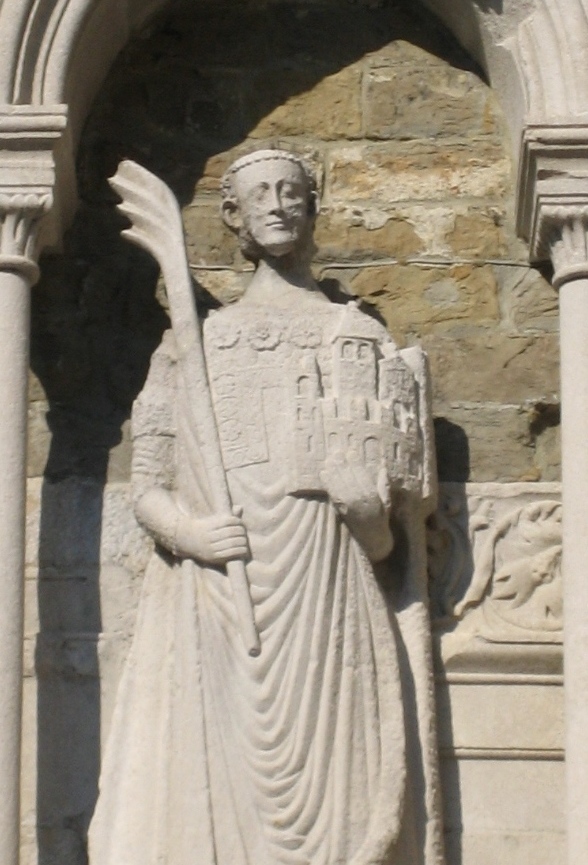
También se celebran el 2 de noviembre
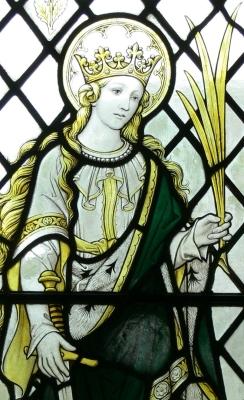
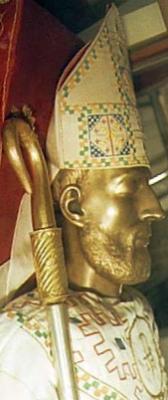
¿Conoces una gracia o milagro atribuido a Saint Giusto?
Reportar una Gracia o Milagro