Santo
Saint Gregorio Giovanni Gasparo
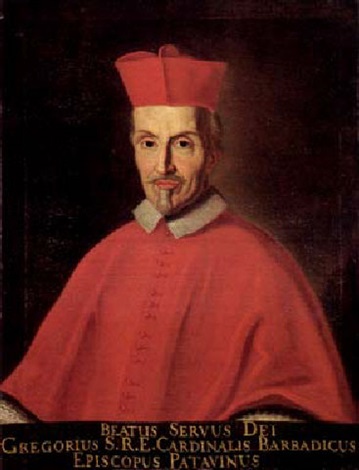
In the storied history of the Diocese of Padua, few shepherds left a mark as enduring as that of Bishop Gregorio Giovanni Gasparo.
Biografía
Esta biografía está disponible actualmente solo en inglés.
In the storied history of the Diocese of Padua, few shepherds left a mark as enduring as that of Bishop Gregorio Giovanni Gasparo. While the chronicles of his early life remain shrouded in the mists of time, his tenure as a bishop is defined by a profound commitment to the structural and spiritual renewal of his flock. He stands out not for legendary miracles or dramatic martyrdoms, but for the quiet, steadfast work of building institutions that would sustain the faith for generations.
His most significant contribution to the Church was the establishment of a seminary for clerics. In an era where the quality of pastoral leadership was paramount, this act signaled a deep concern for the formation of the clergy.
By founding this house of study, he ensured that future priests would be equipped not only with theological knowledge but also with the spiritual discipline required to guide the faithful. This initiative reflects a broader movement within the Church to prioritize education and sanctity among its ministers, ensuring that the sacraments were administered by men prepared to serve with competence and holiness. The creation of such an institution required significant resources and administrative skill, marking him as a leader of vision who looked beyond his own tenure to the future of the diocese.
Beyond the walls of the seminary, Bishop Gasparo’s pastoral heart extended to the youngest members of his community. He took it upon himself to teach catechism to children, a task that required patience and a genuine love for the local populace. Uniquely, he did not insist solely on Latin or formal theological language; instead, he taught the children in their own dialect. This choice was revolutionary in its accessibility, breaking down barriers between the bishop and his people. It demonstrated a belief that the truths of the faith were not reserved for the educated elite but were meant to be understood by every soul, regardless of their linguistic background. By speaking the language of the home and the street, he made the doctrines of the Church tangible and alive for the next generation.
Historical records regarding his birth and death are sparse, and much of his personal biography is lost to the passage of centuries. Tradition honors him with a specific celebration, acknowledging the fruits of his labor, though the precise dates of his life are often approximated or unknown to modern historians. However, the legacy of his episcopacy remains visible in the traditions of the Paduan Church. The seminary he founded likely served as a model for future educational efforts, while his method of catechesis set a precedent for engaging the laity in their own vernacular. He is remembered as a man of action, whose life was dedicated to the practicalities of faith: training leaders and nurturing children.
The liturgical calendar honors him with a celebration of his life and works, acknowledging the fruits of his labor. In the silence of the archives, where specific dates of his birth and death are often approximated or unknown, his name is invoked with reverence. He serves as a reminder that sanctity is often found in the steady, unglamorous work of building up the Body of Christ. For the faithful of Padua, he remains a patron of clerical formation and a teacher of the faith, a bishop who understood that the strength of the Church lies in the education of its priests and the catechesis of its children.
También se celebran el 18 de junio
¿Conoces una gracia o milagro atribuido a Saint Gregorio Giovanni Gasparo?
Reportar una Gracia o Milagro