Santo
Saint Hedwig of Poland
The story of a queen whose life bridged two great nations begins not in the royal courts of a single realm, but in the vibrant heritage of Hungary.
Biografía
Esta biografía está disponible actualmente solo en inglés.
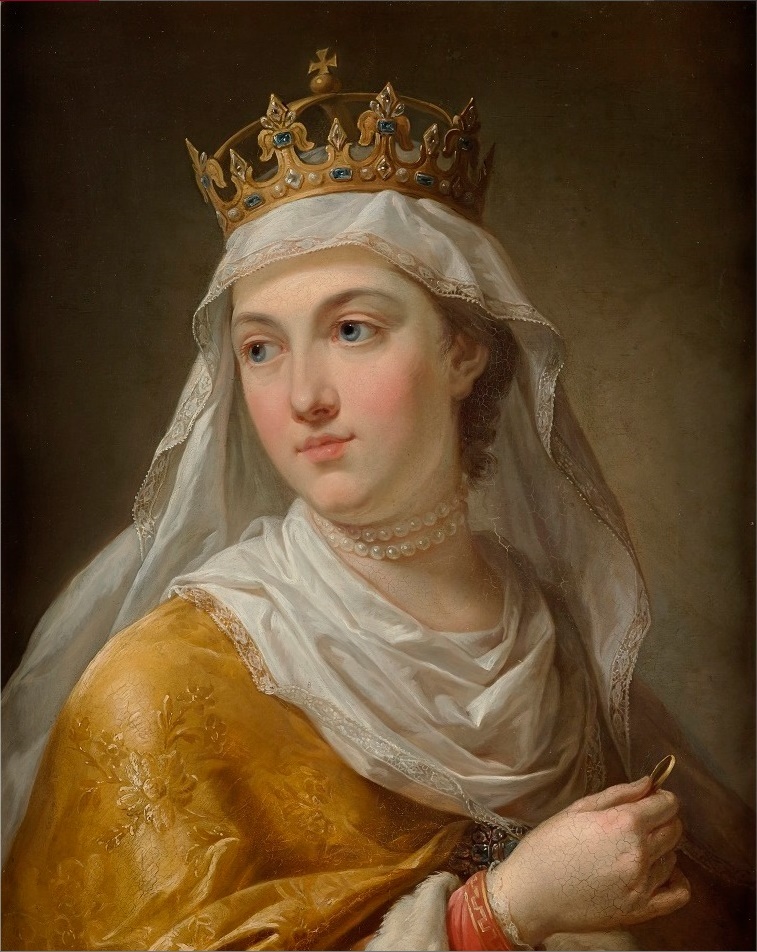
The story of a queen whose life bridged two great nations begins not in the royal courts of a single realm, but in the vibrant heritage of Hungary. Born into a lineage of significant influence, she carried with her the promise of political and spiritual union that would reshape the map of Central Europe. Her journey to the throne was one of destiny, as she received the kingdom of Poland, taking her place as a sovereign ruler at Krakow. This acquisition of the Polish crown marked a pivotal moment in history, elevating her from a princess of one land to the monarch of another, a transition that underscored her remarkable standing in the medieval world.
Her reign was defined by a union that transcended mere diplomatic alliance. By marrying the Lithuanian grand duke Jaghelon, she forged a connection between Poland and Lithuania that would prove enduring and transformative.
This marriage was not simply a personal union of two individuals but a strategic and spiritual consolidation of power that brought the pagan lands of the north into the orbit of Christian Europe. The location of her rule, Krakow, stood as the heart of this new political reality, serving as the seat from which she governed her people and navigated the complexities of her dual heritage.
While the specific details of her daily conduct and charitable works are not fully preserved in the available records, the magnitude of her position speaks to a life of profound responsibility. As a queen, she held the authority of a sovereign, yet her legacy is inextricably linked to the unification of her husband's people with the Polish crown. The marriage to Jaghelon signaled a turning point, suggesting a life dedicated to peace and the integration of diverse cultures under a shared faith. The historical context of this era was one of shifting borders and rising powers, where royal marriages were the primary instruments of stability. Her role in this context was central, anchoring the stability of the region through her presence and her union.
The brevity of the historical account regarding her specific deeds does not diminish the weight of her status. To be a queen born in Hungary who received the kingdom of Poland and united it with Lithuania is a distinction that alone sets her apart in the annals of the faithful. The narrative of her life, as it is known, focuses on these monumental achievements rather than the minutiae of her private piety. Yet, in the Catholic tradition, such public service and the stewardship of a kingdom are often viewed as the outward expression of inward grace. The fact that she is venerated as a saint suggests that her life, even if only partially documented, was lived in a manner that reflected the virtues of the faith she professed.
Through her, the kingdom of Poland found a new direction, and the grand duchy of Lithuania found a path toward integration with Western Christendom. The legacy of this union continues to resonate, rooted in the actions of a woman who carried the burdens of two crowns. Though the record is fragmentary, the outline of her life remains clear: a Hungarian princess who became a Polish queen, ruling from Krakow, and uniting her people through marriage to Jaghelon. In the quiet reverence of the church, she is remembered not for the specific acts of charity or the dates of her birth and death, but for the enduring impact of her reign and the bridge she built between nations.
También se celebran el 17 de julio
¿Conoces una gracia o milagro atribuido a Saint Hedwig of Poland?
Reportar una Gracia o Milagro