Santo
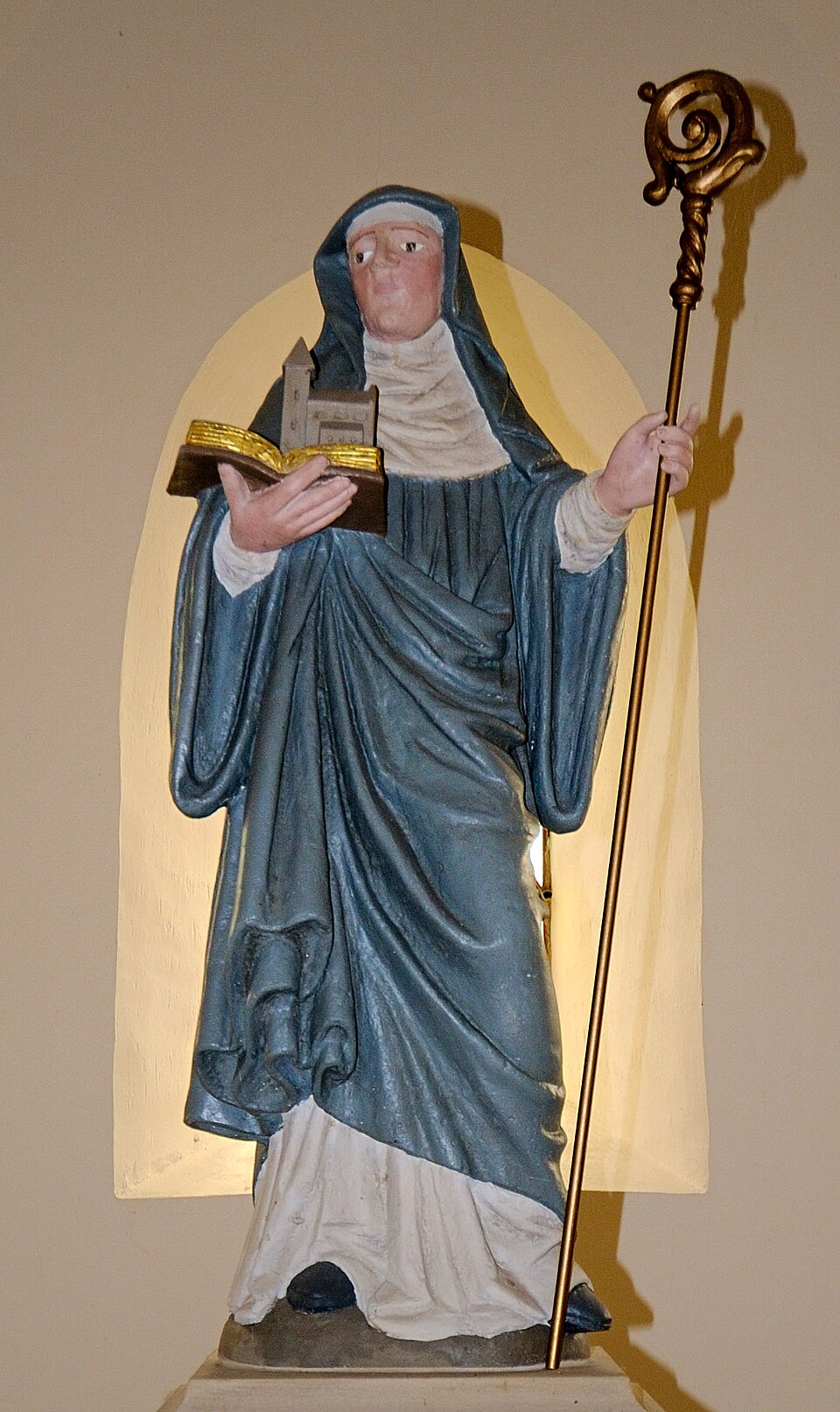
Saint Irmina
In the rugged landscape of early medieval Europe, amidst the shifting tides of the Frankish kingdoms, stood a figure of quiet but profound spiritual authority.
Biografía
Esta biografía está disponible actualmente solo en inglés.
In the rugged landscape of early medieval Europe, amidst the shifting tides of the Frankish kingdoms, stood a figure of quiet but profound spiritual authority. She was a woman of substance and faith, recognized not merely by the nobility of her lineage, but by the solemnity of her vocation. As a matron consecrated to God, she dedicated her life to the service of the Church, rising to the challenging role of abbess within the monastic community of Öhren. This monastery, situated near the ancient city of Trier in the region of Austrasia, served as a beacon of Christian life during a time when the faith was still taking deep root in the Germanic territories.
The historical setting of her life is defined by the vibrant ecclesiastical culture of the late seventh and early eighth centuries. Trier, one of the oldest bishoprics in the German lands, provided a backdrop of ancient Christian
tradition against which new spiritual movements were emerging. Within this landscape, the monastery of Öhren became a center of religious observance under her guidance. As an abbess, she would have overseen the spiritual and temporal affairs of the community, ensuring that the rule of the order was maintained and that the residents of the monastery remained steadfast in their devotion.
Her significance is further illuminated by her relationship with Saint Willibrord, a prominent figure in the evangelization of the Frisians and the surrounding regions. While the specific details of their interactions are often lost to the mists of time, the historical record preserves the memory of her generosity toward him. As a matron consecrated to God, she possessed the capacity to support the broader mission of the Church through material means. She donated to Saint Willibrord, contributing resources that would have been vital to the work of a missionary bishop engaged in the arduous task of spreading the Gospel. This act of charity underscores her active role in the wider Church, extending her influence beyond the cloister walls to support the expansion of the faith in Austrasia.
It must be acknowledged that the historical record regarding her life is fragmentary. Much of the detail surrounding her personal history, including her exact birth date and the specifics of her family, remains obscured by the passage of centuries. Historians rely on the sparse entries that survive, often piecing together her existence from charters and monastic lists rather than detailed biographies. Consequently, while the broad strokes of her life are known, the intimate nuances of her daily struggles and triumphs are not fully preserved. Yet, this scarcity of data does not diminish her legacy.
Tradition holds that her piety was matched by her practical wisdom in managing the affairs of the monastery. In an era where women of noble birth often found a voice through religious life, she exemplified the power of the consecrated matron. Her donation to Saint Willibrord stands as a testament to her belief in the mission of the Church, prioritizing the spiritual needs of the faithful over personal accumulation.
Today, Saint Irmina is remembered as a pillar of the church in Trier. Her legacy is one of stability and generosity, anchored in the soil of Austrasia. Though the archives may be silent on the specifics of her early years, the enduring memory of her work at Öhren and her support of the missionary cause ensures that she is not forgotten. She remains a symbol of the quiet strength of the female monastic leadership that sustained the Church during the early Middle Ages, a matron whose consecrated life left an indelible mark on the spiritual geography of Germany.
También se celebran el 24 de diciembre
¿Conoces una gracia o milagro atribuido a Saint Irmina?
Reportar una Gracia o Milagro