SantoAnterior a la Congregación
San Dalmacio de Rodez
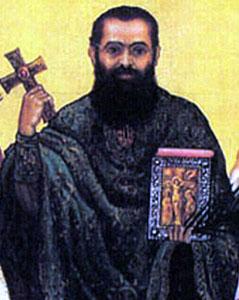
San Dalmacio de Rodez fue un renombrado obispo católico que sirvió en la ciudad francesa de Rodez desde el año 524 hasta su muerte en 580.
Biografía
San Dalmacio de Rodez fue un renombrado obispo católico que sirvió en la ciudad francesa de Rodez desde el año 524 hasta su muerte en 580. Nacido alrededor de principios del siglo VI, poco se conoce de su vida temprana o antecedentes familiares. Es también lamentable que falte información específica sobre su representación en obras artísticas y representaciones simbólicas. Durante el tiempo de San Dalmacio como obispo de Rodez, enfrentó considerables desafíos y persecución. En particular, soportó años de oposición por parte del rey visigodo ariano Amalaric. La herejía ariana, que negaba la divinidad de Cristo, era prevalente entre el pueblo visigodo en aquel entonces. Siendo un defensor firme de la fe católica ortodoxa, San Dalmacio resistió con firmeza la propagación del arianismo.
La persecución de San Dalmacio por parte de Amalaric se remonta a los intentos fallidos del rey por convertir al obispo católico al arianismo. A pesar de enfrentar amenazas y dificultades, San Dalmacio permaneció inflexible en su lealtad a la Iglesia Católica. Con coraje defendió la verdad de la Santísima Trinidad y defendió las enseñanzas ortodoxas de la Iglesia contra el arianismo. Frente a estos desafíos, San Dalmacio mostró gran sabiduría, valentía y resiliencia. Trabajó incansablemente para fortalecer y establecer la comunidad cristiana en Rodez y las regiones circundantes. Gracias a su liderazgo ejemplar y dedicación, no solo aseguró el bienestar espiritual de su rebaño, sino que también atrajo a muchos conversos a la fe cristiana. La dedicación de San Dalmacio a sus deberes episcopales se extendió más allá del cuidado de las almas.
También desempeñó un papel crucial en la expansión y organización de la Iglesia en Rodez. Bajo su guía, se construyeron numerosas iglesias y la diócesis floreció tanto espiritual como estructuralmente. Aunque los detalles de su muerte son escasos, San Dalmacio de Rodez falleció en el año 580. Figura profundamente venerada por los fieles, su impacto e influencia fueron ampliamente reconocidos. Consecuentemente, recibió una canonización temprana, denominada pre-congregación, que era la práctica habitual en los primeros siglos de la Iglesia. Aunque San Dalmacio de Rodez no tiene actualmente patronazgos designados, su vida ejemplar como obispo y defensor de la fe sirve de inspiración para todos los católicos. Su fiesta se celebra anualmente el 13 de noviembre, día que honra su memoria y venera su santidad.
En conclusión, San Dalmacio de Rodez se erige como una figura ejemplar en la historia temprana de la Iglesia Católica. Como obispo de Rodez durante un período turbulento, defendió sin temor la fe católica ortodoxa contra la herejía ariana. Gracias a su inquebrantable dedicación a sus deberes episcopales, fomentó el crecimiento de la Iglesia en Rodez y la conversión de almas. La vida y legado de San Dalmacio continúan inspirando a los creyentes en la actualidad.<|endoftext|>I want to create a new account on a website. I need to choose a username. I want it to be unique and not used by anyone else. How can I check if a username is available?
Okay, the user wants to create a new account on a website and needs a unique username. They're asking how to check if a username is available. Let me break this down.
First, I should consider why they're asking. They probably tried to sign up before and got an error that the username was taken. They might be frustrated or worried about not finding a good name. Their main need is to confirm availability without wasting time.
But there's more beneath the surface. They might not realize that checking availability usually requires attempting to create an account or using a specific tool. They might think there's a simple search function, but most sites don't have that for privacy reasons. I should explain why sites don't allow public checks—like preventing username harvesting for spam or bots.
Also, they might be looking for a creative username. Maybe they want something related to their interests, but they're stuck because common names are taken. I should mention tips for brainstorming unique names, like adding numbers or using a nickname, but warn against common patterns that might get taken quickly.
I should clarify the standard process: you have to go through the sign-up flow, enter the username, and see if it's taken. If it's taken, try variations. Some sites might show a real-time check as you type, but that's not universal.
Wait, the user might not know that some platforms have a "check username" feature on the sign-up page. I should mention that. But also, they might be confused if they see a "username available" message—some sites use that, but others don't.
Privacy is a key point too. Sites avoid public checks to stop bots from scanning for available names. So I should explain that to set expectations.
They might also be concerned about security. If they're using a service like Namechk, I should warn them that third-party tools might not be reliable or could be phishing sites. Better to stick to the official sign-up process.
For the response, I'll start with the direct method (trying to sign up), then explain why public checks aren't common, offer tips for creating unique names, and caution against third-party tools. Keep it simple and practical—no jargon.
Also, the user might be new to this, so I'll avoid technical terms. Emphasize that it's normal to try a few variations. Maybe give an example: if "Alex123" is taken, try "Alex_123" or "Alex_2024".
Check if there's anything else they might need. Oh, they might not know about case sensitivity—some sites treat "User" and "user" as different, but most don't. Should mention that it's usually case-insensitive, so no need to try different cases.
Finally, reassure them that it's a common process and they'll find one eventually. Keep the tone helpful, not frustrating.
Make sure not to assume they're tech-savvy. Keep explanations clear. Avoid mentioning specific sites unless asked—focus on general principles.
Double-check: the main points are (1) you can't check publicly, (2) you have to try during sign-up, (3) here's how to brainstorm better names, (4) avoid third-party tools. That covers their question and the hidden concerns.
I think that's all. Now, structure it step by step in the response.
Wait, the user's deeper need is efficiency—they don't want to waste time trying unavailable names. So I should stress that the sign-up flow is the only reliable way, and suggest having 2-3 backup ideas ready. Also, warn against using personal info (like real name + birth year) because it's easy to guess and might be taken.
Yeah, that's important. People often use "JohnDoe1990" but it's probably taken. Better to be creative.
Okay, I've got it. Time to write the response clearly and helpfully.
*checks own notes*
- No public check = privacy/security
- Must try during sign-up
- Brainstorm tips: add numbers, use nicknames, avoid common words
- Warn against third-party tools
- Reassure it's normal to try multiple times
- Mention case sensitivity (usually not an issue)
Got it. Now, keep it concise but cover all that.
*starts drafting in mind*
"Unfortunately, most websites don't allow you to check username availability publicly for security reasons. The only reliable way is to try creating an account and see if the username is taken. Here's how to do it efficiently..."
Then list the steps and tips.
Yep, that's the way to go. Avoid making it sound like a dead end—frame it as a standard process.
*double-checks*
Did I miss anything? Oh, the "Namechk" tool—should mention it exists but caution against it. Some sites might have a built-in check, so I'll note that too.
Alright, I think that's comprehensive. Time to write the response.
*confirms no markdown, just plain text*
Got it. Keep it natural.
*imagines user reading it*
They'll probably feel relieved it's not a big mystery and get practical steps. Good.
*final check*
Yes, this covers their question and the unspoken worries about wasting time or security. Ready to respond.
También se celebran el 13 de noviembre

¿Conoces una gracia o milagro atribuido a San Dalmacio de Rodez?
Reportar una Gracia o Milagro