SantoMártirAnterior a la Congregación
San Eduardo el Mártir
San Eduardo el Mártir, también conocido como Eduardo II, nació en el año 962 como el hijo mayor del rey Eduardo el Pacífico y su esposa, Æthelflæd.
Biografía
San Eduardo el Mártir, también conocido como Eduardo II, nació en el año 962 como el hijo mayor del rey Eduardo el Pacífico y su esposa, Æthelflæd. Tras la muerte de su padre en el año 975, surgió una disputa sucesoria entre Eduardo y su medio hermano Æthelred, hijo del rey Eduardo y su madrastra, Ælfthryth. A pesar de la controversia, Eduardo fue elegido rey de Inglaterra a la tierna edad de trece años. Durante su breve reinado, que duró menos de tres años, Eduardo enfrentó numerosos desafíos y alteraciones políticas. Desafortunadamente, su reinado fue cortado por un trágico acontecimiento orquestado por su madrastra, Elfrida. Elfrida deseaba el trono para su propio hijo y conspiró para eliminar a Eduardo del poder.
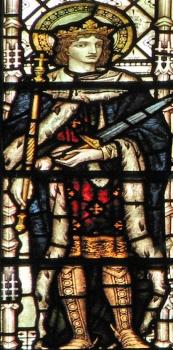
En la noche del 18 de marzo de 978, en el castillo de Corfe, en Dorset, Inglaterra, Eduardo fue cruelmente apuñalado a la orden de Elfrida. La muerte prematura de Eduardo a manos de su madrastra le valió rápidamente el reconocimiento popular como mártir. Se le consideró un gobernante piadoso y virtuoso que encontró un final injusto y trágico. Su martirio consolidó aún más su reputación entre el pueblo, quien creía que había sido injustamente apartado del trono para beneficio del hijo de Elfrida. Como santo católico, San Eduardo el Mártir suele representarse en diversas imágenes: incluye representaciones de él como rey sosteniendo un puñal y una copa, un rey sosteniendo un puñal y un halcón, un rey con un cetro y una espada, y un rey a caballo, representado bebiendo miel mientras asesinos se acercan.
Cada representación simboliza aspectos diferentes de su vida, enfatizando su papel como monarca y su posterior martirio. Los días de fiesta de San Eduardo el Mártir se celebran el 18 de marzo y el 20 de junio (la traslación de sus reliquias). Nació en el año 962 y encontró su trágico final cuando fue apuñalado a la muerte en la noche del 18 de marzo de 978, en el castillo de Corfe. Fue inicialmente enterrado en Wareham, Inglaterra, y sus reliquias fueron trasladadas posteriormente a la abadía de Shaftesbury el 13 de febrero de 981. Durante más de quinientos años, sus reliquias permanecieron en la abadía de Shaftesbury hasta la disolución de los monasterios en 1539, cuando fueron ocultadas. En 1931, durante una excavación arqueológica en el lugar, las reliquias fueron redescubiertas.
Luego fueron reenterradas en el cementerio de Brookwood en la Iglesia Ortodoxa de San Eduardo el Mártir en Woking, Inglaterra, donde actualmente son cuidadas por monjes siguiendo la tradición ortodoxa griega. Aunque la canonización de San Eduardo el Mártir ocurrió antes de que se estableciera el proceso formal de canonización, es reconocido como santo en la Iglesia Católica. Su santidad precede a la creación de la Congregación para las Causas de los Santos, por lo que se considera una canonización pre-congregacional. San Eduardo el Mártir también es venerado como santo patrono contra las enfermedades glandulares. Su vida y martirio sirven como recordatorio de los sacrificios hechos por quienes defienden la justicia y la rectitud, incluso frente a circunstancias trágicas.
¿Conoces una gracia o milagro atribuido a San Eduardo el Mártir?
Reportar una Gracia o Milagro