SantoAnterior a la Congregación
San Killian
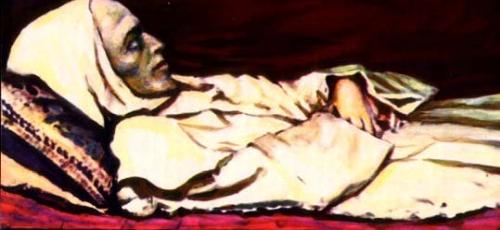
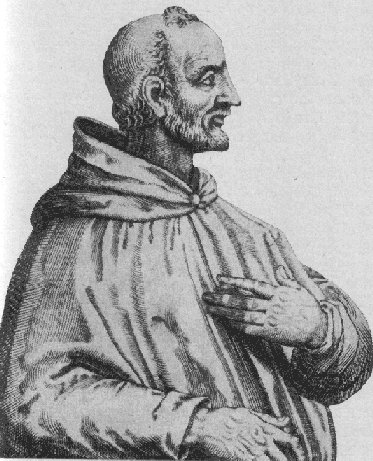
Saint Killian, also known as Saint Kilian, was born in the year 640 in Mullagh, County Cavan, Ireland.
Biografía
Esta biografía está disponible actualmente solo en inglés.
Saint Killian, also known as Saint Kilian, was born in the year 640 in Mullagh, County Cavan, Ireland. He hailed from Irish nobility and devoted his life to serving God and spreading Christianity. Killian became a monk at the Monastery of Hy, where he may have also served as an abbot.
During his time as a monk, Killian felt a deep calling to be a missionary and embarked on a journey to evangelize pagan lands. Along with eleven companions, he traveled through Gaul to Würzburg, Germany. The people of Würzburg, being pagans at the time, became Kilian's focus for conversion.
In 686, Killian went on a pilgrimage to Rome, Italy, where he sought papal authority for his mission. Pope Conon, recognizing Kilian's dedication and passion, ordained him as a missionary bishop. With the blessings and authority from Rome, Killian returned to Würzburg in 687, accompanied by Saint Colman and Saint Totnan.
Together, they began evangelizing the regions of East Franconia and East Thuringia, which are now modern-day Bavaria, Germany. Their efforts proved successful, as they converted Duke Gozbert and a significant portion of Gozbert's subjects.
However, their mission encountered significant opposition when Killian revealed that Duke Gozbert's marriage to Geilana, his brother's widow, was unlawful according to Christian teachings. This revelation caused Geilana to harbor a deep animosity towards Killian and his companions.
Tragedy struck when Geilana plotted against the saint, resulting in the murder of Killian, Colman, and Totnan. Their bodies, along with sacred vessels, vestments, and holy writings, were buried at the crime scene.
Geilana, in an attempt to conceal her guilt, denied knowing the location of the missionaries' remains when the Duke returned to her. However, the actual murderer eventually confessed his crime and met a miserable demise. Geilana herself suffered from insanity before her death.
Although Killian's good work did not have a long-lasting impact in his lifetime, his influence persisted. When Saint Boniface arrived in Thuringia, he discovered evidence of Killian's earlier presence.
The relics of the martyrs, celebrated for miraculous cures attributed to them, were eventually transferred to the Church of Our Lady in 743 by Saint Burchard, the first bishop of Würzburg. After gaining permission from Pope Zachary, the relics were solemnly transferred to the newly constructed Cathedral of the Saviour, possibly on July 8, 752.
The relics were later buried in Saint Killian's vault in the new cathedral, believed to be the spot of their martyrdom. To this day, his bejeweled skull is preserved and processed on his feast day.
Additionally, Killian's copy of the New Testament was safeguarded in Würzburg Cathedral until 1803 and has since been held in the university library.
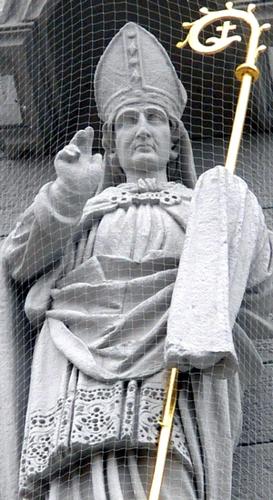
Saint Killian is now venerated as the patron saint against rheumatism. He is also honored in Bavaria, Germany, the Archdiocese of Paderborn, Germany, and the Diocese of Würzburg. His representation often depicts him as a bishop being murdered alongside two priests, holding a crozier and sword, or standing between two priests. Despite not being officially canonized, he is widely recognized as a revered saint.
También se celebran el 8 de julio
¿Conoces una gracia o milagro atribuido a San Killian?
Reportar una Gracia o Milagro