SaintMartyr
Saint Ambrose Edward Barlow
Saint Ambrose Edward Barlow, also known as Ambrose Brereton, Ambrose Radcliffe, and Edward Ambrose Barlow, was born in Barlow Hall, England in 1585.
Biography
Saint Ambrose Edward Barlow, also known as Ambrose Brereton, Ambrose Radcliffe, and Edward Ambrose Barlow, was born in Barlow Hall, England in 1585. He was the fourth son of Sir Alexander Barlow and Mary Brereton. Baptized Catholic on 30 November 1585, he was initially raised as a Protestant. However, as he grew older, he felt a strong pull towards his Catholic faith and eventually returned to Catholicism. Ambrose received his education at the College of Saint Gregory in Douai, France, where he studied theology. Later, he continued his studies at the Royal College of Saint Alban in Valladolid, Spain. It was during this time that he deepened his understanding of the Catholic faith and felt a calling to serve as a priest.
In 1616, Ambrose joined the Benedictine Order and was ordained as a priest in 1617 in Douai. Following his ordination, he returned to England to minister to covert Catholics in south Lancashire. Despite the risks involved, Ambrose was very open about his work, which led to his arrest on multiple occasions. On 25 April 1631, after concluding Easter Sunday Mass at Morley Hall near Manchester, England, Ambrose was arrested by an armed mob led by the local Anglican vicar. His crime was simply being a priest, and he freely admitted to it. He was subsequently charged and imprisoned. Ambrose's dedication to his faith and his bravery in openly practicing Catholicism made him one of the Forty Martyrs of England and Wales.
He faced persecution for his beliefs, yet he remained steadfast in his commitment to the Catholic Church. Finally, on Friday 10 September 1641, Ambrose was hanged, drawn, and quartered at Lancaster, Lancashire, England. His remains were scattered, but a relic of his skull is preserved at Wardley Hall, often referred to as the House of the Skull. Furthermore, his hand is also preserved at Stanbrook Abbey in Worcester, England. In recognition of his martyrdom, Ambrose Edward Barlow was venerated on 8 December 1929 by Pope Pius XI, who issued a decree of martyrdom. Later, on 15 December 1929, Pope Pius XI beatified him. Finally, on 25 October 1970, Pope Paul VI canonized Saint Ambrose Edward Barlow. Though there is no specific depiction or representation associated with Saint Ambrose, his memory lives on through his sacrifice and devotion to the Catholic faith.
His feast days are celebrated on 10 September and 25 October as one of the Forty Martyrs of England and Wales, and on 29 October as one of the Martyrs of Douai. While Saint Ambrose Edward Barlow does not have a designated patronage, he serves as an inspiration for all who face adversity and persecution for their faith.
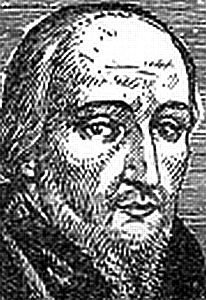
Image: Public domain via Wikimedia Commons (Saint-ambrose-edward-barlow.jpg)
Know of a grace or miracle attributed to Saint Ambrose Edward Barlow?
Report a Grace or Miracle