SaintPre-Congregation
Saint Firminus of Amiens
Saint Firminus of Amiens, also known as Saint Farmin or Firmin of Pamplona, was born around the year 272 in Pamplona, Spain.
Biography
Saint Firminus of Amiens, also known as Saint Farmin or Firmin of Pamplona, was born around the year 272 in Pamplona, Spain. He was the son of a Roman senator and grew up in a privileged environment. However, his life took a profound turn when he encountered the teachings of Christianity and was converted to the faith by Saint Saturninus. After his conversion, Firminus was ordained by Saint Honestus in Toulouse, France, and went on to serve as a missionary in various parts of France. At the young age of 24, he was appointed as the first bishop of Amiens, a significant city in northern France. Firminus devoted himself to spreading the Gospel and nurturing the growing Christian community in the region.
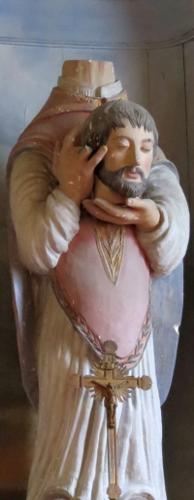
During his time as bishop, Firminus faced persecution and widespread hostility towards Christians. Despite the dangers, he fearlessly continued his mission, sharing the message of Christ and baptizing new believers. Firminus was known for his unwavering faith and commitment to the spiritual well-being of his flock. Tragically, Firminus met a martyr's death at the age of 31. On September 25, 303, he was beheaded in Amiens, France, for refusing to renounce his faith. The story of his execution and subsequent miracles associated with his relics have become legendary. After his martyrdom, the location of Firminus' burial site was lost for many centuries. It was not until Saint Salvius of Amiens rediscovered the relics that their significance was recognized. The relics were enshrined in Amiens, and during the procession to their final resting place, numerous miraculous events were said to have occurred.
The sick were reportedly healed, and even dormant trees burst into full leaf, defying the winter season. Some of his relics were also translated to Pamplona, Spain, in 1196, further establishing his presence in his birthplace. In recognition of his faith, courage, and selflessness, Saint Firminus of Amiens was canonized as a saint. While his canonization took place before the formal process was established, he is considered an honored saint of the Catholic Church. Saint Firminus is venerated as the patron saint of barrel makers and coopers, symbolizing his association with crafts that involve wood. He is also revered as a spiritual protector in France, where Amiens and its diocese hold him in great esteem. Similarly, in Spain, he is remembered and celebrated in places like Lesaka, Navarre, and Pamplona, where he was born. The life and martyrdom of Saint Firminus of Amiens serve as an inspiring example of true devotion and sacrifice for the Christian faith. His unwavering commitment to spreading the Gospel and caring for his community remain an enduring testament to his enduring legacy.
Know of a grace or miracle attributed to Saint Firminus of Amiens?
Report a Grace or Miracle