Santo
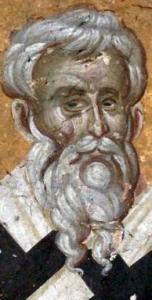
Saint Faustino de la Encarnación Míguez González
In the quiet resilience of Spanish religious life, one particular priest stands out not for a dramatic conversion or a singular miracle, but for the enduring institution he nurtured within the heart of the Iberian…
Biografía
Esta biografía está disponible actualmente solo en inglés.
In the quiet resilience of Spanish religious life, one particular priest stands out not for a dramatic conversion or a singular miracle, but for the enduring institution he nurtured within the heart of the Iberian peninsula. His legacy is anchored in the founding of the Calasanctian Institute of the Daughters of the Divine Shepherdess, a work that continues to define the spiritual and educational landscape of the region. This priest, a member of the Piarist order, dedicated his life to the service of the Church through the establishment of a community dedicated to a specific Marian devotion, ensuring that the charism of the Piarists would continue through the generations of women he guided.
The location of his foundational work holds particular significance. Situated at the city of Getafe near Madrid, the environment was one of growing urban and spiritual complexity. It was here that the
priest sought to establish a beacon of faith, embedding the institute within a community that required both pastoral care and educational support. The Piarist tradition, rooted in the teachings of St. Joseph Calasanz, placed a heavy emphasis on the education of youth and the piety of the faithful. By founding a female institute bearing the Calasanctian name, he extended this mission, creating a parallel path for religious women to engage in the same apostolic work of sanctification and instruction.
The specific designation of the order, the Daughters of the Divine Shepherdess, speaks to a deep Marian spirituality. This title suggests a focus on Mary as the guide and protector of souls, a role that would likely have shaped the daily prayers and spiritual exercises of the nuns under his care. The priest’s ability to attract and organize these women into a cohesive religious family demonstrates a profound understanding of the charism required to sustain such a community. It was a work of patience and vision, requiring the establishment of rules, the training of novices, and the securing of a place for the order to flourish within the broader ecclesiastical structure.
While the precise chronology of his early life and specific biographical details remain sparse in the available records, the impact of his ministry is undeniably clear. The recognition of his sanctity by the Church serves as the ultimate testament to the fruitfulness of his labor. In the context of Spanish hagiography, where the lives of many saints are preserved through detailed local chronicles, the recognition of this priest highlights the importance of foundational work. Often, the greatest saints are those who build the vessels in which holiness can be carried forward, rather than those who only walk the path themselves.
His work in Getafe near Madrid represents a bridge between the historical Piarist mission and the specific needs of the faithful in the region. The institute he founded stands as a living monument to his dedication, ensuring that the name of the Divine Shepherdess is invoked and honored by those he left behind. Through this enduring legacy, the priest’s life is remembered not merely as a series of events, but as a continuous offering of spiritual support. The Church’s declaration of his sainthood confirms that his life was a true witness to the Gospel, validated by the lasting presence of the community he established.
Ultimately, the story of this priest is one of quiet fortitude and institutional faithfulness. In an era where the Church faced various challenges, he chose to build, to teach, and to nurture.
También se celebran el 8 de marzo
¿Conoces una gracia o milagro atribuido a Saint Faustino de la Encarnación Míguez González?
Reportar una Gracia o Milagro