Santo
Saint Jaoua
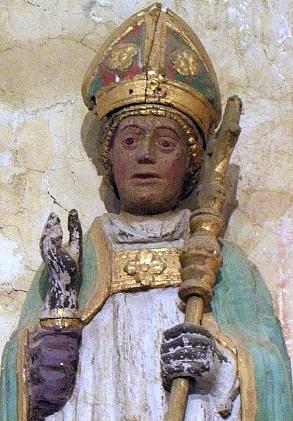
In the rugged coastal lands of ancient Armorica, where the Atlantic wind sweeps against the cliffs and the Celtic mist clings to the stone, a unique spiritual archetype emerged: the bishop who remained a hermit at heart.
Biografía
Esta biografía está disponible actualmente solo en inglés.
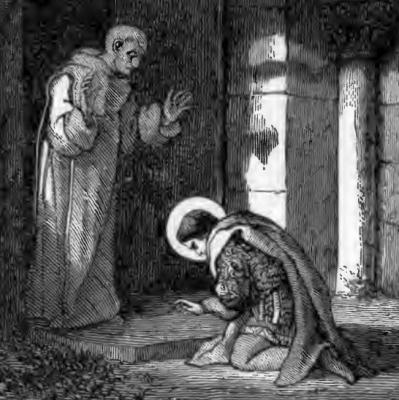
In the rugged coastal lands of ancient Armorica, where the Atlantic wind sweeps against the cliffs and the Celtic mist clings to the stone, a unique spiritual archetype emerged: the bishop who remained a hermit at heart. This was the life of Jaoua, a figure whose legacy is defined less by a catalog of miracles or martyrdoms and more by the profound transition from the silence of the desert to the responsibilities of the episcopate. In a period when the Church in Brittany was navigating its formative years, Jaoua stands as a testament to the enduring power of asceticism within the structures of ecclesiastical authority.
Historical records regarding the early Christianization of Brittany are often fragmentary, woven from oral tradition and the sparse chronicles of the Apostles of Brittany. Yet, within this tapestry, Jaoua is clearly positioned as a successor to Saint Paul of Léon, also
known as Paul Aurelian. Paul is traditionally regarded as one of the seven founding fathers of the Breton church, establishing the see at Léon in the northwestern tip of the peninsula during the fifth or sixth century. Following the death of the founder, the mantle of leadership fell to Jaoua, a man who had previously dedicated his life to the rigorous discipline of the hermit.
To understand Jaoua is to understand the tension inherent in his vocation. In the Celtic tradition of the time, the eremitic life was highly esteemed, viewed as the highest form of spiritual warfare. Yet, the needs of the fledgling diocese required shepherds capable of governance, administration, and pastoral care. Jaoua’s decision to accept the office of bishop suggests a rare synthesis of these two callings. He did not abandon the solitude he cherished, but rather carried the interior stillness of the hermit into the public sphere of the bishopric. This transition from the cell to the cathedral implies a deep humility; it suggests a man who sought the cross of leadership not for the sake of power, but as a necessary burden for the salvation of his flock.
The specific details of his tenure remain obscured by the mists of history. Unlike some of his contemporaries who are celebrated for specific acts of charity or dramatic conversions, the record of Jaoua is silent on the particulars of his daily governance. This absence of detail, however, does not diminish his significance. In the hagiographic tradition, silence can sometimes speak louder than the written word, indicating a life so fully integrated into the divine will that specific deeds became secondary to the state of his soul. The fact that he is remembered as a bishop of Saint-Pol-de-Léon confirms his acceptance of the apostolic succession and his role in maintaining the continuity of the faith in the region.
The See of Léon, under his care, would have been a focal point of resistance against the pagan influences still lingering in the countryside, as well as a center for the consolidation of Christian identity among the Breton people. Jaoua’s hermitic background would have provided him with a spiritual depth that likely influenced the monastic character of the diocese he oversaw. It is traditionally understood that the early bishops of Brittany were often monks first, ruling their communities with a blend of monastic rule and episcopal authority. Jaoua embodied this dual identity, serving as a bridge between the solitary pursuit of holiness and the communal duty of the Church.
He is not merely a name on a list of prelates but a symbol of the quiet strength required to lead a people. In the annals of the Catholic Church, where many saints are defined by the extraordinary, Jaoua is defined by the continuity he maintained. He succeeded the great Paul, ensuring that the light kindled in Léon was not extinguished, even as the world around him shifted. His life serves as a reminder that sanctity is not always loud; sometimes, it is found in the quiet acceptance of a heavy burden, carried by a man who loved the silence of God enough to speak for Him in the noise of the world.
También se celebran el 1 de julio
¿Conoces una gracia o milagro atribuido a Saint Jaoua?
Reportar una Gracia o Milagro