SaintMartyr
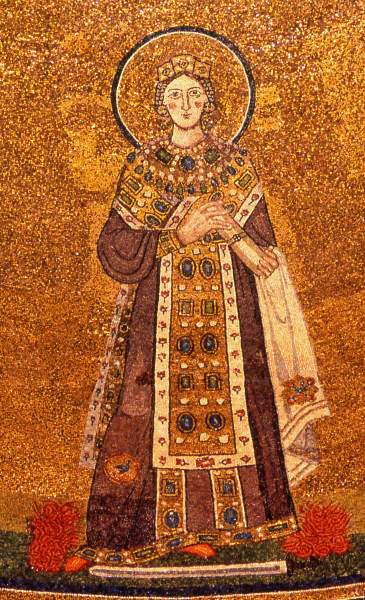
Saint Agnes
In the heart of the Eternal City, amidst the grandeur and the peril of the ancient Roman world, a young girl offered a witness that would echo through the ages.
Biography
In the heart of the Eternal City, amidst the grandeur and the peril of the ancient Roman world, a young girl offered a witness that would echo through the ages. This was the story of Saint Agnes, whose life was cut short in her youth yet whose spiritual maturity shone with a brilliance that outshone the emperors of her time. While the precise chronology of her birth remains shrouded in the mists of antiquity, tradition holds that she was a girl of tender years when she was called to this supreme sacrifice. Her story is not merely one of death, but of a deliberate consecration of the body and soul to Christ, making her a beacon of purity in a city known for its excesses.
Agnes resided in Rome, a place where the demands of the state often clashed with the demands of conscience. During the era of persecution, when the Christian faith was viewed as a subversive threat to the social order,
she stood firm. The brief accounts of her life highlight that she was a virgin and a martyr, two titles that define the totality of her offering. To be a virgin in this context was not simply a physical state but a spiritual commitment; she had consecrated her chastity to God. This vow became the focal point of her trial. When the authorities sought to break her resolve, they targeted her purity, intending to force her into a union that would violate her sacred dedication.
Her testimony was described as supreme. This indicates that her faith was not passive but active and courageous. She did not waver in the face of the threat. The narrative suggests that she gave Rome a lesson in faith that the city could not ignore. While historical records from the period are often fragmentary, the tradition surrounding her life tells of a confrontation where her resolve was tested. She refused to renounce her belief or to submit to the demands that would compromise her spiritual integrity. The "supreme testimony" implies a level of conviction that transcended fear, proving that her loyalty belonged to a higher power than the imperial court.
The culmination of her witness was her martyrdom. The brief notes that she consecrated the fame of her chastity with her martyrdom, linking her physical purity directly to her sacrifice. In the traditional accounts, this sacrifice is depicted as the ultimate seal of her faith. Though the specific details of her passion vary in legend, the core truth remains: she died rather than betray her vows. This act of martyrdom was the final act of her consecration, a moment where the witness of her life was completed in blood.
Her legacy is preserved in the liturgical memory of the Church. Her memorial is celebrated with reverence, acknowledging her as a model of virtue for all ages. The symbolism associated with her life, often represented by the lamb, underscores her gentleness and her role as a sacrifice offered willingly. She remains a testament to the power of youth, demonstrating that the strength of faith is not measured by the length of one's years but by the depth of one's commitment. In the annals of the saints, she stands as a luminous figure who, while still a girl, gave the city of Rome a gift that the world has never forgotten: the supreme testimony of faith and the enduring fame of a chastity consecrated to God.
Also remembered on January 21




Know of a grace or miracle attributed to Saint Agnes?
Report a Grace or Miracle