Saint
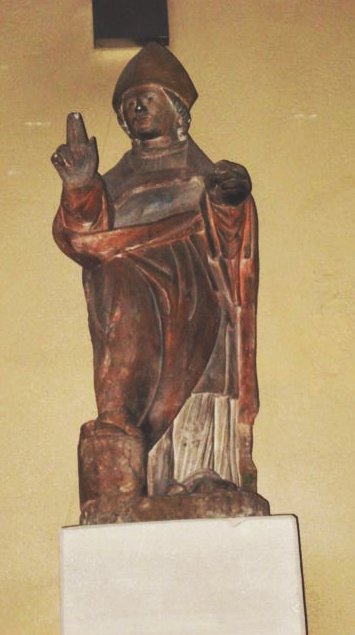
Saint Albin
In the ancient and storied city of Lyons, a beacon of early Christianity in Gaul, a quiet but steadfast leader emerged to guide the flock.
Biography
In the ancient and storied city of Lyons, a beacon of early Christianity in Gaul, a quiet but steadfast leader emerged to guide the flock. The city itself, Lugdunum, was a crucible of faith where the blood of martyrs had long since watered the soil of conversion. Into this environment stepped a shepherd who would bear the heavy mantle of apostolic succession. His name was Albin, and his tenure marked a crucial link in the continuity of the Church in this vital French metropolis.
The historical record places him specifically as the successor to Saint Justus. In the early centuries of the Church, the transfer of leadership was not merely administrative but spiritual, ensuring the continuity of doctrine and discipline. To succeed a saint was to assume a burden of responsibility that required both humility and fortitude.
The fact that he succeeded Justus places him within a specific lineage of bishops who guarded the orthodoxy of the region. Lyons was not a minor outpost; it was a metropolis of the Roman province of Lugdunensis. As a bishop there, he would have presided over a community facing the complexities of integrating Roman civic life with Christian witness. The precise dates of his episcopate remain obscured by the mists of antiquity, a common fate for many shepherds of that era. Yet, his presence is recorded in the catalogues of the See, affirming his role in the unbroken chain of leadership that connected the local church to the broader universal body.
It is crucial to acknowledge that the historical record offers little beyond this succession. No specific miracles, homilies, or acts of charity are attributed to him in surviving texts. In the absence of detailed hagiography, one must look to the significance of the office itself. To be chosen as the successor to a saint is to be recognized as a vessel of grace and stability. He stood as a pillar during a time when the Church in Gaul was consolidating its structures against external pressures and internal challenges. The silence of the archives regarding his specific deeds does not diminish his sanctity; rather, it highlights the nature of early episcopal service, where the daily work of administration and pastoral care often leaves no written trace.
The faithful of Lyons venerated him not for sensational deeds but for the faithful stewardship of the pastoral care entrusted to him. In the liturgical calendar, he is commemorated as a guardian of the faith. He represents the countless bishops of the early centuries whose names have been preserved only through the lists of succession, yet whose spiritual labor sustained the Church. This silence of the sources invites the faithful to contemplate the weight of the episcopal office in an age where the very existence of Christian communities was often precarious.
Today, his feast day serves as a testament to the endurance of the Church in France. Though the details of his daily life are lost to time, the fact of his episcopacy remains a historical anchor. He is remembered as the one who took up the staff after Justus, ensuring that the light of the Gospel continued to shine in the Rhône valley. His legacy is one of fidelity, a silent but powerful witness to the truth that the work of the bishop is ultimately one of service and continuity. In the vast tapestry of the Church's history, Albin stands as a testament to the unbroken line of shepherds who, through the centuries, ensured that the faith remained intact for those who followed.
Also remembered on September 15
Know of a grace or miracle attributed to Saint Albin?
Report a Grace or Miracle