Saint
Saint Andéol
In the quiet valleys of southern Gaul, where the first sparks of the Gospel ignited amidst the Roman provinces, a witness emerged whose name has endured despite the silence of the ages.
Biography
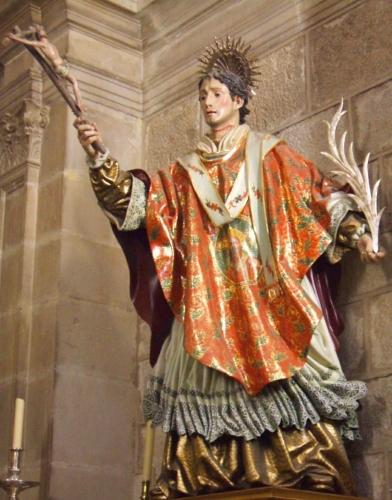
In the quiet valleys of southern Gaul, where the first sparks of the Gospel ignited amidst the Roman provinces, a witness emerged whose name has endured despite the silence of the ages. Saint Andéol remains a figure of profound mystery, known primarily through the enduring memory of the Church in the territory of Viviers. He stands as a beacon of the early faith in France, a martyr whose life was ultimately sealed in blood, though the specific contours of his earthly journey remain obscured by the mists of history.
The region of Viviers, situated within the modern boundaries of France, was one of the earliest dioceses established in the West. During the centuries when the Christian community was navigating the perilous landscape of the Roman Empire, local leaders and faithful alike faced the constant threat of imperial persecution.
It is within this volatile environment that Andéol lived his life and offered his sacrifice. While the precise chronology of his existence is lost to time, the designation of martyr places him firmly within the tradition of the earliest witnesses to Christ. To bear this title is to acknowledge that he did not merely preach the faith but embodied it to the point of death.
Historical records from the era of the early Church are notoriously sparse, particularly regarding figures who were not bishops or popes. Andéol’s story reflects the reality of the countless local confessors and martyrs who sustained the Church in Gaul without leaving written memoirs. The survival of his name suggests a strong local tradition of veneration. The city of Viviers, which grew into a significant ecclesiastical center, preserved his memory, indicating that his witness was integral to the spiritual identity of the region. In the liturgical calendar and the collective memory of the faithful, he is remembered not for a specific deed of heroism recorded in text, but for the ultimate fidelity of his soul.
Tradition regarding such early saints often carries the weight of communal reverence rather than documentary evidence. For Andéol, the historical data is limited to the fact of his martyrdom and his association with Viviers. Yet, in the hagiographical tradition, such limitations do not diminish the sanctity of the individual. The silence of the archives speaks as loudly as the chronicles of the great. It reminds the faithful that the foundation of the Church was built not only by the famous but by the obscure, those who gave their lives when the price of belief was measured in death.
The legacy of Saint Andéol is one of quiet endurance. He represents the silent majority of the early Church, whose names are known only to God and the local community that honored them. In the territory of Viviers, his memory persists as a testament to the cost of discipleship in a hostile world. To venerate him is to honor the resilience of the faith in the face of persecution, acknowledging that the truth of the Gospel is often sustained by the blood of those who are forgotten by history but known to the Divine.
In the end, the profile of Saint Andéol is a portrait of faith defined by its limits. He is a martyr at Viviers, a name preserved in the annals of the Church, standing as a solemn reminder that the history of the saints is written as much in the silence of the tomb as in the voice of the living. His life, though undocumented, remains a powerful symbol of the early Christian commitment to a truth that transcends the boundaries of time and the fragility of the written word.
Also remembered on May 1
Know of a grace or miracle attributed to Saint Andéol?
Report a Grace or Miracle