Saint
Saint Antipas
In the landscape of early Christian martyrdom, few names resonate with the same scriptural immediacy as that of Antipas.
Biography
In the landscape of early Christian martyrdom, few names resonate with the same scriptural immediacy as that of Antipas. His story is not preserved in the detailed chronicles of later hagiographers but is etched into the very heart of the New Testament itself. As the Apostle John recorded in the Apocalypse, he was singled out not merely as a victim of persecution, but as the "faithful witness" in a city notorious for its hostility toward the followers of Christ. This unique biblical endorsement marks him as a pivotal figure in the history of the Church, bridging the gap between the apostolic age and the enduring tradition of martyrdom.
The setting of his sacrifice was Pergamum, an ancient city located in Asia Minor, within the bounds of the Roman province of Asia, in what is now present-day Türkiye. During the late first century, c. 90, Pergamum was not merely a political hub but a religious stronghold dedicated to the imperial cult. It was known as the place where "Satan's throne" stood, a reference to the intense pressure placed upon local Christians to participate in pagan rituals honoring the Roman emperor. To refuse was to invite social ostracization, economic ruin, and potentially death. In this volatile environment, the resolve of a believer like Antipas stood as a stark counter-narrative to the prevailing culture of compromise.
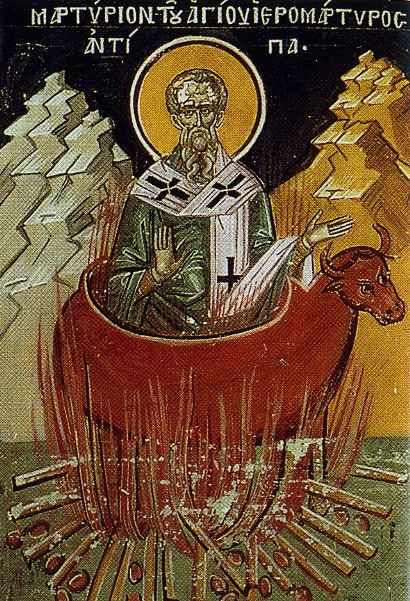
John’s vision in Revelation 2:13 explicitly names him, declaring, "I know where you dwell, where Satan's throne is. You hold fast my name, and you did not deny your faith even in the days of Antipas my faithful witness, who was killed among you, where Satan dwells." This testimony confirms that his death was a public event, occurring within the city walls, witnessed by the community of believers. While the precise method of his execution is not detailed in the canonical text, tradition often associates his suffering with the brutal methods employed by the Roman authorities against those who refused to renounce their Lord. Whether through the sword, the fire, or the beast, the historical record confirms only that he suffered martyrdom, offering his life as a sacrifice for the Gospel.
The scarcity of biographical details regarding his early life, family, or specific profession serves as a reminder of the fragility of early Christian records. In the first century, the Church often operated in the shadows of the Empire, and the focus remained on the act of witness rather than the biography of the individual. Yet, this lack
Know of a grace or miracle attributed to Saint Antipas?
Report a Grace or Miracle