Saint
Saint Chad
The burden of the episcopal office in the early Anglo-Saxon church was not merely one of spiritual oversight, but of tangible governance amidst a landscape of fragmentation and hardship.
Biography
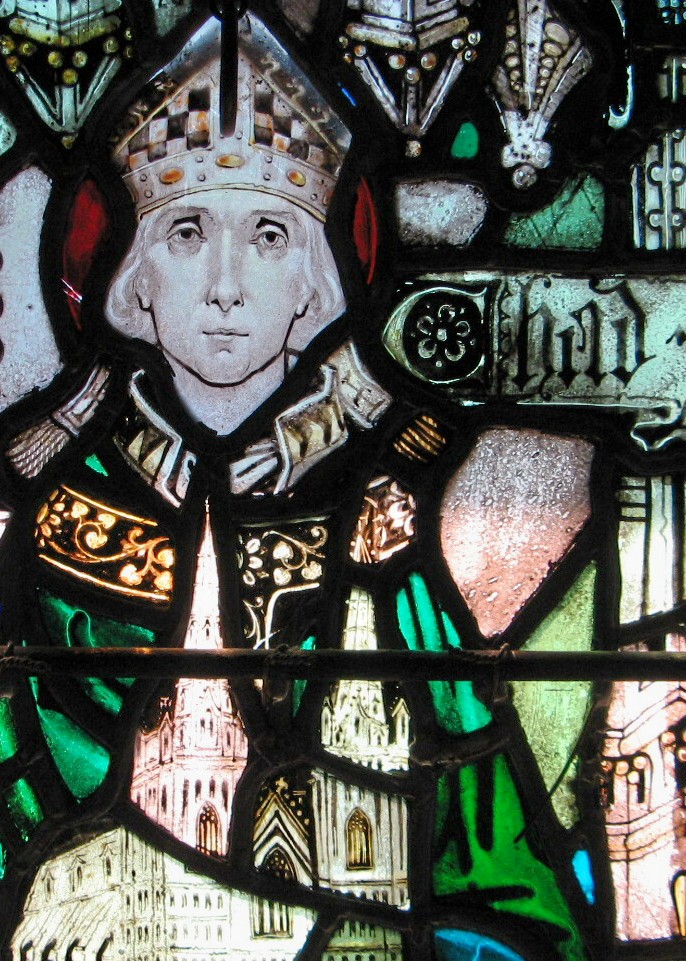
The burden of the episcopal office in the early Anglo-Saxon church was not merely one of spiritual oversight, but of tangible governance amidst a landscape of fragmentation and hardship. In this challenging environment, the figure of Chad stands as a testament to pastoral resilience. While the historical record regarding his early life remains sparse, his tenure as bishop of Lichfield marks a significant moment in the ecclesiastical history of England. His story is one of dedicated service in regions where the infrastructure of the Church was nascent, requiring a leader who could administer with both authority and humility.
Chad held the episcopal office during a period when the English church was still consolidating its identity following the mission of Augustine and the subsequent synods. His jurisdiction was vast, encompassing the then poor provinces of Mercia, Lindsey, and southern
Anglia. These were not wealthy or established dioceses in the modern sense; rather, they were frontier territories where the Christian faith was deeply rooted yet often precarious. The designation of these regions as "poor provinces" suggests a context of economic scarcity and perhaps spiritual underdevelopment, requiring a bishop who could nurture the fledgling communities without the support of a wealthy metropolitan see.
The geographical scope of his ministry was considerable. Mercia, a powerful kingdom in the Midlands, served as the core of his authority, while the inclusion of Lindsey and southern Anglia indicates a broad pastoral responsibility that spanned significant distances. In an era where travel was arduous and communication slow, holding the episcopal office across such a wide territory demanded a commitment that went beyond the confines of a single cathedral. Chad’s role involved undertaking the administration of these diverse lands, ensuring that the sacraments were available and that the clergy remained faithful to the teachings of the faith.
Historical context suggests that bishops in this era often faced the dual challenges of establishing stable communities and navigating the complex political relationships between the various Anglo-Saxon kingdoms. As a bishop of Lichfield, Chad would have been instrumental in maintaining the unity of the Church in these regions during a time when political allegiances shifted frequently. The administration he undertook likely involved the ordination of priests, the consecration of churches, and the moral guidance of the faithful in a society transitioning from pagan traditions to Christian norms.
Though specific details of his life are not fully preserved in the extant brief, the focus on his administrative duties highlights a saint whose legacy is defined by stewardship. He did not seek the glory of a wealthy diocese but accepted the responsibility of the poor provinces. This willingness to serve in difficult conditions aligns with the broader hagiographical tradition of saints who find holiness in the daily labor of shepherding souls rather than in miraculous spectacle.
The enduring memory of Chad rests on his faithful fulfillment of the episcopal mandate in a challenging time. By holding the office in Mercia, Lindsey, and southern Anglia, he helped anchor the Church in the heart of England. His life reminds the faithful that the work of the bishop is often found in the quiet, persistent administration of the Gospel, especially where the resources are few but the need is great. In the annals of the Church, Chad remains a symbol of steadfast leadership in the face of provincial poverty and the enduring demands of spiritual governance.
Also remembered on March 2


Know of a grace or miracle attributed to Saint Chad?
Report a Grace or Miracle