Saint
Saint Chlodulf
In the turbulent landscape of early medieval Europe, where spiritual authority and political power were often inextricably intertwined, one figure emerged as a vital link between the sanctity of the Church and the…
Biography
In the turbulent landscape of early medieval Europe, where spiritual authority and political power were often inextricably intertwined, one figure emerged as a vital link between the sanctity of the Church and the stability of the Frankish kingdom. While specific chronicles detailing his daily deeds remain scarce, the legacy of this prelate stands as a testament to a family deeply committed to the service of God and the governance of Austrasia. He was not merely a cleric; he was a pillar of a dynasty that would eventually shape the very heart of the region.
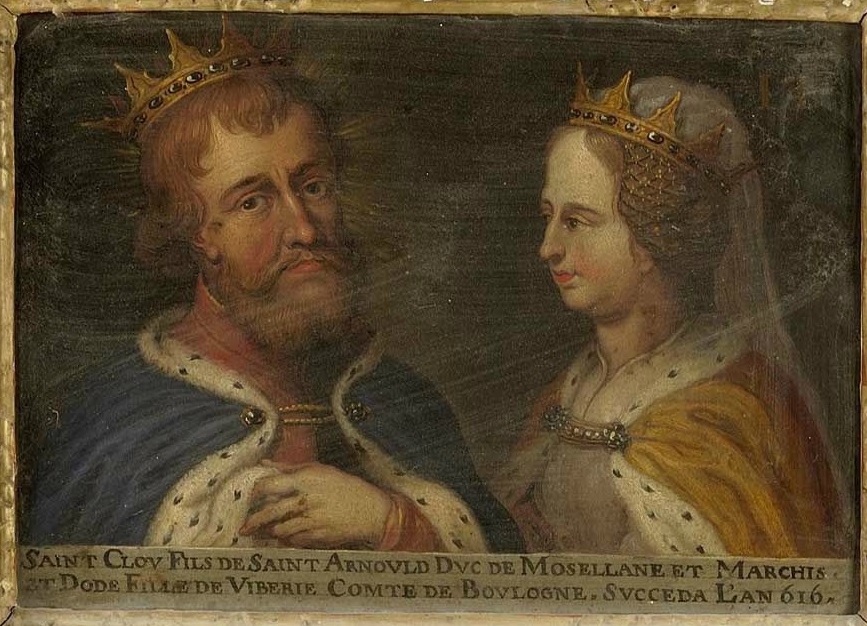
Born into a household already sanctified by the Church, he carried the weight of an extraordinary inheritance. His father was Saint Arnulf, a man whose piety and counsel had already secured a place among the revered saints of the region.
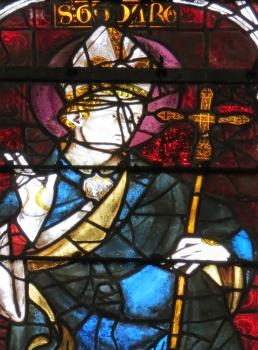
Traditionally, the sons of such holy men were expected to follow in their footsteps, yet to step into the role of bishop required a personal vocation that transcended mere nepotism. At Metz, a city of strategic importance in the kingdom of Austrasia, now located within the borders of modern-day France, he assumed the pastoral care of a diocese that had long been a center of Christian learning and influence.
The political environment of the Merovingian era was one of constant flux, with kings often struggling to maintain authority against rival nobles and internal strife. In this context, the role of a bishop often extended beyond the altar; it encompassed the duties of a statesman and a counselor. This prelate served in the capacity of an adviser to the king, a position that demanded both wisdom and moral fortitude. Navigating the corridors of power required a delicate balance, ensuring that the interests of the Church were upheld while providing guidance to the temporal ruler. His counsel would have been sought during times of crisis, where the sanctity of his office offered a counterweight to the often violent realities of Frankish politics.
Though specific chronicles detailing his daily life or miraculous interventions are not preserved in the available brief, his tenure is remembered as a period of continuity and stability. In an age where the line between the sacred and the secular was frequently blurred, he represented a steady hand. The fact that he is venerated as a saint suggests that his life was marked by virtues that resonated deeply with the faithful of his time, likely mirroring the asceticism and charity associated with his father.
Historical context suggests that Metz was a crucible for the faith in Gaul. As the bishop of this city, he oversaw a community that was vital to the religious identity of the region. His connection to the royal court indicates that he was trusted by the highest levels of government, a rare distinction that speaks to his integrity. Whether mediating disputes, offering spiritual direction to the monarch, or tending to the poor of the diocese, his work contributed to the enduring legacy of the Arnulfian family.
Today, the memory of this bishop endures not through elaborate hagiographies, but through the quiet recognition of his office and lineage. He remains a symbol of the Merovingian church, where the blood of saints could lead to the throne of the bishopric, and where the spiritual authority of the clergy played a decisive role in the governance of the realm. He lived and served c. the seventh century, a time when the foundations of the modern European church were being laid by men of faith who dared to walk the path between the altar and the throne.
Also remembered on June 8

Know of a grace or miracle attributed to Saint Chlodulf?
Report a Grace or Miracle