Saint
Saint Cunigunde of Luxembourg
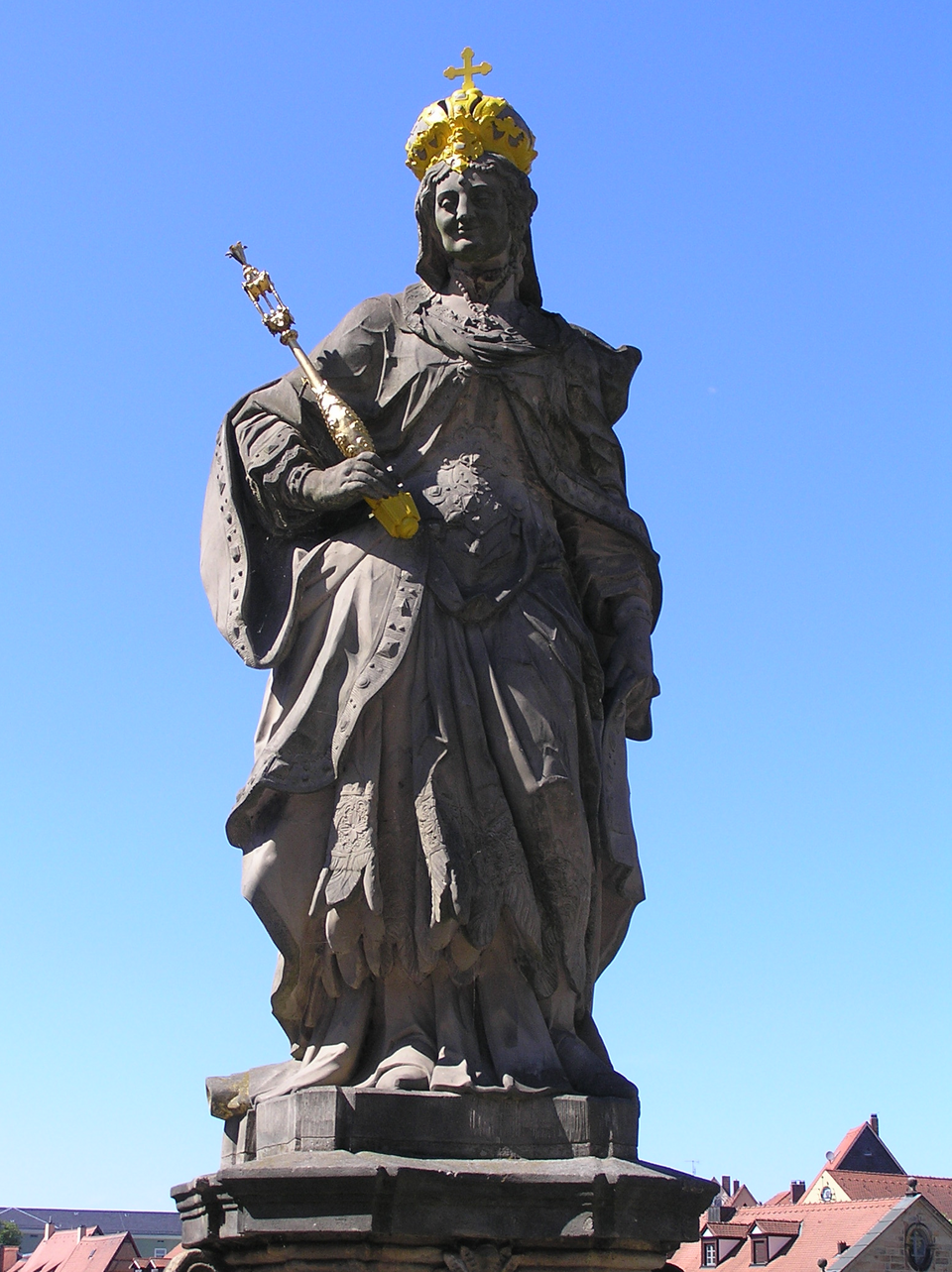
The life of the Empress of the Holy Roman Empire stands as a testament to the profound influence a pious consort can exert upon the spiritual landscape of a nation.
Biography
The life of the Empress of the Holy Roman Empire stands as a testament to the profound influence a pious consort can exert upon the spiritual landscape of a nation. While often overshadowed by the political machinations of the medieval court, her legacy is defined not by the weight of a crown, but by the tangible benefits she brought to the Church alongside her husband. This partnership, forged in the heart of the Holy Roman Empire, transformed her status as a royal figure into a beacon of ecclesiastical support and charitable action.
Her story is deeply rooted in the geography of Germany, specifically associated with the region of Hesse. It is at Oberkaufungen, a locale within this German state, that her spiritual imprint remains particularly significant.
Traditionally, this location is revered as a site where her presence was felt through the enduring improvements she facilitated for the religious life of the community. In an era where the Church required both material support and moral guidance, her contributions helped to stabilize and enrich the local ecclesiastical structures.
The narrative of her life emphasizes a shared mission with her spouse. Together, they navigated the complexities of their high station to serve a higher purpose. The records indicate that she did not act in isolation; rather, the benefits brought to the Church were a joint endeavor. This collaboration suggests a household dedicated to the service of God, where the responsibilities of state were harmonized with the duties of faith. By working in unison with her husband, the Empress ensured that her royal resources were directed toward the welfare of the clergy and the faithful.
Her influence extended beyond the immediate circle of the court. As a member of the House of Luxembourg, her lineage connected her to significant political powers, yet she utilized these connections for the advancement of the Church. The specific nature of the benefits she brought remains a point of veneration, reflecting a life characterized by generosity and piety. In the context of the Holy Roman Empire, where religious and political authority were often intertwined, her role as a model of Christian rulership was vital.
Historical context suggests that during her time, the Church faced numerous challenges that required dedicated patronage. Her ability to navigate these waters allowed her to establish a lasting foundation for religious practice in the regions she touched. The association with Oberkaufungen in Hesse serves as a geographical anchor for this legacy, marking the spot where her devotion was most visibly enacted.
While specific dates of her birth or death are not detailed in the brief account, her status as a Saint confirms the recognition of her holiness by the Church. The use of "c." indicates that her life unfolded during a period of significant religious activity, likely in the early centuries of the second millennium, where such imperial patronage was crucial for the maintenance of the faith.
She did not seek personal glory but rather the enrichment of the Church. The memory of her work in Hesse, and the benefits she secured for the religious order, continue to mark her as a remarkable figure in Catholic history. Through her actions, the Church received enduring support, and the faithful found a champion who wielded her influence for the sake of the Gospel.
Also remembered on March 3

Know of a grace or miracle attributed to Saint Cunigunde of Luxembourg?
Report a Grace or Miracle