Saint
Saint Fulbert
In the heart of France, amidst the rolling landscapes of the region, a figure emerged whose influence would be measured not merely in years of service, but in the stone that would eventually reach for the heavens.
Biography
In the heart of France, amidst the rolling landscapes of the region, a figure emerged whose influence would be measured not merely in years of service, but in the stone that would eventually reach for the heavens. While the precise chronology of his life remains obscured by the passage of time, the legacy of this bishop of Chartres is etched into the very foundation of the city's spiritual and architectural identity. He is remembered as a man of profound intellect and boundless generosity, a shepherd who understood that the care of souls required both the sustenance of the mind and the shelter of the body.
His tenure in the diocese was marked by a rigorous commitment to the faith. The records indicate that he nourished many with his doctrine, suggesting a period of intense pastoral engagement and teaching. In an age where literacy and theological understanding were often confined to the cloister, his ability to communicate the tenets of the Church to the faithful was a significant achievement. This intellectual and spiritual nourishment implies a deep engagement with the flock, ensuring that the people were not merely passive recipients of grace but active participants in their own spiritual growth. He stood as a beacon of orthodoxy and instruction, guiding the community through the complexities of faith with clarity and conviction. Through his words, he provided the intellectual framework necessary for the people to understand their place in the divine order, fulfilling the essential role of a teacher and guide.
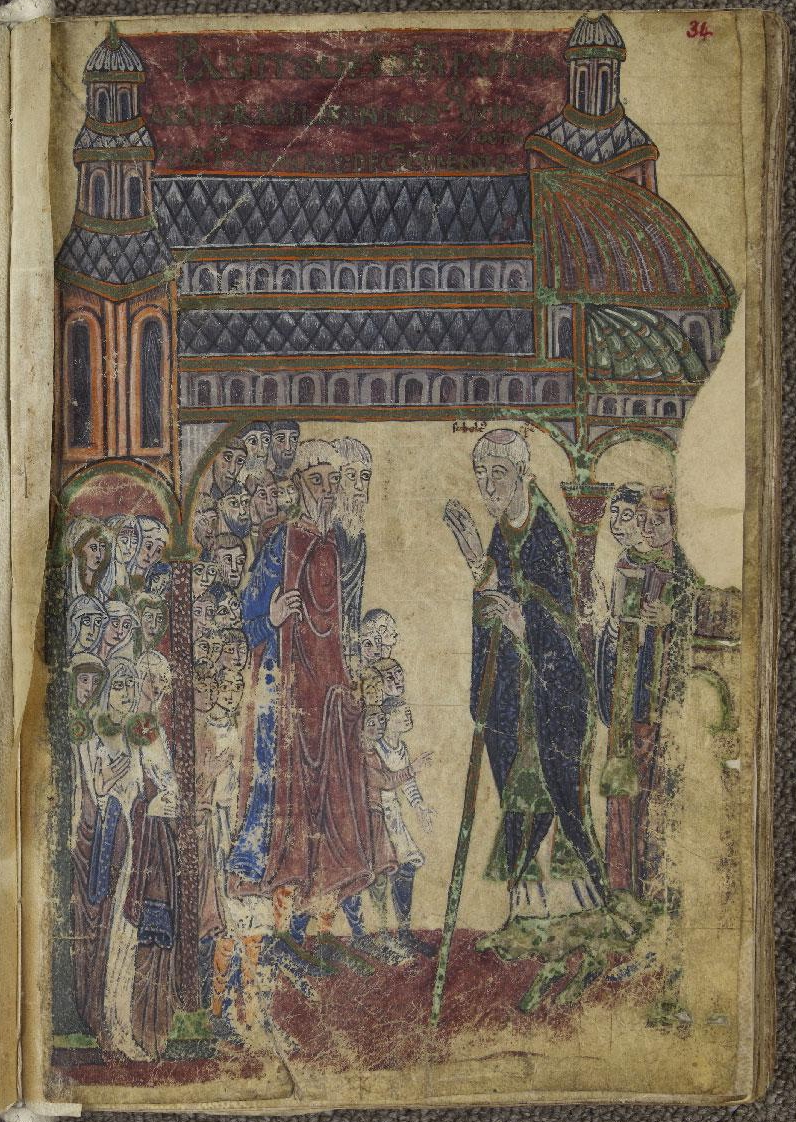
Beyond the realm of the spirit, his impact was physically manifested in the landscape of Chartres. It is through his vision that the construction of the cathedral church was initiated. This was no small undertaking, requiring a level of munificence and industry that few could muster. To begin such a massive project demanded not only the financial resources of the episcopate but also the organizational skill to mobilize labor and materials. His dedication to this architectural endeavor reflects a belief that the house of God should be a fitting dwelling for the divine, worthy of the reverence it inspired. The stones laid under his direction were not just bricks and mortar; they were expressions of piety and a desire to create a lasting monument to the glory of God. This initiative demonstrated a willingness to invest the wealth of the see into a project that would outlast his own lifetime, prioritizing the eternal over the temporal.
Historically, the scarcity of detailed biographical records regarding his early life or specific dates of birth and death is a testament to the passage of time. Yet, the survival of the cathedral itself serves as a living hagiography, attesting to the industry and vision of its patron. Tradition holds that he was a man of significant character, whose life was defined by the dual pillars of teaching and building. Whether through the pulpit or the construction site, his influence was pervasive. He understood that the Church was a community of believers sustained by truth and sheltered by faith.
Today, the legacy of this bishop endures. The cathedral stands as a silent witness to the era in which he labored, a physical echo of the doctrine he preached. While the specific details of his daily life may remain in the shadows of history, his contribution to the spiritual and physical landscape of Chartres remains undeniable. He is remembered not for the dates he lived, but for the work he accomplished. In the quiet reverence of the nave and the strength of the doctrine passed down through generations, his spirit continues to nourish those who seek the divine.
Know of a grace or miracle attributed to Saint Fulbert?
Report a Grace or Miracle