Saint
Saint Giovanni da Lodi
In the turbulent landscape of the eleventh-century Church, where the struggle for ecclesiastical purity defined the age, Saint Giovanni da Lodi emerged as a steadfast pillar of reform and pastoral care.
Biography
In the turbulent landscape of the eleventh-century Church, where the struggle for ecclesiastical purity defined the age, Saint Giovanni da Lodi emerged as a steadfast pillar of reform and pastoral care. While specific details of his early life remain obscured by the mists of history, his legacy is secured through his significant role as a Camaldolese monk and eventually as the Bishop of Gubbio. What distinguishes him in the hagiographical record is not a long list of supernatural wonders, but his intimate association with one of the most formidable figures of the period, Saint Peter Damian. This companionship places him at the very heart of the Gregorian Reform movement, a time when the Church was seeking to cleanse itself of simony and clerical marriage through rigorous discipline and moral renewal.
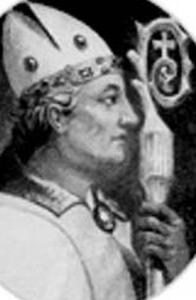
The Camaldolese order, to which Giovanni belonged, was founded by Saint Romuald with a unique vision that balanced the eremitical life of solitude with the communal discipline of cenobitism. This dual focus prepared its members for the rigors of active ministry. Giovanni embraced this charism fully, moving from the quiet contemplation of the monastery to the demanding public sphere of the episcopate. His appointment as Bishop of Gubbio in Umbria marks a transition from the cloister to the diocese, a move that required both spiritual depth and administrative fortitude. Gubbio, nestled in the hills of central Italy, was a city with deep roots, and its spiritual welfare rested in Giovanni’s hands during a period of significant political and religious upheaval.
It was during these years of service that Giovanni’s reputation was most solidified. He is recorded historically as a trusted companion of Saint Peter Damian, the great reformer and Doctor of the Church. Peter Damian was known for his fiery preaching and his tireless diplomatic missions, often traveling across Italy and into the Holy Roman Empire to negotiate with emperors and popes alike. To be chosen as a companion for such missions was a testament to Giovanni’s reliability, intellect, and sanctity. These diplomatic endeavors were fraught with danger and complexity, requiring a man of unwavering faith and diplomatic skill. While the specific details of their joint missions are not preserved in full, the fact of their collaboration underscores Giovanni’s active participation in the high-stakes restoration of the Church’s authority during the mid-eleventh century, c. 1040 to c. 1070.
Despite the lack of specific dates regarding his birth or death, the historical context allows for a general placement within the era of Peter Damian’s activity. Traditionally, saints of this period are remembered for their personal holiness rather than recorded miracles, and Giovanni da Lodi is no exception. As a bishop, he would have been responsible for the spiritual guidance of the faithful in Gubbio, upholding the standards of the Camaldolese rule even while managing the affairs of a diocese.
Ultimately, the story of Saint Giovanni da Lodi is one of faithful service and quiet dignity. In an age that often demands the spotlight, he remained a faithful instrument of reform, walking alongside Peter Damian to ensure the Church remained a beacon of truth. His life, though sparsely documented in surviving texts, stands as a testament to the countless holy men of the Camaldolese order who dedicated their lives to the renewal of the Church. To remember him is to honor the essential, often unseen work of the faithful servant who supports the great causes of his time with unwavering commitment.
Also remembered on September 7


Know of a grace or miracle attributed to Saint Giovanni da Lodi?
Report a Grace or Miracle