Saint
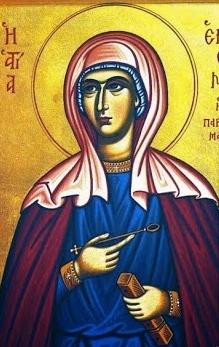
Saint Ida
In the rugged, forested landscapes of early medieval Saxony, few figures shone with the quiet radiance of a holy widow known simply as Ida.
Biography
In the rugged, forested landscapes of early medieval Saxony, few figures shone with the quiet radiance of a holy widow known simply as Ida. Her legacy rests not on grand political maneuvers or military conquests, but on the intimate, enduring disciplines of charity and prayer. While the chronicles of the Saxon dukes often focus on the shifting alliances of kings and the expansion of territory, the spiritual life of the region was sustained by women like her, who turned the domestic sphere into a sanctuary of grace.
She lived during a time when the Germanic territories were undergoing significant religious and cultural transformation. Heresfeld, the settlement where she resided, was a place of growing importance within the Saxon heartland. It was here, amidst the quietude of the countryside, that she found her vocation.
Historically, she is identified as the widow of Duke Ecbert, a title that indicates a life of nobility and responsibility. As a duchess, she would have managed significant estates and overseen the welfare of those under her care. However, the most defining chapter of her existence began after her husband passed, marking a transition from the public duties of a noble wife to the private, rigorous life of a religious widow.
The historical record regarding her life is sparse, a common fate for women of the era whose influence was exercised through personal piety rather than public office. Yet, the tradition preserves the essence of her existence with remarkable clarity. She is remembered not for the wealth she held, but for how she dispensed it. Her charity towards the poor was not a sporadic act of benevolence but a consistent feature of her daily routine. In an age where the social safety net was non-existent, her provision for the destitute and the sick would have been a vital lifeline for the local community.
Furthermore, her assiduity in prayer defined the rhythm of her days. This dedication suggests a woman who viewed her widowhood not as a period of loss, but as an opportunity for total devotion. The spiritual intensity she brought to her intercessory prayers likely drew others to her, even if the specific details of her interactions have not been preserved in the annals of history. The phrase "assiduity in prayer" implies a discipline that was rigorous and unceasing, suggesting she spent significant portions of her day in contemplation, perhaps within the confines of her home or a nearby religious house.
While later hagiographical traditions sometimes attribute miraculous deeds to the saints, in the case of Ida, the focus remains on the tangible fruits of her sanctity: the alleviation of suffering and the cultivation of the soul. She did not seek the limelight of the court but found her glory in the service of the marginalized and the presence of the Divine.
To the faithful who venerate her, she represents the ideal of the pious widow, one who transforms the vulnerability of widowhood into a strength of spirit. Though specific dates of her birth and death are not recorded, and the precise timeline of her marriage to Duke Ecbert remains within the fog of early medieval history, her witness endures. She stands as a silent pillar of faith in Saxony, reminding the modern observer that sanctity is often found in the steady, faithful accumulation of good works and the unbroken commitment to prayer. Her story, though brief in its surviving details, resonates with the timeless truth that true nobility is measured by the depth of one's compassion.
Also remembered on September 4
Know of a grace or miracle attributed to Saint Ida?
Report a Grace or Miracle