Saint
Saint Conrad Nantwein
Saint Conrad Nantwein, also known as Conrad Nanovwin, Conrad Nantovinus, Conrad Nantuino, Conrad Nantuinus, Conrad Nantwin, Conrad Nantwinus, Conrad Natwein, Corrado, or Konrad, was born in the 13th century in Bavaria…
Biography
Saint Conrad Nantwein, also known as Conrad Nanovwin, Conrad Nantovinus, Conrad Nantuino, Conrad Nantuinus, Conrad Nantwin, Conrad Nantwinus, Conrad Natwein, Corrado, or Konrad, was born in the 13th century in Bavaria, Germany. He was a pious man who embarked on a pilgrimage to Rome, Italy. However, his journey took an unexpected turn when he arrived in Wolfratshausen, a small town in Germany. While in Wolfratshausen, Conrad was falsely accused of abusing a young boy by a local judge. This judge had ulterior motives as he coveted the possessions of the pilgrims. He conducted a sham trial, deliberately skipping witness testimony, and unjustly found Conrad guilty. The judge's primary aim was to confiscate Conrad's possessions, and he succeeded in achieving this through the false accusation and subsequent conviction.
Tragically, Conrad was sentenced to death for a crime he did not commit. On August 7, 1286, Conrad was burned at the stake in Wolfratshausen. According to legend, the executioners offered Conrad the chance to choose the location of his execution. In a remarkable act of faith, Conrad took the top off his pilgrim's staff, threw it across the river Loisach, and said that they should burn him where it landed. Astonishingly, the executioners found the staff and carried out Conrad's request, burning him at that spot. Following his unjust death, numerous miracles were reported at the site of Conrad's execution. Many people came to witness these miracles and began to question his guilt. It became apparent to them that Conrad had been innocent all along.
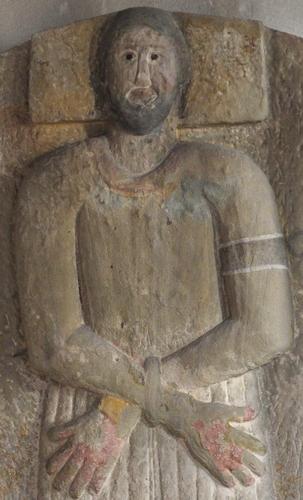
A local devotion to him quickly developed, and a chapel was constructed on the spot where he was burned a few years later. Conrad's relics were enshrined in this chapel. In 1624, the church of Saint Nantwein was built on the site where Conrad was executed, and it stands to this day. However, during a period of political unrest in 1801, the remaining bone relics of Conrad, covered in silver, were handed over to the government of Bavaria. The silver was later melted down to support the war effort against France. Fortunately, some relics of Conrad were saved. In 1928, a few of the remaining relics were given to the Stadtmuseum in Munich, Germany. They serve as a lasting testament to the life and martyrdom of Saint Conrad Nantwein.
Saint Conrad Nantwein was officially canonized by Pope Boniface VIII in 1297. He is venerated as a saint due to his innocence, steadfast faith, and the miracles associated with his martyrdom. Although there is no specific patronage attributed to him, Saint Conrad Nantwein's story is a reminder of the importance of justice, truth, and devotion in the face of adversity.
Know of a grace or miracle attributed to Saint Conrad Nantwein?
Report a Grace or Miracle