Skip to content
Saint for a Minute
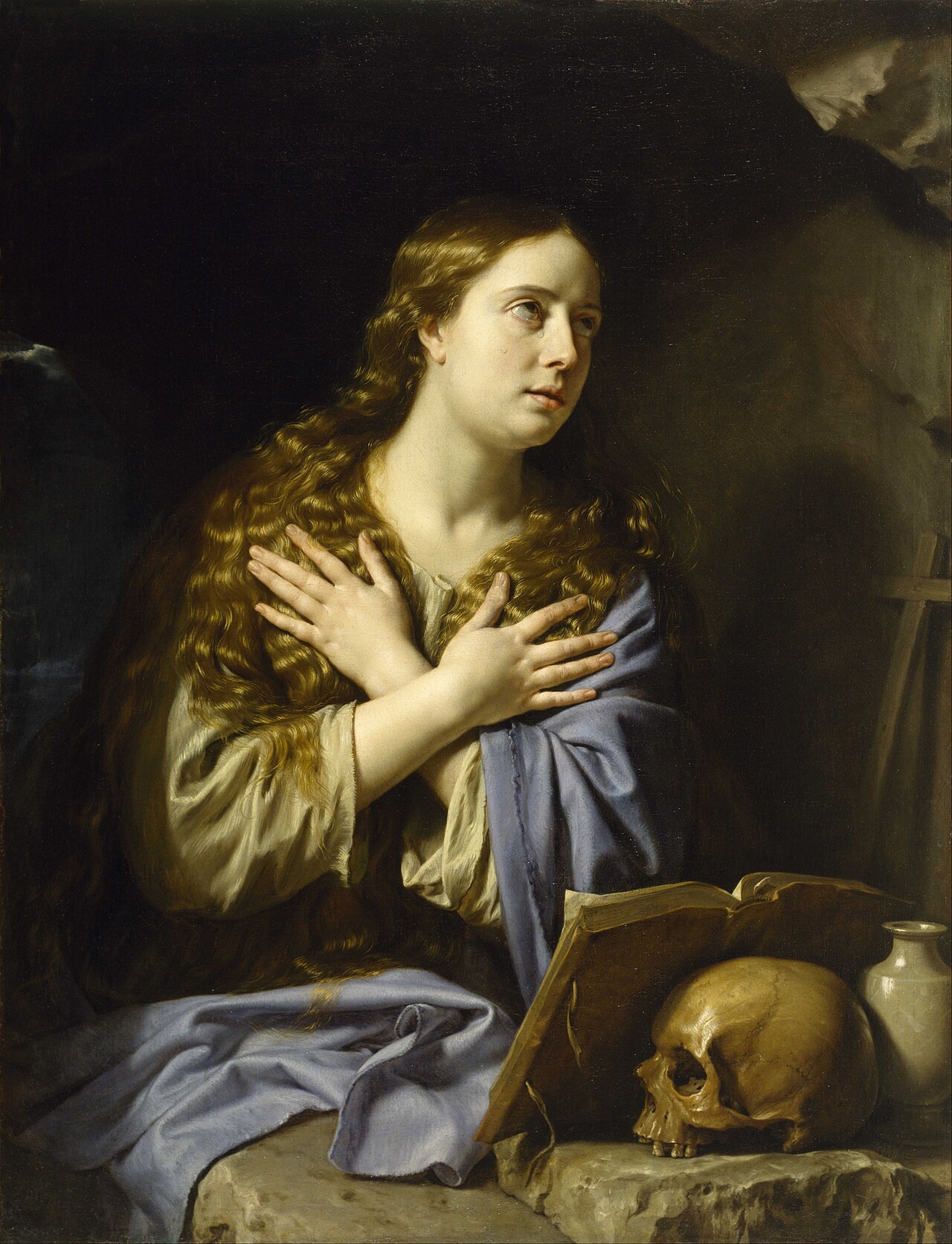
Saint Mary Magdalen Holy Card In Which She Holds Her Alabaster Jar of Oil From The Painting Magdalene By Carlo Dolci 16651670 Oil On Canvas Galleria Palatina Florence Italy

Saint Mary Magdalen

Also known as: Maria Maddalena; Maria Magdalena; Mary Magdalene; the Sinner

Saint
Pre-Congregation

Feast Day: 22 July; 1 March (Basel, Switzerland); 19 March (translation of relics)

Died: The Greek Church says she died in Ephesus of natural causes her relics were transferred to Constantinople in 886 where they remain today ; she died in Ephesus of natural causes; her relics were transferred to Constantinople in 886 where they remain today ; ; she died in Ephesus of natural causes; her relics were transferred to Constantinople in 886 where they remain today ; ; a French tradition says as she lay on her death bed, nine angels carried Mary to the oratory of Saint Maximinus in Aix where she received Communion and then died of natural causes she was interred in an oratory constructed by Saint Maximinus at Villa Lata (Saint Maximin) in 745 her relics were moved to Vézelay to save them from Saracen invaders at some point they were moved to a shrine at her hermitage on La Sainte-Baume; they were there in 1279 when King Charles II of Naples funded a Dominican convent on the hill in 1600 the relics were placed in a sarcophagus sent by Pope Clement VIII in 1814 the church on La Sainte-Baume, wrecked during the anti-Christian excesses of the French Revolution, was restored in 1822 the grotto was re-consecrated, still has the head of the saint, and is a pilgrimage centre ; as she lay on her death bed, nine angels carried Mary to the oratory of Saint Maximinus in Aix where she received Communion and then died of natural causes; she was interred in an oratory constructed by Saint Maximinus at Villa Lata (Saint Maximin); in 745 her relics were moved to Vézelay to save them from Saracen invaders; at some point they were moved to a shrine at her hermitage on La Sainte-Baume; they were there in 1279 when King Charles II of Naples funded a Dominican convent on the hill; in 1600 the relics were placed in a sarcophagus sent by Pope Clement VIII; in 1814 the church on La Sainte-Baume, wrecked during the anti-Christian excesses of the French Revolution, was restored; in 1822 the grotto was re-consecrated, still has the head of the saint, and is a pilgrimage centre; as she lay on her death bed, nine angels carried Mary to the oratory of Saint Maximinus in Aix where she received Communion and then died of natural causes; she was interred in an oratory constructed by Saint Maximinus at Villa Lata (Saint Maximin); in 745 her relics were moved to Vézelay to save them from Saracen invaders; at some point they were moved to a shrine at her hermitage on La Sainte-Baume; they were there in 1279 when King Charles II of Naples funded a Dominican convent on the hill; in 1600 the relics were placed in a sarcophagus sent by Pope Clement VIII; in 1814 the church on La Sainte-Baume, wrecked during the anti-Christian excesses of the French Revolution, was restored; in 1822 the grotto was re-consecrated, still has the head of the saint, and is a pilgrimage centre

Canonized: Pre-Congregation


Biography

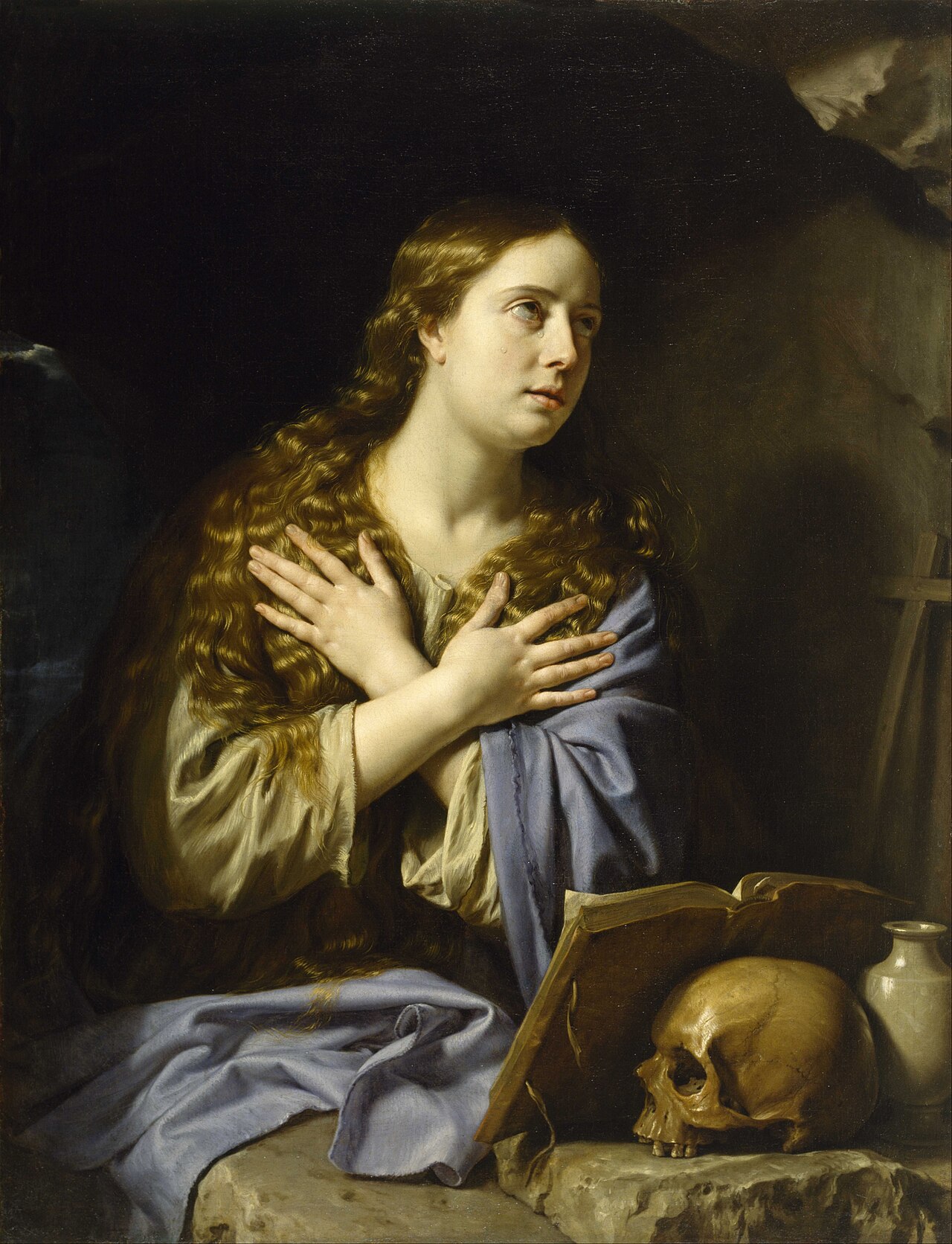
Saint Mary Magdalen, also known as Maria Maddalena, Maria Magdalena, Mary Magdalene, or the Sinner, is one of the most iconic figures in Christian history. Although very little is known about her, her role as a friend and follower of Jesus has left a significant impact on the early Church and beyond. Mary Magdalen is best known for her acts of devotion and repentance towards Jesus. Filled with sorrow over her sins, she anointed Christ with precious ointment and washed his feet with her hair. It is said that Jesus exorcised seven demons from her, freeing her from spiritual oppression. Mary was also visited by the Risen Christ, an encounter that solidified her faith and devotion to him. There is much debate among scholars and traditions regarding the life of Mary Magdalen after the Crucifixion. The Greek Church maintains that she retired to Ephesus with the Blessed Virgin Mary and spent the rest of her life there. On the other hand, a French tradition suggests that Mary, along with Lazarus and some companions, traveled to Marseilles, France, where they evangelized and converted the people of the Provence region. It is believed that Mary later spent thirty years as a penitent hermitess at La Sainte-Baume. Contrary to some popular misconceptions, it is important to note certain facts about Mary Magdalen. She was not Jesus' wife or mistress, nor the mother of his child. Likewise, she did not found a royal dynasty or a separate branch of Christianity. Regarding her death and relics, multiple theories exist. According to the Greek Church, Mary Magdalen died of natural causes in Ephesus, and her relics were later transferred to Constantinople in 886, where they still remain today. Alternatively, a French tradition states that as Mary lay on her death bed, nine angels carried her to the oratory of Saint Maximinus in Aix, where she received Communion before passing away naturally. She was initially interred in an oratory constructed by Saint Maximinus at Villa Lata (Saint Maximin). In 745, her relics were moved to Vézelay to protect them from Saracen invaders. At some point, they were transferred to a shrine at her hermitage on La Sainte-Baume. In 1600, the relics were placed in a sarcophagus sent by Pope Clement VIII. The church on La Sainte-Baume was rebuilt in 1814 and rededicated in 1822 as a pilgrimage center, housing the head of the saint. Saint Mary Magdalen, though not officially canonized in the Pre-Congregation era, is widely venerated as a saint by the Catholic Church. She is considered the patron saint against sexual temptation, apothecaries, contemplative life, contemplatives, converts, druggists, glove makers, hairdressers, hairstylists, penitent sinners, penitent women, people ridiculed for their piety, perfumeries, perfumers, pharmacists, reformed prostitutes, tanners, and women. Various locations in Italy, such as Atrani, Salerno; Casamicciola Terme; Castelnuovo Cilento; Castiglione del Lago; Credera Rubbiano; Cusiano; Foglizzo; La Magdeleine; Morgongiori; Porretta Terme; Rubbiano; and Venice, have a strong devotion to Saint Mary Magdalen. Additionally, she is also revered in Anguiano, Spain, and Elantxobe, Spain. Her life and legacy continue to inspire Christians worldwide, encouraging them to seek forgiveness, transformation, and unwavering devotion to Christ.

Patron Saint Of

Against sexual temptation
apothecaries
contemplative life
contemplatives
converts
druggists
glove makers
hairdressers
hairstylists
penitent sinners
penitent women
people ridiculed for their piety
perfumeries
perfumers
pharmacists
reformed prostitutes
tanners
women
Fréjus-Toulon, France, diocese of
Salt Lake City, Utah, diocese of
locations in Italy Atrani, Salerno Casamicciola Terme Castelnuovo Cilento Castiglione del Lago Credera Rubbiano Cusiano Foglizzo La Magdeleine Morgongiori Porretta Terme Rubbiano Venice
Atrani, Salerno
Casamicciola Terme
Castelnuovo Cilento
Castiglione del Lago
Credera Rubbiano
Cusiano
Foglizzo
La Magdeleine
Morgongiori
Porretta Terme
Rubbiano
Venice
Anguiano, Spain
Elantxobe, Spain

Representations & Symbols

Alabaster box of ointment
long hair (refers the wiping of Jesus’ feet)

Learn More

Watch Video

Similar Saints & Blesseds

Saint Mary Magdalen of Pazzi

Saint
Saint Mary Magdalen of Pazzi, also known as Mary-Magdalen de’Pazzi, was born as Catherine in...

Blessed Magdalen Panattieri

Blessed
Blessed Magdalen Panattieri, also known as Maddalena Panattieri, Mary Magdalen Panattieri, or...
Stay Connected

Get saint inspirations and updates. Join our growing community of faith.