Santo
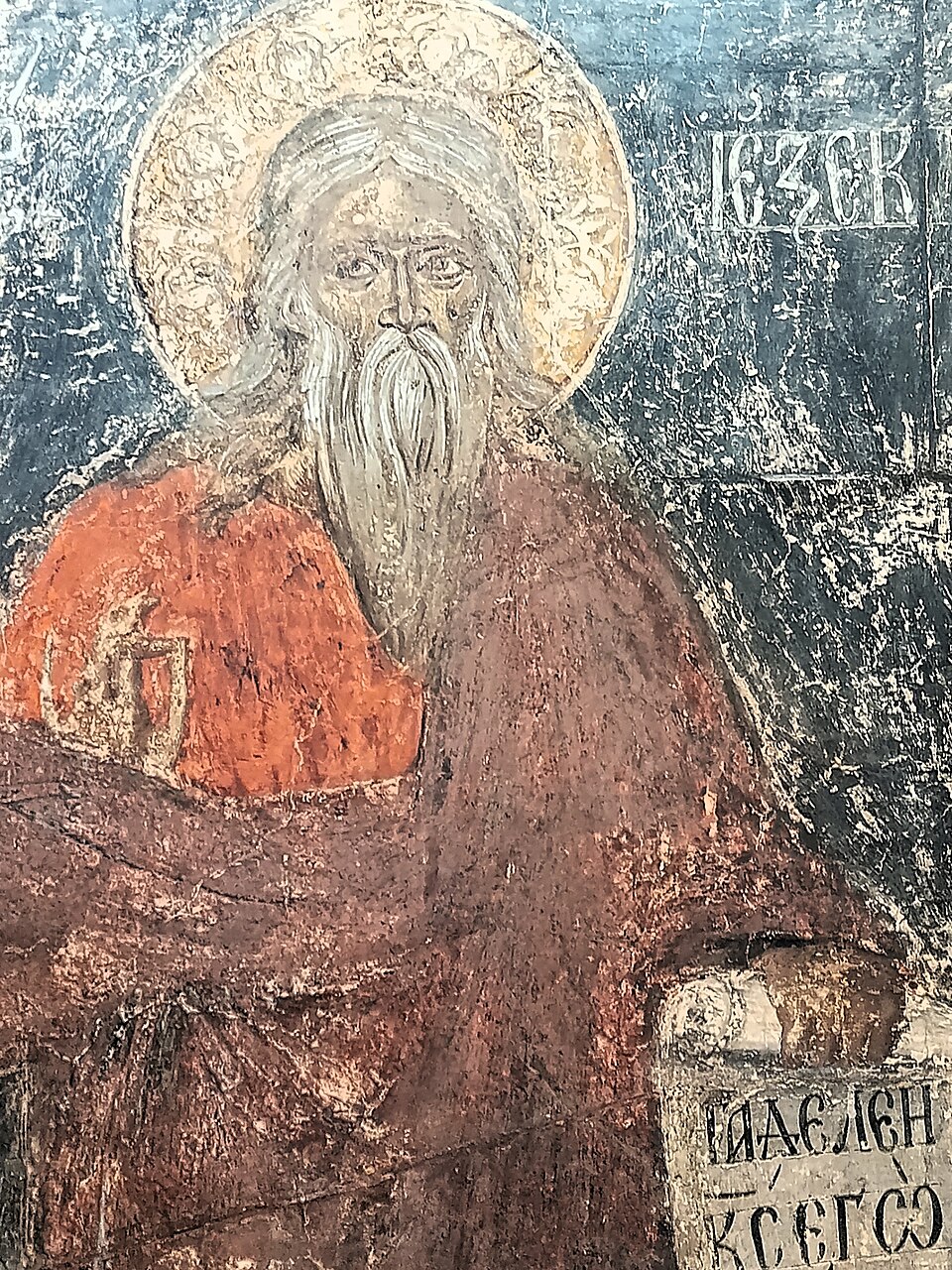
Saint Ezekiel
In the shadow of foreign dominion, where a people had lost their temple and their land, a singular figure stood as a conduit for the divine.
Biografía
Esta biografía está disponible actualmente solo en inglés.
In the shadow of foreign dominion, where a people had lost their temple and their land, a singular figure stood as a conduit for the divine. The prophet Ezekiel is remembered not for the splendor of a palace or the security of a homeland, but for the terrifying and beautiful encounter with the Divine that occurred while he lived in captivity. His life is marked by the profound weight of receiving a vision of the glory of the Lord during the dark days of the Babylonian exile. This encounter was not merely a private spiritual experience but a commissioning that defined his public ministry, anchoring his authority in the sight of God amidst the desolation of a foreign land.
Historically, this period places the prophet in the land of the Chaldeans, a time of great upheaval for the Israelites following the destruction of Jerusalem. While the specific timeline remains a matter of scholarly
estimation, the events transpired c. the sixth century before Christ. It was a time when the temple lay in ruins and the community struggled to maintain its identity far from the promised land. Into this desolation came the son of a priestly line. His lineage was significant, grounding his authority in the sacred traditions of the Levitical priesthood, yet his calling transcended the ritual duties of his ancestors. The brief records indicate he was the son of the priest Buzi, a detail that connects him to the ancient covenantal duties of the Aaronic order, even as he operated outside the borders of the holy city.
The defining moment of his existence was the vision of the glory of the Lord. This encounter was honoured to him, a privilege reserved for the most steadfast of the faithful, confirming that the Divine did not abandon His people even in the deepest exile. While the specific details of the vision are vast, the core of his witness was the revelation of God’s presence even in a foreign land. He was a seer who saw what others could not, bridging the gap between the heavenly throne and the earthly captors. The Chaldeans surrounded him, yet his vision pierced through the political and military dominance of the empire to see the sovereignty of God. This theological insight became the bedrock of his message, offering a future restoration to a people who had lost everything.
As a prophet, his role was to speak truth to power and hope to the despairing. The brevity of the historical record regarding his daily activities stands in stark contrast to the magnitude of his spiritual reception. He was a man who carried the light of the Lord's glory, a light that did not require the physical temple to shine. His legacy is one of endurance and revelation, proving that the voice of God can be heard even when the land itself is silent.
Today, the Church commemorates Saint Ezekiel as a vital link in the chain of salvation history. His feast day serves as a reminder that divine glory is not confined to holy places or times of peace. It is found in the midst of suffering, in the land of the Chaldeans, and in the heart of the exile. Through his witness, the faithful are encouraged to look beyond their immediate circumstances to the eternal reality of the Divine presence. He remains a testament to the idea that even in the darkest captivity, the glory of the Lord is visible to those who seek it with a priestly heart.
También se celebran el 23 de julio

¿Conoces una gracia o milagro atribuido a Saint Ezekiel?
Reportar una Gracia o Milagro