Santo
Saint Jean Cassien
In the vibrant landscape of Provence, where the Mediterranean sun warmed the ancient stones of Marseille, a spiritual legacy took root that would echo through the centuries of the Church in Gaul.
Biografía
Esta biografía está disponible actualmente solo en inglés.
In the vibrant landscape of Provence, where the Mediterranean sun warmed the ancient stones of Marseille, a spiritual legacy took root that would echo through the centuries of the Church in Gaul. The most remarkable aspect of this holy life is the establishment of a dual monastic foundation, a rare and visionary act of inclusivity for the era. While many religious figures of the time focused on solitary asceticism or single-gender communities, this priest dedicated his energy to founding two distinct houses of religious life: one for men and another for women. This structural innovation in Marseille signaled a profound commitment to the spiritual formation of the faithful, regardless of gender, embedding the monastic ideal deeply into the social fabric of the region.
The setting of this ministry was the city of Marseille in Provence, a port of significant historical and ecclesiastical importance. Here, the priest worked to cultivate a community of prayer and labor that would serve as a beacon of faith. The brevity of the historical record regarding specific dates requires caution, but the enduring nature of his work suggests a period of significant influence. It is understood that he operated within a time when monasticism was gaining momentum throughout the Western Church, seeking to translate the desert ascetic traditions into a settled, communal life that could nurture the faithful.
His vocation was not merely administrative; it was rooted in a lifetime of spiritual discipline. The records speak of his long experience, a reservoir of wisdom that informed his leadership. This depth of practice likely stemmed from a journey of personal sanctity before he turned his attention to the organization of communal religious life. As a priest, he carried the pastoral burden of the Church, yet his unique contribution lay in his ability to guide both men and women toward a shared pursuit of holiness. The founding of the second monastery for women, in particular, stands out as a testament to his pastoral heart, ensuring that the call to religious life was accessible to all who sought it within the bounds of his influence.
The historical context of Provence during this period was one of transition and consolidation for the faith. In such a climate, the establishment of stable monastic communities provided a necessary anchor for the local population. These institutions were not isolated from the world but served as centers of learning, charity, and prayer that supported the broader ecclesiastical mission. Through his leadership, the priest fostered an environment where the rules of religious life could be observed with fidelity, creating a lasting infrastructure for spiritual growth.
The existence of these foundations in Marseille stands as a permanent witness to his dedication. He is remembered not for a single dramatic event, but for the steady, enduring cultivation of a spiritual family that spanned genders and generations. His legacy is one of foundational stability, where the long experience of his own life was poured out to build houses of prayer that would continue to bear fruit long after his passing. In the annals of the Church, he remains a figure of quiet strength, whose vision for monastic life in Provence continues to be honored by those who value the integration of priestly service and monastic dedication.
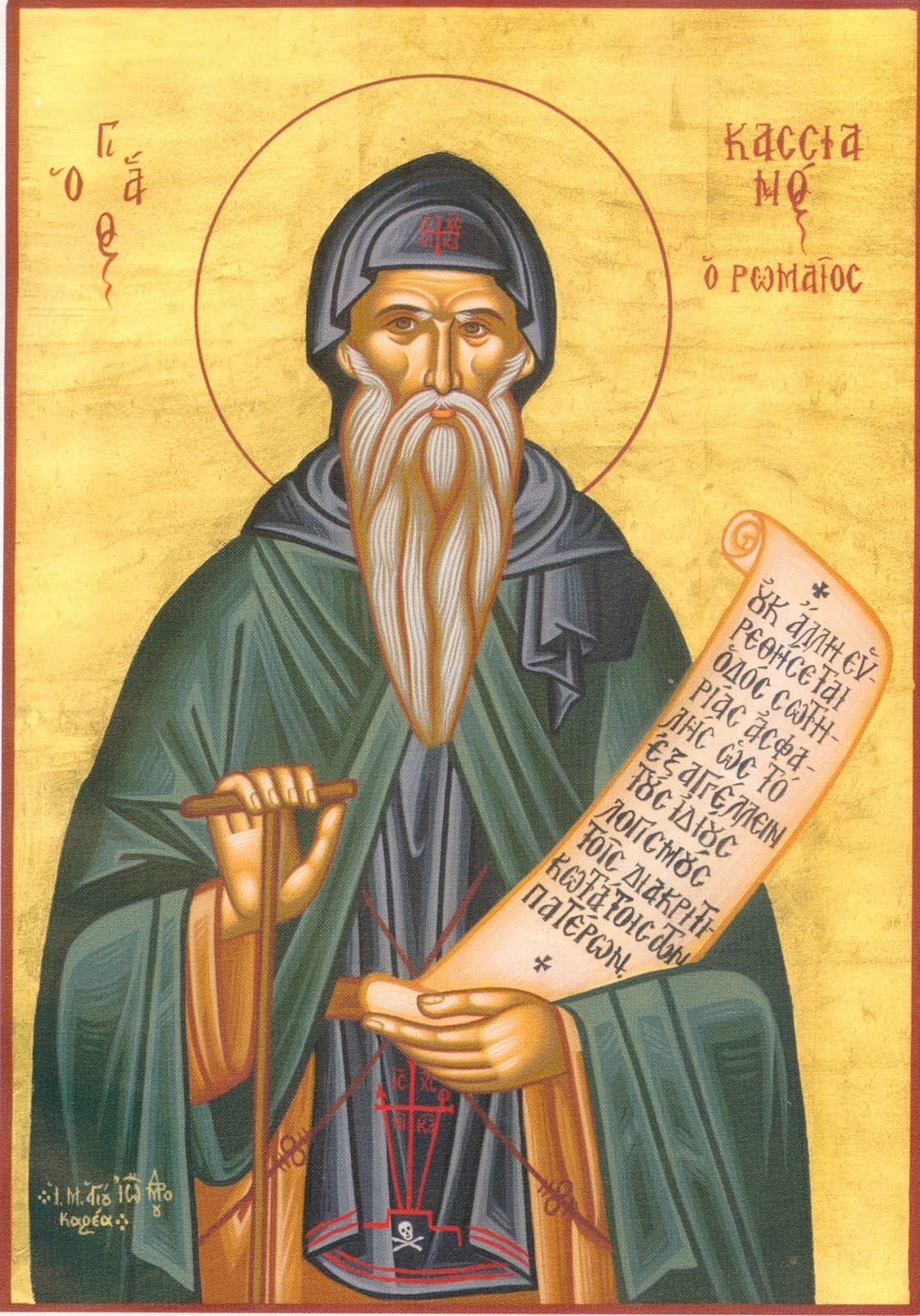
También se celebran el 23 de julio

¿Conoces una gracia o milagro atribuido a Saint Jean Cassien?
Reportar una Gracia o Milagro