Santo
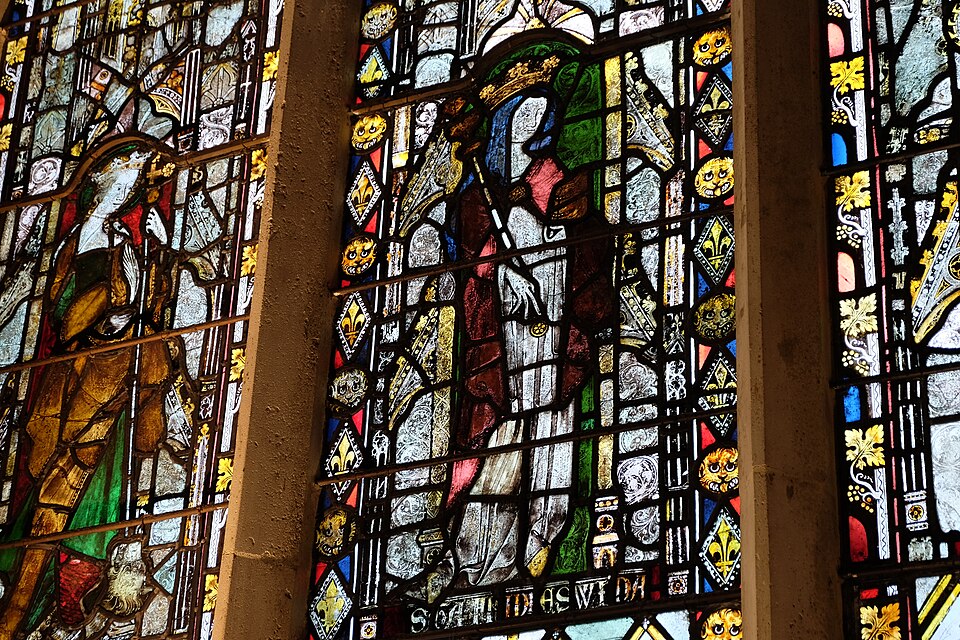
Saint Frithuswith
In the formative years of the English Church, a woman of profound spiritual authority emerged to shape the monastic landscape of Oxford.
Biografía
Esta biografía está disponible actualmente solo en inglés.
In the formative years of the English Church, a woman of profound spiritual authority emerged to shape the monastic landscape of Oxford. Her name was Frithuswith, a figure whose life stands as a unique testament to the capacity for female leadership in the early medieval world. While many saints of this era are remembered for martyrdom or miraculous deeds, her distinction lies in the scope of her ecclesiastical jurisdiction and the nobility of her lineage. She did not merely exist within the monastic walls; she commanded them.
Born into the highest echelons of society, she carried the blood of kings within her veins. This royal background might have predisposed her to a life of political alliance, yet she instead embraced the consecrated life. Her choice to remain a virgin was not merely a personal devotion but a public declaration of total commitment to the Gospel.
This decision elevated her status, allowing her to serve as a spiritual mother and administrator with a gravity that commanded respect across the region. In an age where women of royal birth were often used as political pawns, her dedication to chastity was a profound act of independence, securing her autonomy over her own spiritual destiny.
The most remarkable aspect of her vocation was the breadth of her rule. She did not confine her care to a single community of women. Instead, she governed two distinct houses of religious life situated in Oxford. One community was dedicated to consecrated virgins, while the other comprised monks. To hold authority over both men and women in a single religious leadership role was a rarity of her time, reflecting a trust placed in her wisdom and spiritual fortitude by her contemporaries. This dual oversight suggests a level of administrative genius and spiritual maturity that allowed her to guide souls of different genders and religious states under one banner. Such a configuration implies a high degree of trust from the local ecclesiastical hierarchy, acknowledging that her spiritual gifts transcended the gendered divisions common in secular leadership.
Oxford, in this early era, was a place where the light of the Gospel was beginning to illuminate the countryside. The establishment of such institutions there speaks to a period of growth in the English Church, where women were permitted to exercise significant administrative and spiritual leadership. The dual monastery structure suggests a collaborative environment where the spiritual needs of the entire community were met under her vigilant care. Her presence in Oxford anchors her existence in the geography of English Christianity, marking a specific locale where her influence was felt and recorded.
Despite the clarity of her achievements, the specific details of her life remain shrouded in the mists of time. The precise dates of her birth, her entry into religious life, and the year of her death are not preserved in the historical record. There are no legends of dragon-slaying or supernatural interventions recorded in the brief tradition available; her holiness is found in the stability of her rule and the purity of her vocation. What remains is the testimony of her office and her location. She is remembered as a virgin at Oxford, a fact that anchors her existence in the geography of English Christianity.
Her story is one of quiet strength and administrative genius. In a patriarchal society, she wielded influence that transcended gender norms of the era, ruling over monks and virgins alike with equal devotion. To this day, she stands as a testament to the vital role women played in the foundational years of the Church in England, offering a model of leadership rooted in humility and royal sacrifice. Her legacy endures not in the noise of miracles, but in the quiet endurance of a double monastery sustained by one woman's vision.
También se celebran el 19 de octubre

¿Conoces una gracia o milagro atribuido a Saint Frithuswith?
Reportar una Gracia o Milagro