Santo
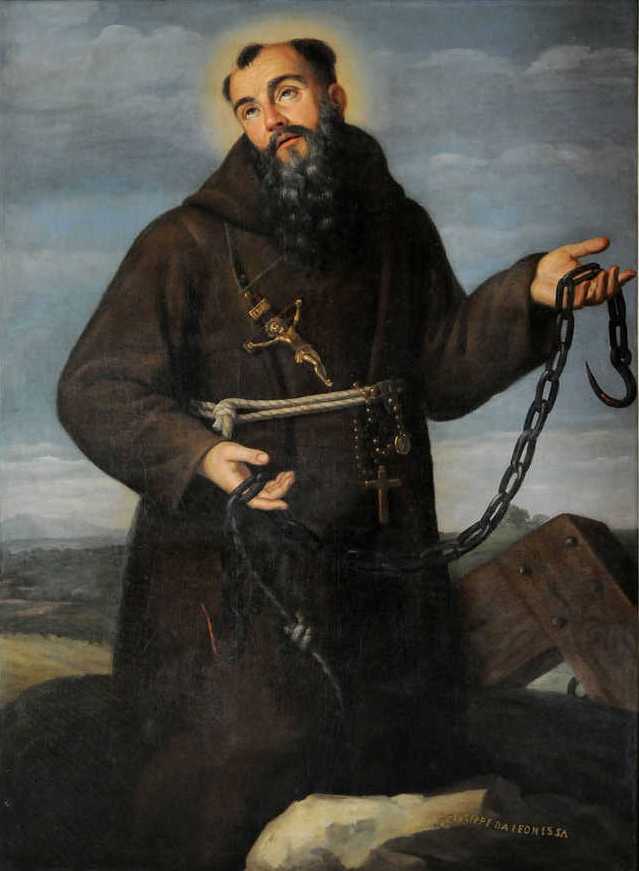
Saint Giuseppe da Leonessa
The daring journey to the heart of the Ottoman Empire stands as the defining testament to his charity.
Biografía
Esta biografía está disponible actualmente solo en inglés.
The daring journey to the heart of the Ottoman Empire stands as the defining testament to his charity. While many of his contemporaries remained within the safety of Italian convents, this Capuchin priest ventured forth to minister to the most vulnerable among the faithful. His mission took him to Constantinople, where he dedicated himself to the aid of Christian prisoners held under Ottoman rule. This act of mercy, performed at the peril of his own safety, encapsulates the radical spirit of his vocation, placing the needs of the captive above personal security.
Belonging to the Order of Friars Minor Capuchin, he walked in the footsteps of St. Francis of Assisi, embracing a life of radical poverty and simplicity. His roots were planted in the region of Lazio, specifically at Amatrice, a town in central Italy that would serve as his spiritual home and the point of departure for his
ministry. The Capuchin reform emphasized a return to the primitive strictness of the Franciscan rule, characterized by a life of prayer, manual labor, and active charity. It was this formation that equipped him to face the harsh realities of captivity abroad.
Historical records regarding his life remain sparse, a common fate for many religious figures whose lives were defined by service rather than chronicle. The precise dates of his birth and death are not preserved in the surviving hagiographical accounts, leaving his lifespan shrouded in the mists of time. However, the context of his work places him within a period of intense conflict between Christian Europe and the expanding Ottoman Empire. During these centuries, the capture of Christians for ransom or enslavement was a tragic reality, and the spiritual and material care of these captives was a recognized duty of the Church.
Tradition suggests that his efforts went beyond mere spiritual consolation. To help prisoners in Constantinople often involved the arduous task of negotiating ransoms, securing food, and providing the sacraments to those who had been stripped of their liberty. As a priest of the Capuchin order, he would have worn the distinctive brown habit and scapular, a visible sign of his commitment to humility even in the face of foreign power. His work likely required a deep trust in Divine Providence, given the financial and political complexities involved in operating within the Ottoman capital.
Despite the lack of detailed biographical data, the enduring legacy of Giuseppe da Leonessa is one of selfless devotion. He is remembered not for the length of his life, but for the depth of his compassion.
También se celebran el 4 de febrero
¿Conoces una gracia o milagro atribuido a Saint Giuseppe da Leonessa?
Reportar una Gracia o Milagro