Santo
Saint Mary Magdalene
Saint Mary Magdalene, called Mary of Magdala after the Galilean town on the shore of the Sea of Galilee from which she likely came, is one of the most prominent women in the Gospels and the first witness to the…
Biografía
Esta biografía está disponible actualmente solo en inglés.
Saint Mary Magdalene, called Mary of Magdala after the Galilean town on the shore of the Sea of Galilee from which she likely came, is one of the most prominent women in the Gospels and the first witness to the Resurrection. All four canonical Gospels name her among the followers of Jesus, and the Church honors her with the ancient title "Apostle to the Apostles," because it was she who first announced the risen Christ to the Twelve.
The Gospels record that Jesus healed Mary Magdalene, casting out seven demons, after which she became one of his devoted disciples. She was among the women who accompanied him and supported his ministry, and she remained faithful when most of his followers fled. She stood by the cross at Calvary, witnessed his death and burial, and came to the tomb on Easter morning.
There, according to the Gospel of John, the risen Lord appeared to her first and sent her to carry the news of the Resurrection to the apostles, giving her the honored place at the very dawn of the Church's Easter faith.
Beyond these Gospel accounts, there is limited historical information about her life. In the Western Church a lasting confusion arose: largely through an influential sermon of Pope Gregory the Great in the year 591, Mary Magdalene came to be identified as a repentant prostitute and merged in the popular imagination with the sinful woman of Luke's Gospel and with Mary of Bethany. There is no biblical basis for portraying her as a prostitute, and modern Catholic teaching has moved away from that conflation, emphasizing instead her true dignity as a faithful disciple and the first herald of the Resurrection. The Eastern Orthodox Church never accepted that identification, honoring her from the beginning as one of the Myrrh-bearing women and as "Equal to the Apostles."
Devotion to Mary Magdalene has flourished for centuries, especially in France, where a rich medieval tradition associated her later life and her relics with Provence. Many alleged relics attributed to her, including her skull, are venerated at Catholic sites in France and on Mount Athos, where they are the object of notable displays and annual processions. Her memory has inspired countless works of art, prayer, and reflection on the mercy of Christ and the calling of women within his ministry.
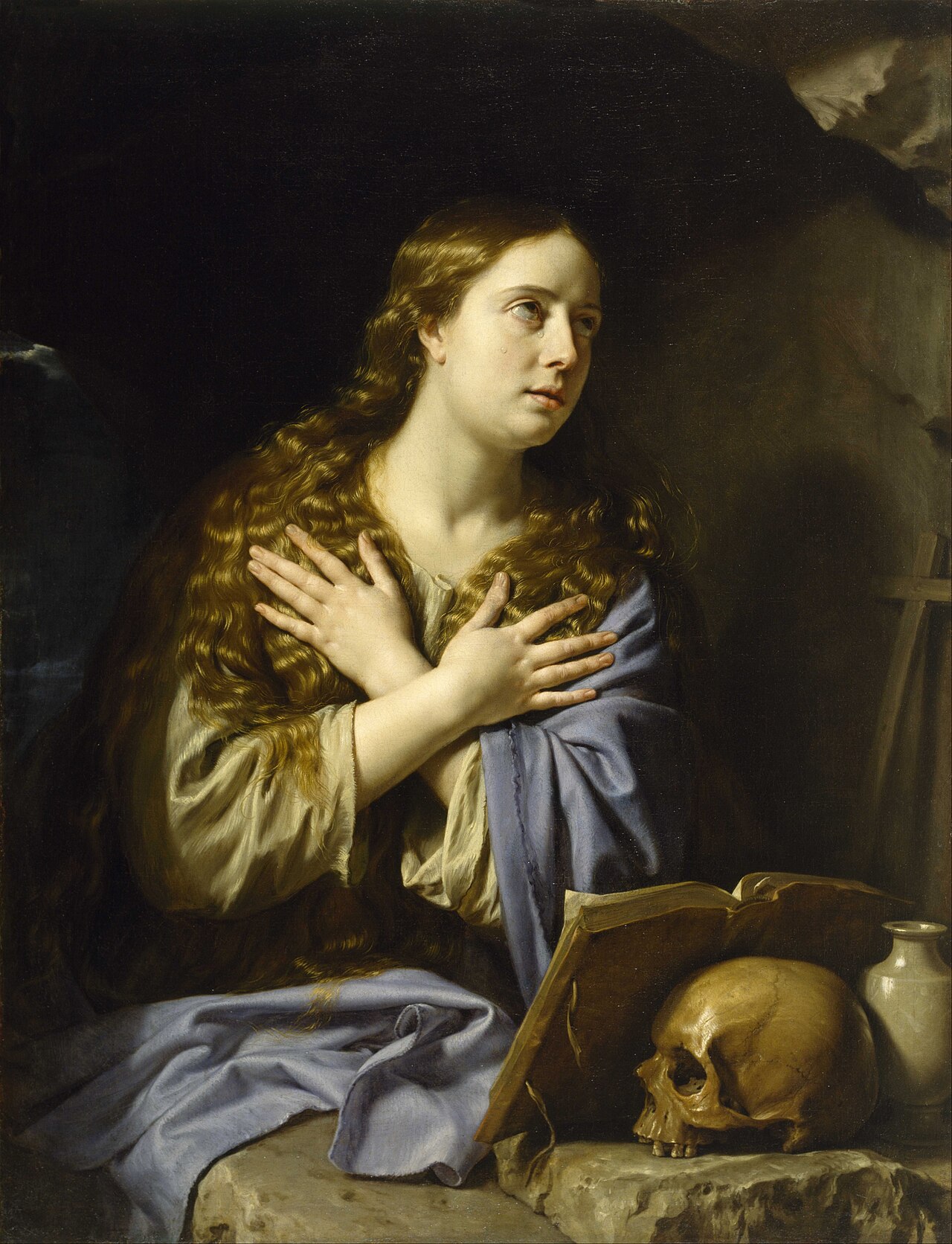
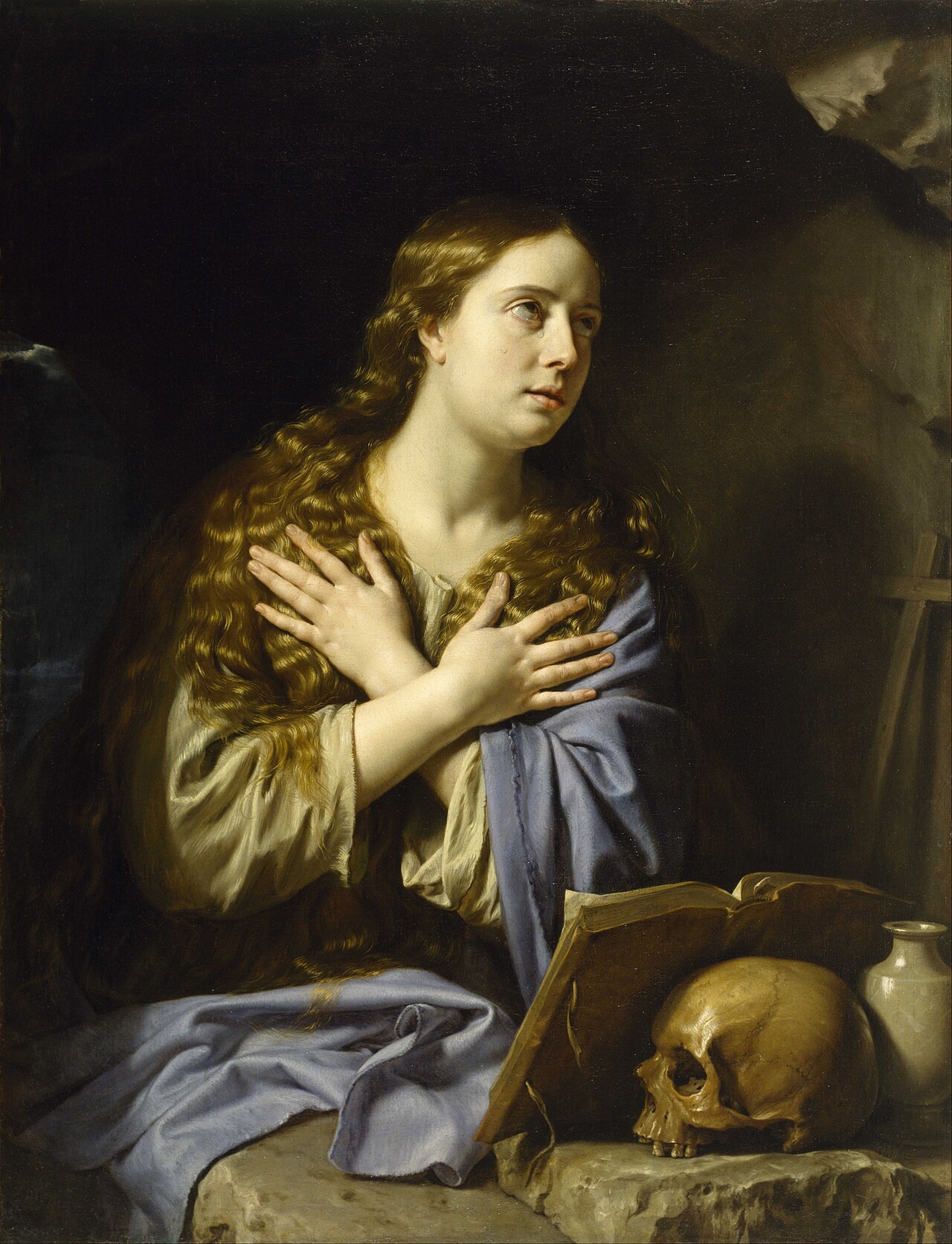
The Catholic Church celebrates her feast on July 22. In 2016 Pope Francis raised her commemoration from a memorial to a feast, underscoring her singular role as witness to the Resurrection and model of the disciple who loves much. The faithful invoke her intercession as a patron of penitents and the converted, of contemplatives, and of all who have known both sin and the transforming mercy of God. In art she is most often shown with a jar of ointment, recalling the myrrh she brought to anoint the Lord's body, and frequently with long flowing hair, a symbol drawn from the devotional tradition. Her witness endures as a promise that no one who loves Christ is forgotten, and that grief at the tomb can give way to the joy of Easter.
También se celebran el 22 de julio
¿Conoces una gracia o milagro atribuido a Saint Mary Magdalene?
Reportar una Gracia o Milagro