Saint
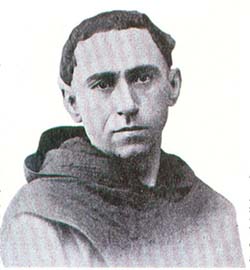
Saint Bartolomeo da Simeri
In the rugged, olive-draped hills of Southern Italy, where the silence of the mountains often speaks louder than the liturgy of the cathedrals, a figure emerged whose life was defined by a profound tension between…
Biography
In the rugged, olive-draped hills of Southern Italy, where the silence of the mountains often speaks louder than the liturgy of the cathedrals, a figure emerged whose life was defined by a profound tension between solitude and community. Bartolomeo da Simeri did not merely seek God in the wilderness; he built a sanctuary for Him there. A priest and an abbot, his legacy is carved not into marble, but into the spiritual landscape of Calabria. His story is one of those rare saints whose existence is anchored not in the spectacle of miracles, but in the quiet endurance of a life dedicated to the ascetic ideal and the founding of a religious house.
Before he donned the mantle of leadership, he walked the path of the solitary. Historical context suggests that Calabria was a region where the eremitic tradition remained vibrant, offering seclusion amidst the natural beauty of the Ionian coast.
Bartolomeo embraced this vocation with intensity, withdrawing from the world to practise a hermitic life. This period of isolation was not a retreat from duty, but a deepening of spiritual capacity. The desert father archetype was alive in him, suggesting years spent in prayer, fasting, and contemplation, preparing the soul for the heavier yoke of governance. It was in this silence that the foundations of his future work were laid, forging a character capable of guiding others toward the Divine.
Yet, the call of God often leads the solitary back to the community. Bartolomeo eventually transitioned from the desert cell to the monastic rule, moving from a life of private devotion to public service. His most enduring contribution was the founding of the monastery of the Greeks. In the context of Southern Italy, this designation carries significant historical weight. Calabria was a cultural and religious crossroads, frequently influenced by the Byzantine Empire. A monastery of the Greeks would have preserved the Eastern liturgical tradition, the Byzantine rite, and the spiritual customs of the East, while likely operating under the broader authority of the Roman Church. This foundation served as a beacon of cultural and spiritual continuity in a region subject to shifting political powers, acting as a bridge between Latin and Greek Christendom.
The fact that he is remembered specifically as the founder of this institution highlights his administrative and spiritual authority. To establish a monastery required not only spiritual vision but also the practical ability to gather disciples, secure land, and establish a rule of life. As an abbot, he would have been the spiritual father to a community, guiding them through the challenges of monastic discipline and the demands of the liturgy. His role as a priest further underscores his sacramental commitment, ensuring that the Eucharist remained the center of the community's life.
Records from this period are often fragmented, and for many ascetics of this era, the focus of their followers was on their spiritual fruits rather than their biographical details. Consequently, the exact dates of his birth and death are unknown. However, the persistence of his memory in the hagiographical tradition speaks to the impact of his work. He is venerated not for a specific miracle recorded in a dossier, but for the establishment of a house of prayer that likely endured for generations.
In the end, Bartolomeo da Simeri stands as a testament to the power of foundational work in the spiritual life. He bridged the gap between the desert and the cenobium, proving that the hermit's prayer could sustain a community. His life reminds the faithful that sanctity is often found in the quiet building of institutions that allow others to seek the Divine. Though the centuries have obscured the specifics of his journey, the monastery he founded remains the enduring witness to a life lived for the glory of God, leaving a legacy of faith that transcends the limitations of historical record.
Also remembered on August 19
Know of a grace or miracle attributed to Saint Bartolomeo da Simeri?
Report a Grace or Miracle