Saint
Saint Bernardo da Corleone
In the annals of the Franciscan family, certain lives burn with a quiet intensity that outlasts the written record.
Biography
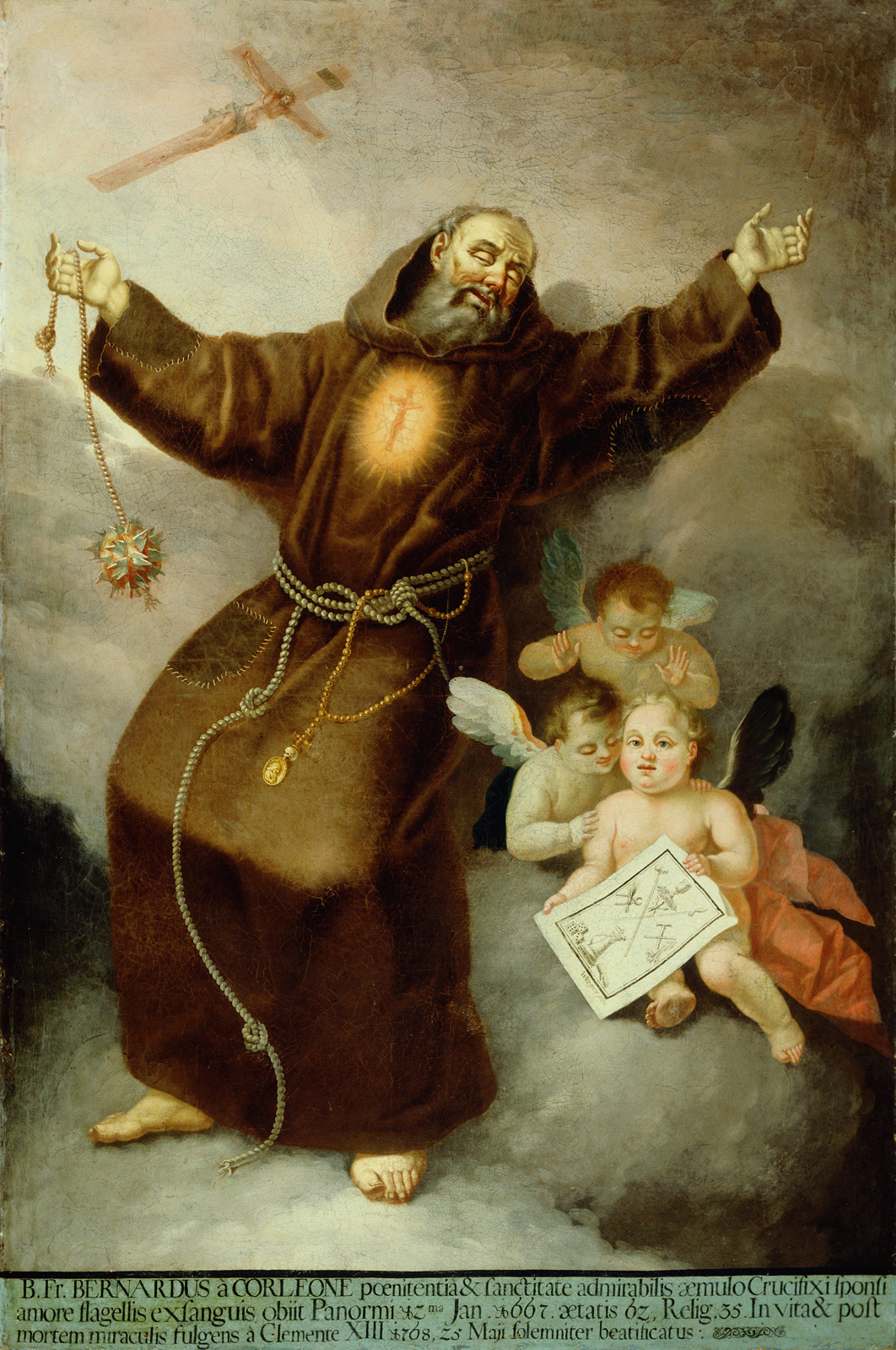
In the annals of the Franciscan family, certain lives burn with a quiet intensity that outlasts the written record. For the friar known as Bernardo da Corleone, that intensity was forged in the fires of asceticism and the warmth of selfless service. He stands not as a figure of grand political maneuvering or miraculous spectacle, but as a testament to the radical simplicity of the Gospel lived out in the bustling port of Palermo.
Joining the Order of Friars Minor Capuchin, he entered a movement dedicated to a strict return to the primitive rule of Saint Francis. The Capuchins, emerging during a period of ecclesiastical reform in the early modern era, sought to strip away the complexities of the religious life to focus on prayer, poverty, and preaching. This movement swept across Europe, offering a rigorous spiritual alternative to the world. Bernardo embraced this call to the margins.
While the specific chronology of his earthly journey remains obscured by the mists of time, his presence is firmly anchored in the Sicilian city of Palermo. There, amidst the shadows and lights of a vibrant Mediterranean port known for its commerce and its suffering, he dedicated his existence to the service of the Divine and the needy.
What distinguishes Bernardo from the countless others who took the habit is the singular emphasis placed upon his character. Hagiographers and local tradition point to two defining pillars of his sanctity: an admirable charity and a profound spirit of penance. To speak of his charity is to speak of a man who saw the face of Christ in the most vulnerable members of society. In a city where the gaps between the wealthy and the poor were stark, his reputation suggests that his actions spoke louder than his sermons. He did not merely offer alms; he offered himself. His charity was not a distant virtue but a daily discipline, a constant orientation toward the needs of his neighbor.
Conversely, his spirit of penance reveals the interior landscape of his soul. In the Capuchin tradition, penance is not self-inflicted punishment but a loving cooperation with God’s will, a way of sharing in the redemptive suffering of Christ.
Also remembered on January 12
Know of a grace or miracle attributed to Saint Bernardo da Corleone?
Report a Grace or Miracle