Saint
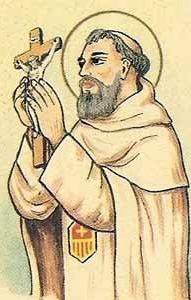
Saint Cornelius
The Via Appia, the ancient queen of roads leading out of Rome, became a pathway to eternity for many of the Church's earliest defenders.
Biography
The Via Appia, the ancient queen of roads leading out of Rome, became a pathway to eternity for many of the Church's earliest defenders. Among those who found their final rest in the shadow of this stone-paved highway was a pontiff whose legacy is defined by the unyielding defense of unity amidst crisis. His deposition marks a solemn day in the liturgical calendar, commemorating the interment of a bishop and martyr within the hallowed confines of the crypt of Lucina in the cemetery of Callixtus. While the specific details of his earthly life are obscured by the passage of time and the violence of the era, the weight of his title as a pope and martyr speaks volumes of the spiritual fortitude required to lead the Church through its darkest hours.
Historical context places this figure within the mid-third century, a period when the Christian community faced intermittent but severe imperial persecution. As the head of the Church in Rome, he assumed the pastoral office during a time when the faithful were often driven to the brink of apostasy or death. The brevity of the records concerning his biography does not diminish the magnitude of his actions. He is recorded as having strongly opposed a schism that threatened to fracture the unity of the faithful. This internal conflict, known to history as the Novatian schism, challenged the Church’s understanding of penance and reconciliation for those who had lapsed under pressure. By standing firm against this rigorist division, he preserved the integrity of the episcopal office and the mercy of the sacraments, a stance that would eventually define orthodox Catholic teaching on the matter.
The location of his burial offers a profound testament to his standing within the Christian community of Rome. The Cemetery of Callixtus, often referred to as the great cemetery of the early Church, was the resting place for popes and confessors alike. To be interred in the crypt of Lucina, a specific and revered section within this catacomb complex, indicates a high level of veneration even during his lifetime. Lucina herself was a Roman matron traditionally associated with the care of the faithful and the preservation of relics, and the crypt bearing her name served as a sanctuary for the departed. The fact that the deposition is noted in the liturgical tradition suggests that his memory was kept alive by the local faithful who gathered to honor him at his tomb.
Tradition holds that he did not die in his bed but in exile, a fate that befalls many bishops during the reigns of Decius and Valerian. Whether he was banished to the Sardinian mines or suffered execution in Rome remains a matter of historical debate, yet the designation of martyr is the enduring truth of his witness. He offered his life, or at least his freedom, for the sake of the Gospel. The Via Appia, where he was deposited, remains a silent witness to the courage of those who walked it before the end, carrying the cross of Christ.
In the absence of detailed biographical anecdotes, the narrative of this saint rests on the solidity of his office and the truth of his martyrdom. He is remembered not for miracles of the visible world, but for the invisible strength of his faith. His life serves as a reminder that the Church is built upon the foundation of bishops who are willing to sacrifice their own standing to maintain the bond of charity among the faithful. The crypt of Lucina, deep beneath the earth, holds the memory of a leader who chose unity over schism and faith over fear. His legacy endures in the liturgy, where his name is invoked as a beacon of stability for a Church that continues to navigate the challenges of history with the same reliance on divine grace.
Also remembered on September 14
Know of a grace or miracle attributed to Saint Cornelius?
Report a Grace or Miracle