Saint
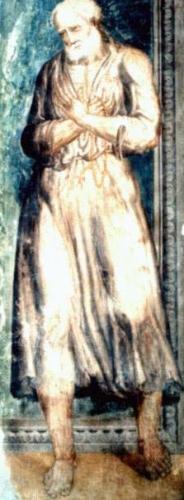
Saint Epaphras
In the annals of the early Church, few figures burn with the quiet intensity of a devoted collaborator who labored tirelessly to establish the foundations of faith in the Lycus Valley.
Biography
In the annals of the early Church, few figures burn with the quiet intensity of a devoted collaborator who labored tirelessly to establish the foundations of faith in the Lycus Valley. While the apostles themselves are often the focus of the narrative, it is the faithful disciples who carried the torch into the towns and villages that sustained the Gospel’s spread. One such man, a disciple of Saint Paul the Apostle, is remembered not for grand miracles or royal patronage, but for the relentless work of evangelization and the deep bond he shared with his spiritual father.
This disciple, known as Epaphras, emerged during a pivotal era in the first century c. when the Christian message was moving from the heart of Jerusalem into the bustling provinces of the Roman Empire.
He is historically situated as a worker in the region of Asia Minor, specifically tasked with a demanding mission across three significant cities: Colossae, Laodicea, and Hierapolis. In an age where travel was arduous and persecution was a constant shadow, the commitment to move between these communities required a fortitude that went beyond mere duty. His work was not passive; the records indicate that he worked a lot for the Gospel, suggesting a life defined by prayer, instruction, and the active planting of Christian communities in a pagan environment.
The significance of his life is best understood through the lens of his relationship with the Apostle Paul. Paul, a man who traveled thousands of miles and faced imprisonment for his faith, spoke of Epaphras with profound affection and respect. In his writings, the Apostle did not merely list him as a subordinate but called him a dear collaborator. This terminology elevates Epaphras from a simple missionary to a co-laborer in the divine vineyard, someone whose efforts were viewed as essential to the work of Christ. The bond was so strong that Paul felt compelled to highlight his intercessory prayers and his concern for the spiritual maturity of the believers in the Lycus Valley.
Historically, the cities where he ministered were part of a wealthy and culturally diverse region, yet they were also susceptible to syncretism and heresy. Epaphras’s labor involved not only converting the populace but also stabilizing the faith of new converts against the intellectual and spiritual currents of the time. The fact that Paul felt the need to write letters to these specific communities implies that the work Epaphras began required ongoing spiritual oversight. He is the human link between the apostolic age and the established churches of the East, ensuring that the teachings of the Gospel remained intact.
Though specific dates of his birth or death are not recorded in the primary brief, the legacy of his ministry endures. He represents the archetype of the humble servant who finds glory in the unseen work of building up the Body of Christ. His life serves as a testament to the idea that the Church is built not only by the founders of its doctrines but by those who faithfully tend the vineyard day after day. In the commemoration of his life, the faithful are reminded that being a dear collaborator in the Gospel is a calling that demands total devotion, prayerful intercession, and a willingness to labor where the harvest is greatest. Through his example, the light of the Gospel continued to shine in the Lycus Valley long after the Apostle Paul had moved on to other fields of labor.

Also remembered on July 19



Know of a grace or miracle attributed to Saint Epaphras?
Report a Grace or Miracle