Saint
Saint Iosephus Mukasa Balikuddembe
The most striking aspect of this saint’s life is not merely his sacrifice, but the profound transformation of his influence.
Biography
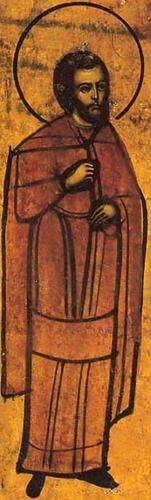
The most striking aspect of this saint’s life is not merely his sacrifice, but the profound transformation of his influence. Before his baptism, he held a position of immense temporal power, serving as the head of the royal court within the Kingdom of Buganda. Yet, upon receiving the waters of baptism, he did not leverage this status for personal ambition or political maneuvering. Instead, he became a spiritual conduit, utilizing his proximity to the nobility to win many young people to the faith. This shift from a courtier of the king to a shepherd of souls defines his legacy, marking him as a figure who understood that true authority lay in service to the Gospel rather than in the corridors of power.
Historical records place these events within the turbulent late nineteenth century, a period when the Kingdom of Buganda was undergoing a violent upheaval regarding religious allegiance.
The Christian faith, introduced by missionaries, found a receptive audience among the youth and the court, but it also provoked a fierce backlash from traditionalist factions and the ruling monarch, who viewed the new religion as a threat to his sovereignty. It was within this volatile atmosphere that this nobleman lived out his vocation. His conversion was not a quiet, private affair; it was a public declaration that resonated through the palace walls. As head of the royal court, his adoption of Christianity sent shockwaves through the social hierarchy, encouraging others to question the old ways and embrace the teachings of the Church.
The brief accounts indicate that his ministry was particularly effective among the younger generation. In a society where tradition held absolute sway, his ability to win many young people suggests a deep charisma and a genuine pastoral concern. He did not preach from a distance but engaged directly with those under his influence, likely modeling a life of integrity that contrasted with the corruption often found in royal courts. This dedication to the spiritual formation of the youth set a dangerous precedent in the eyes of the authorities, who viewed such recruitment as sedition.
The culmination of his witness occurred at Mengo in Uganda. This location was the center of the kingdom and the site of the most intense persecutions against the Christian converts. As the political climate deteriorated, the demand for loyalty to the king superseded the demands of conscience. This saint, along with many others, was targeted for his unwavering commitment. He did not recant his faith to save his life or his position. Instead, he accepted the crown of martyrdom, dying at Mengo for the sake of the Gospel.
While specific details of the days leading up to his death are scarce, the historical context of the Uganda Martyrs paints a clear picture of the cost of his witness. The persecution was systematic, aiming to extinguish the Christian presence in the kingdom. His death was not an isolated incident but part of a larger wave of sacrifice that would eventually galvanize the Catholic Church in East Africa. The fact that he is recognized as a martyr confirms that he died in odium fidei, in hatred of the faith, for his refusal to renounce the baptism he had received.
A man who could have remained a powerful political figure chose instead to become a humble witness. The legacy of Saint Iosephus Mukasa Balikuddembe is found in the countless young people he inspired and the example he set of fidelity under pressure. His story reminds the faithful that the head of the court is not just a manager of temporal affairs, but a potential leader in the kingdom of heaven. Through his witness, the faith took root in the soil of Uganda, and his sacrifice remains a beacon of courage for those who follow in his footsteps.
Also remembered on November 15
Know of a grace or miracle attributed to Saint Iosephus Mukasa Balikuddembe?
Report a Grace or Miracle