Saint
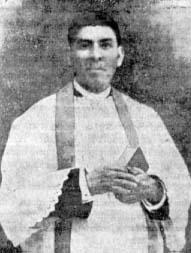
Saint Jesús Méndez Montoya
The ultimate witness of faith is often found not in the silence of a cloister, but in the midst of violent opposition, where the life of a priest becomes the final offering of love.
Biography
The ultimate witness of faith is often found not in the silence of a cloister, but in the midst of violent opposition, where the life of a priest becomes the final offering of love. For Jesús Méndez Montoya, this testimony was not a matter of choice but of destiny, culminating in a sacrifice that would echo through the corridors of the Mexican Church. While the specific details of his early years and formation remain shrouded in the mists of time, his life is defined by a singular, radiant truth: he gave his life for the kingdom of Christ during a time when the very existence of the priesthood was under siege.
The historical backdrop against which this martyrdom unfolded was one of profound turmoil. Mexico, in the early twentieth century, experienced a period of intense hostility directed toward the Catholic Church, known historically as the Mexican persecution.
During these years, the state sought to sever the spiritual ties between the people and their clergy, enacting laws that criminalized the public practice of faith and the exercise of the priesthood. It was into this atmosphere of shadow and danger that Jesús lived and served. He was a priest, a man consecrated to the altar and the sacraments, called to minister in the small community of Valtiervílla. Here, amidst the rural landscapes of Mexico, he carried out the daily duties of his vocation, likely tending to the spiritual needs of the faithful even as the political winds grew increasingly hostile.
Little is recorded of his specific pastoral activities or the nature of his relationships within his parish, for the chaos of the persecution often swept away the records of the faithful. Yet, the brevity of the historical record does not diminish the magnitude of his witness. To be a priest during this era was to live in a state of perpetual risk. To celebrate the Eucharist was an act of defiance; to hear confessions was a dangerous labor. Jesús Méndez Montoya did not flee this danger. Instead, he remained steadfast, embodying the courage of the early Church martyrs who faced the lions rather than deny their Lord.
His death was not merely a tragic end, but a proclamation. By dying for the kingdom of Christ, he affirmed that spiritual authority supersedes temporal power. He joined the ranks of those who understood that the blood of the faithful is seed, and that the persecution of the Church could not extinguish the light of the Gospel. The location of his sacrifice, Valtiervílla, stands as a sacred marker on the map of Mexican sanctity, a place where the ground was watered with the blood of a son of the Church who refused to renounce his vows.
Today, the legacy of this martyr serves as a beacon for the modern faithful. He reminds the Church that holiness is not measured by longevity or comfort, but by fidelity in the face of trial. His canonization stands as a testament to the enduring power of grace, which transforms a moment of earthly violence into an eternal victory. Though the full narrative of his days remains incomplete, the core of his story is clear and unshakeable. He was a priest, he was a martyr, and he is a saint. In his silence, he speaks volumes about the cost of discipleship, inviting all who follow Christ to consider the depth of their own commitment. His life, though cut short, continues to bloom in the hearts of those who honor the memory of those who loved Christ above their own lives.
Also remembered on February 5
Know of a grace or miracle attributed to Saint Jesús Méndez Montoya?
Report a Grace or Miracle