Saint
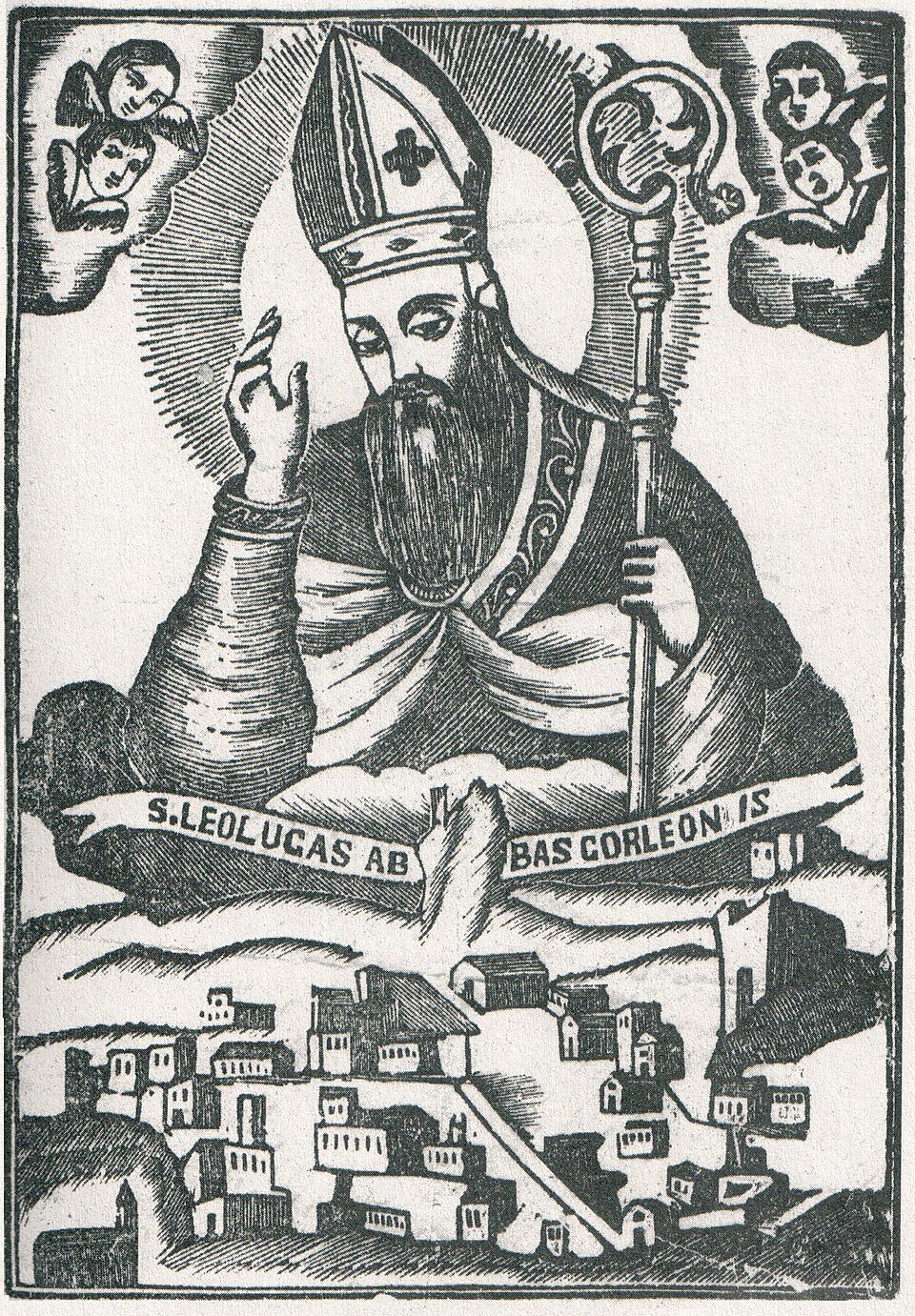
Saint Leoluca
The spiritual legacy of this holy man is defined not by a single deed, but by a rare and harmonious balance between two distinct paths of Christian perfection.
Biography
The spiritual legacy of this holy man is defined not by a single deed, but by a rare and harmonious balance between two distinct paths of Christian perfection. He was a figure who could walk alone in the silence of the desert while simultaneously bearing the heavy yoke of leadership over a community. This duality marked his existence, allowing him to shine with equal brilliance in the hermitic life and the cenobitic one. In an age where the call to solitude often competed with the call to service, he embodied the synthesis of both, proving that the retreat from the world and the governance of the faithful were not mutually exclusive but rather complementary expressions of divine love.
His ministry unfolded within the rugged and spiritually charged landscape of Calabria. Here, on the slopes of Mount Mercury, he established and governed the monastery of Avena. The terrain of this region,
characterized by its steep valleys and ancient stone, provided a natural fortress for those seeking to withdraw from the distractions of the world. Yet, the abbot did not remain confined to the isolation of the hermitage. His reputation as a spiritual father drew others to him, necessitating a transition into the cenobitic life. This shift required a different kind of strength—one that demanded patience, wisdom, and the ability to shepherd a flock of brothers toward salvation.
Later in his ministry, his influence extended to Monte Mula, where he served as abbot. The specific details of his tenure at these locations are often obscured by the mists of history, as is common with many of the early ascetics of southern Italy. However, the enduring memory of his presence at both Avena and Monte Mula suggests a period of significant monastic vitality in the region. The fact that he is remembered specifically for his ability to excel in both solitary and communal forms of prayer indicates a profound depth of character. He was not merely a ruler of men, but a man of prayer whose authority flowed from his intimacy with God.
Historical records regarding his life are scant, a common fate for many saints of the early medieval period. There are no surviving letters, no detailed chronicles of his daily routine, and no precise dates marking his birth or his passing. What remains is the testimony of his vocation. Tradition holds that he was a man of great humility, one who found the greatest fulfillment not in the height of his office, but in the quiet fidelity of his prayer. Whether he was leading a choir of monks in the oratory or standing alone in the wilderness, his focus remained fixed on the divine.
The obscurity of his biographical details does not diminish the significance of his witness. In the absence of specific miracles or chronological markers, the focus shifts to the spiritual archetype he represents. His life reminds the faithful that the call of God can manifest in the stillness of the cell or the bustle of the refectory with equal power.
Ultimately, the story of Saint Leoluca is one of faithful service in a challenging environment. He navigated the spiritual and physical challenges of Calabria with a steady hand, guiding his brothers through the monastery gates and into the depths of their own souls. While the historical record may be silent on the specifics of his daily struggles, the enduring title of abbot and the recognition of his dual excellence in monastic life speak volumes. He remains a beacon of balance, a holy man whose life was a prayer in itself, bridging the gap between the solitude of the hermit and the community of the cenobite.
Also remembered on March 1
Know of a grace or miracle attributed to Saint Leoluca?
Report a Grace or Miracle