SaintPre-Congregation
Saint Luke the Younger
Saint Luke the Younger, also known as Luke of Aegina, Luke of Mount Joannitsa, Luke of the Soterion, Luke the Thaumaturgus, and Luke the Wonder-Worker, was born around the year 920 on the Greek island of Aegina.
Biography
Saint Luke the Younger, also known as Luke of Aegina, Luke of Mount Joannitsa, Luke of the Soterion, Luke the Thaumaturgus, and Luke the Wonder-Worker, was born around the year 920 on the Greek island of Aegina. He was the third of seven children born to Stephen and Euphrosyne, who were small land-owning farmers. Luke's family was forced to flee to Thessaly due to Saracen raids on their home island. In his youth, Luke helped support his family by working the fields and tending sheep. However, tragedy struck when his father passed away. It was at this point that Luke felt a strong calling to dedicate his life to religious pursuits. In response to his calling, Luke made the decision to give away all his property to the poor.
However, this act of generosity put him in conflict with his relatives, who did not approve of his actions. Undeterred, Luke left home to pursue his religious vocation. Seeking a monastic life, Luke settled in the area of modern-day Hungary and Bulgaria. However, he was mistaken for a runaway slave and was subsequently imprisoned for a period of time. Eventually, Luke was released from captivity but found that his family refused to reconcile with him. With nowhere else to turn, Luke briefly joined a monastery in Athens, Greece. However, the superior of the monastery received a dream in which Luke's mother appeared to be calling for help. Taking this dream as a sign, the superior sent Luke back home. To Luke's relief, his mother finally accepted his call to religious life.
He settled as a hermit on Mount Joannitsa near Corinth, Greece. This secluded place became known as the Soterion, meaning the place of healing or the place of safety, due to the numerous people Luke healed through his prayers. Luke was regarded as a Thaumaturgus, or a wonder-worker, due to his miraculous abilities of healing. His reputation for miraculous healings spread far and wide. People from all walks of life sought his intercession and experienced healing through his prayers. Saint Luke the Younger passed away around the year 950 near Corinth, Greece, due to natural causes. Upon his death, his hermitage was transformed into a chapel as a testament to his sanctity and the remarkable healing power associated with the place.
Although Saint Luke the Younger has not been designated a patron saint for any specific cause or activity, his example of selfless devotion to God and his ability to heal through prayer continue to inspire and offer solace to countless individuals seeking spiritual and physical healing. Note: The information provided is based on the given starting point and may not reflect all known details about Saint Luke the Younger.
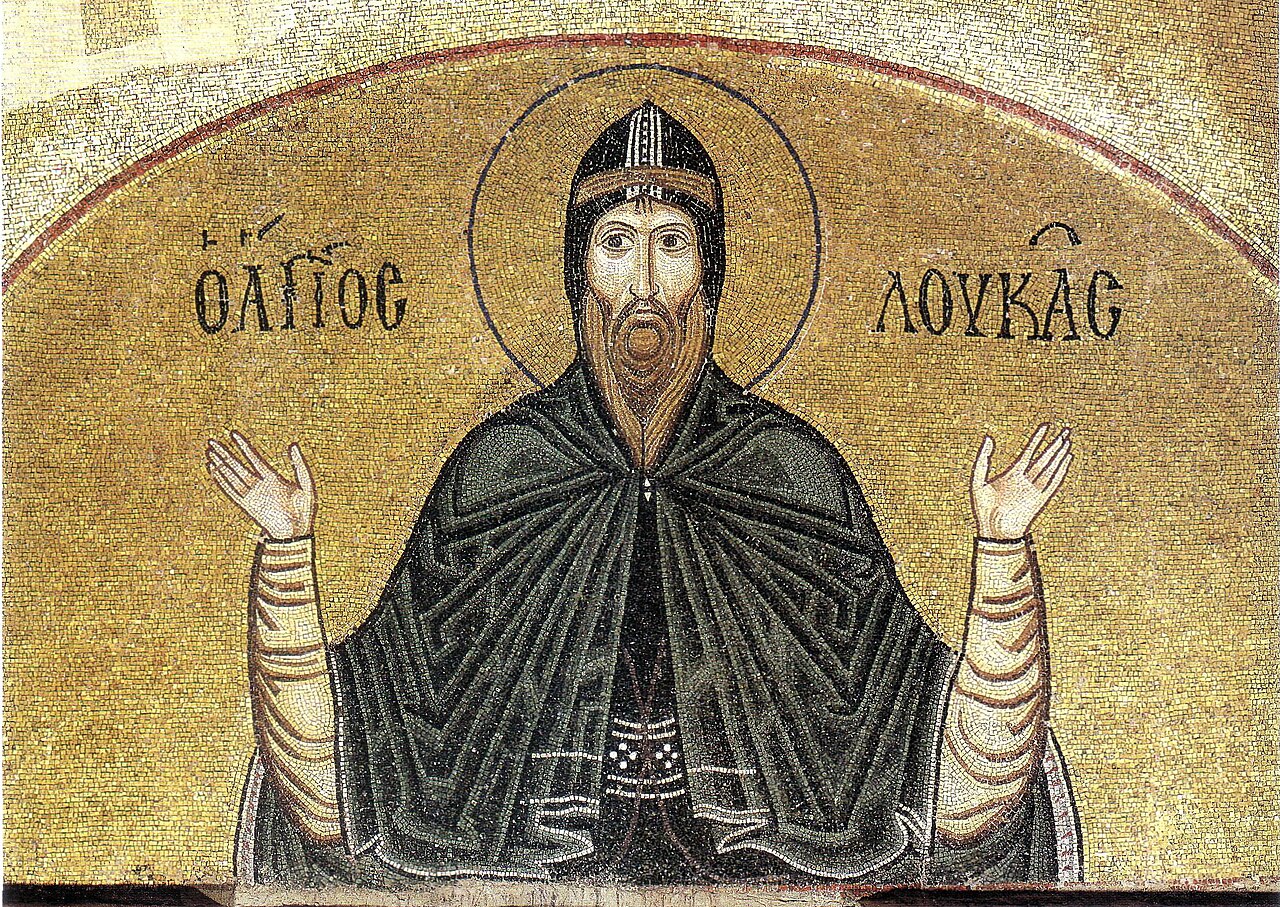
Image: Public domain via Wikimedia Commons (Hosios Loukas (nave, lunette on west wall of north cross-arm) - Luke of Steiris 01.jpg)
Know of a grace or miracle attributed to Saint Luke the Younger?
Report a Grace or Miracle